Your asphalt driveway is cracking because of water, age, and a weak base, usually working together. Water seeps into small gaps, freezes and expands, and widens cracks each winter. A thin or poorly compacted base lets the surface flex and split. Heavy loads, tree roots, sun, and bad install do the rest. Match the crack pattern to one of the eight cause types below.
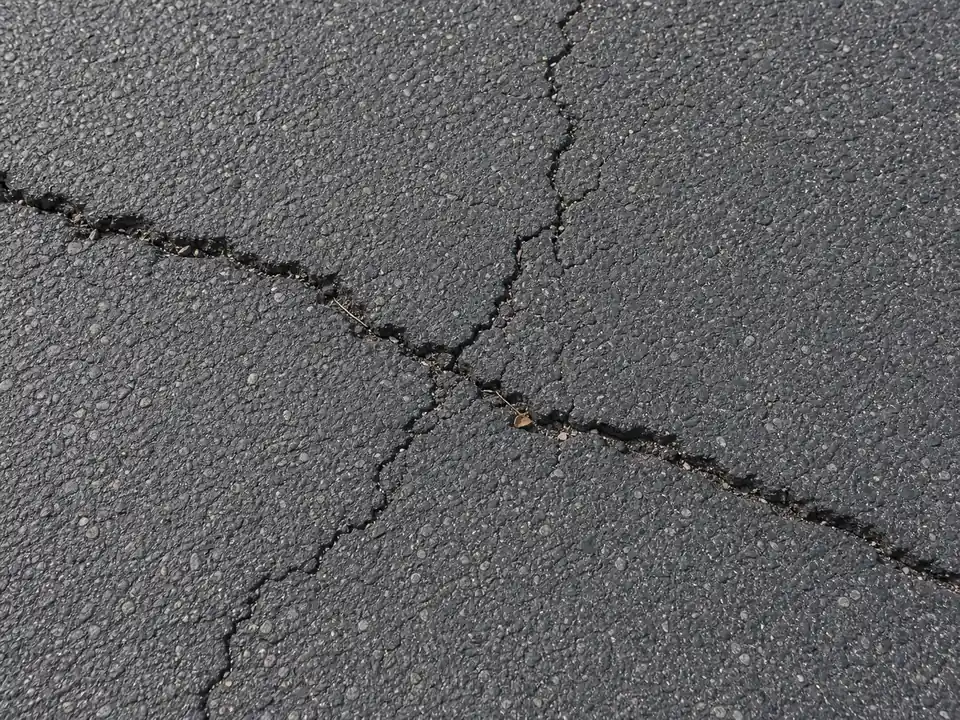
Before you spend a dollar on filler, figure out what is actually causing the crack. Filling the symptom while ignoring a failing base just means you fill the same line again next spring. The eight causes below cover almost every driveway. Most homeowners have two or three at once. Reading the pattern is how you tell them apart, which is why a quick look at the types of cracks pays off before you start.
1. Water and freeze-thaw cycling
This is the number one cause in any climate that drops below freezing. Water finds a hairline gap, soaks in, then freezes and expands by about nine percent. That force levers the crack wider. The next thaw lets more water in, and the cycle repeats every time the temperature crosses 32 degrees Fahrenheit. A single bad winter can run twenty or more freeze-thaw cycles.
How to spot it: cracks that grow visibly each spring, especially after a hard winter. Cracks near the lowest part of the driveway or where water sits. The FHWA pavement program documents freeze-thaw as a primary distress driver in northern climates. The fix is keeping water out: fill cracks before winter and read our freeze-thaw damage guide for the full prevention list.
2. A base that is too thin or poorly compacted
Asphalt is only as strong as what is under it. Residential driveways need roughly 4 to 8 inches of compacted aggregate base under 2 to 3 inches of asphalt. When a contractor skimps on base depth or skips proper compaction, the surface has nothing solid to rest on. It flexes under every car, and flexing asphalt cracks.
How to spot it: cracking that shows up within the first few years, often as alligator patterns or cracks paired with sinking. This is the most common reason a young driveway cracks. Our base prep guide and the layers explained post show what a correct build looks like so you can judge yours.
3. Poor drainage and standing water
Water that does not drain off the surface or away from the edges soaks down into the base and softens it. A soft base lets the asphalt move, and moving asphalt cracks. A driveway needs at least a 1 to 2 percent slope to shed water. Flat or reverse-sloped sections trap it.
- Birdbaths: low spots that hold puddles after rain. See our birdbath repair guide.
- Edge pooling: water sitting against the driveway edge, undermining it. See standing water fixes.
- No grade: a dead-flat driveway with nowhere for water to go. A french drain or regrade may be needed.
4. Age and oxidation from the sun
Asphalt is held together by binder, a petroleum product that the sun slowly dries out. Over 10 to 20 years, UV and heat oxidize the binder, the surface goes gray and brittle, and it loses the flexibility that let it absorb stress. Brittle asphalt cracks under loads it used to shrug off. This is normal aging, not a defect. Industry research from the National Asphalt Pavement Association ties surface oxidation directly to lost flexibility and the cracking that follows.
How to spot it: a gray, faded, rough surface with widespread fine cracking on an older driveway. This is exactly what sealcoating slows down. Read what sealcoating actually does and our fading and color restore guide. Most driveways last 15 to 30 years with upkeep.
5. Heavy loads and concentrated weight
A driveway sized for cars will crack under loads it was never built for. Parking an RV, a loaded trailer, a moving truck, or a dumpster on residential-grade asphalt punches and flexes it. Point loads like trailer jacks or vehicle stands are worse because all the weight sits on one spot.
How to spot it: cracking or depressions where a heavy vehicle parks, or along a path a heavy truck drives. If you park heavy regularly, you need a thicker section. See thickness for RVs and heavy vehicles and the RV parking pad guide.
Crack cause checker
Answer four quick questions to see the most likely root cause and whether it is cosmetic or structural.
6. Bad installation
Plenty of cracking is baked in on paving day. Asphalt placed too thin, paved in cold or wet weather, rolled before it was ready, or laid on an unprepared base will crack early no matter how well you maintain it. A new driveway that cracks in its first year or two almost always has an install problem behind it.
How to spot it: cracking within 1 to 3 years, often paired with poor compaction marks or uneven thickness. This may be a warranty issue. See our bad install problems guide and the warranty guide before you pay for repairs the installer should cover.
7. Tree roots and ground movement
Roots from nearby trees grow under and into the base, pushing the asphalt up and cracking it from below. Expansive clay soils that swell and shrink with moisture do the same thing. Both create uneven support, and uneven support cracks asphalt.
How to spot it: cracks and heaving near a tree, or cracks that follow a root path. Settling or movement on a slope is related. See tree roots pushing up asphalt, settling fixes, and the cracking on a hill guide.
8. Shrinkage and joint cracking
As fresh asphalt cures, it shrinks slightly and can develop thin shrinkage cracks. Cracks also tend to form along construction joints, where one paving pass met another, and along the cold seam between the driveway and a garage slab or apron. These are stress points where two surfaces move independently.
How to spot it: straight cracks following a seam, edge, or the line where the paver passes met. These are usually cosmetic and easy to fill. Our crack sealing guide walks through the right filler for each width, and how to fix cracks sorts the job by crack type.
How to tell cosmetic from structural
Two questions sort most cracks. First, the width: under a quarter inch is usually surface maintenance, over half an inch and growing is a base concern. Second, the pattern: a single straight line is far less worrying than an interconnected alligator web. Add sinking, water pooling, or fast growth and you are looking at a base problem, not a surface one. If you are unsure whether yours has crossed the line, read when a driveway is beyond repair.
A simple field test helps. Slide a screwdriver into the crack. If it goes in less than an inch and hits firm material, the base is probably sound and the crack is a surface issue. If it sinks deep or you feel loose, gravelly material, the base is failing and filler will not hold. Watch the same crack across one full winter, too. A crack that doubles in width over a single freeze-thaw season is moving for a structural reason, and the Asphalt Institute distress guides treat that kind of rapid widening as fatigue, not cosmetic aging.
One more thing on timing. Whatever the cause, the cheapest moment to act is before the next freeze. A clean, filled crack in October survives winter. The same crack left open fills with water, freezes, and comes back wider in spring. Build crack inspection into your maintenance schedule and a small annual habit will hold off the expensive repairs for years.
Bottom line
Asphalt cracks because water, age, and a weak base wear it down, with loads, roots, and bad install speeding things up. Identify the cause first, then act: thin cracks get filled before winter, wide cracks get patched, and alligator or sinking cracks need base repair or resurfacing versus replacement. Get a planning number from the driveway cost calculator and check the figures behind this guide on our sources page.