An asphalt driveway settles or sinks when the base or soil beneath it loses support, usually from water erosion, poor compaction, or buried material that rotted away. The surface follows the void below. Fix the cause first, restore the base, then repair the asphalt. Topping the dip without fixing the support always fails. Start with our asphalt calculator to size any patch.
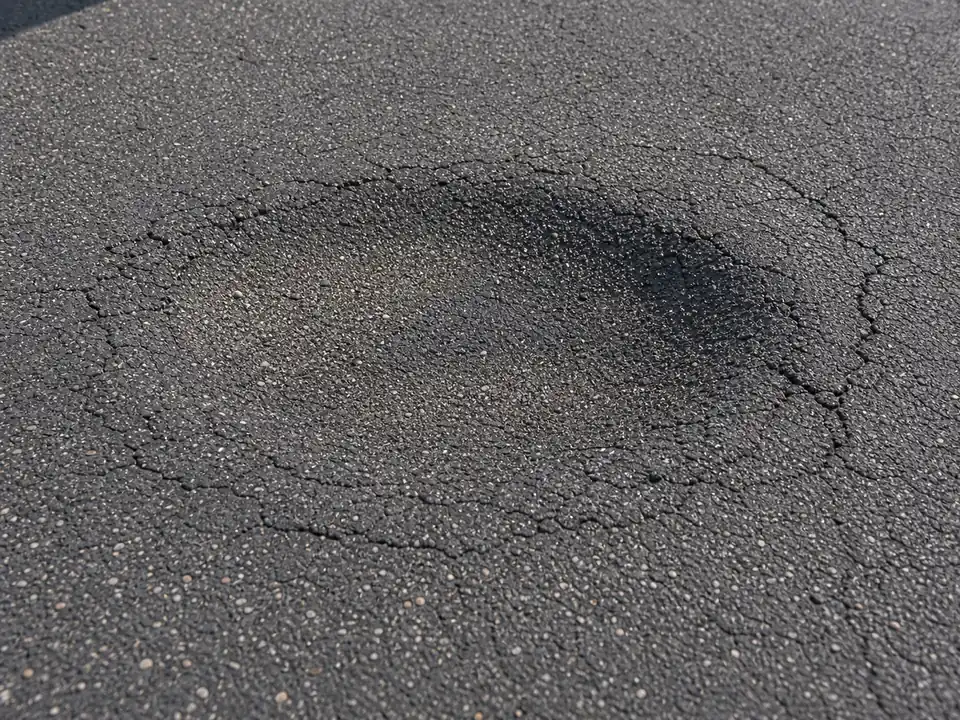
Why is my asphalt driveway sinking?
Asphalt itself does not collapse. It bends to follow whatever is happening underneath. When you see a sink, something has removed the support below the slab. The most common causes:
- Water erosion of the base. A downspout, a leaking pipe, or runoff carries away the fine particles that hold crushed stone together. The base loosens, then compacts under traffic, and the surface drops. This is the single most common cause.
- Poor original compaction. If the base or subgrade was not compacted in lifts during install, it keeps settling for years. This is a classic bad-install problem that shows up in the first two or three seasons.
- Buried organic material. A tree stump, roots, or construction debris left under the driveway rots and shrinks, leaving a void the asphalt sags into.
- Utility trenches. A trench dug for water, sewer, or gas that was backfilled loosely settles for years and pulls the driveway down along the line.
- Freeze-thaw cycles. Water in the base freezes, expands, then melts and drains, leaving the base looser each cycle. Cold climates see more settling for this reason. The FHWA pavement program documents how moisture and frost drive base failure.
- Tree roots. Roots both push asphalt up and, when they die back, leave voids that let it sink. See our guide on tree roots and asphalt.
How to tell settling from a birdbath or normal cracking
Not every low spot is true settling, and the difference changes the repair. Use a straightedge and a tape measure to sort it out.
- Birdbath. A shallow surface dip that holds a thin film of water but the base is solid. Usually under half an inch deep with no cracking around it. This is cosmetic. See our birdbath low-spot repair guide.
- Settling. A deeper depression, often over one inch, with cracking around the rim and a soft feel when a vehicle rolls over it. The base has moved.
- Cracking only. Lines without a dip are a separate issue. Match them to type in our crack-type guide.
Lay a long straightedge or a string line across the area. If the gap at the deepest point is over an inch, treat it as settling. If the rim is cracked in a ring, that confirms the base failed underneath.
Mini-tool
Settling Severity Checker
Enter the deepest measured dip and the rough size of the low area to get a likely repair path. This is a planning guide, not a substitute for an on-site look.
Step-by-step: diagnose and fix a settling driveway
Work in this order. Skipping the cause and the drainage steps is why most settling repairs fail and return within a season.
- Measure the depression. Straightedge across the dip, measure the deepest gap. Under one inch is shallow, one to three inches is moderate, over three inches is deep base failure.
- Find the cause. Look for downspouts emptying near the spot, leaking pipes, tree roots, utility trench lines, or water that pools after rain. Settling follows lost support, so name the cause before you repair.
- Fix drainage first. Redirect downspouts, repair leaks, and correct grade so water no longer runs into the low area. Our drainage solutions and French drain guides cover the options.
- Choose the repair. Match depth and cause to a method in the table below.
- Restore the base. For anything past a shallow fill, cut out the failed asphalt, add and compact crushed stone in two-inch lifts until firm and level, then place and compact new asphalt flush with the surrounding surface.
- Cure and seal. Let new asphalt cure, then sealcoat the repair with the rest of the driveway once it is fully set to lock out water.
Which repair matches your settling?
The right method depends on depth, area, and whether the base failed. Here is how the common fixes line up.
- Cold patch (DIY). Shallow dips under one inch and a few square feet, with a solid base. Materials 20 to 60 dollars. Covered in our repair guide.
- Infrared repair. Heats the existing asphalt, reworks it, and re-compacts it seamlessly. Good for moderate dips. About 300 to 700 dollars. See infrared repair explained.
- Cut-out and base repair. The real fix when the base failed. Saw out the section, rebuild and compact the base, re-pave with hot mix. Roughly 500 to 2,000 dollars per section.
- Mudjacking or foam lifting. Pumps slurry or polyurethane foam under a settled slab to raise it. Roughly 600 to 2,000 dollars. Best when the asphalt is intact but dropped as a unit.
- Overlay or rebuild. When settling is widespread or recurring, weigh overlay vs mill-and-overlay or a full rebuild. Read when a driveway is beyond repair first.
How much does fixing a sinking driveway cost?
Cost tracks the cause, not the size of the dip you see. A one-foot sink over a collapsed trench costs more than a wide shallow dip on a solid base. Typical ranges in 2026:
- Cold patch fill: 20 to 60 dollars in materials, DIY.
- Infrared spot repair: 300 to 700 dollars.
- Cut-out and base repair: 500 to 2,000 dollars per failed section.
- Mudjacking or foam: 600 to 2,000 dollars.
- Section or full rebuild: several thousand dollars depending on driveway size.
Get planning numbers from the driveway cost calculator, and run any contractor bid through the quote checker so a base repair does not get padded with work you do not need.
How to keep settling from coming back
Most return settling is a water problem that was never solved. Keep these in check after any repair:
- Drainage. Keep downspouts discharging well away from the slab and the grade pitched to shed water. Standing water erodes the base faster than anything else.
- Sealing. A sound sealcoat keeps surface water out of cracks before it reaches the base. Plan it with our maintenance schedule.
- Crack repair. Fill cracks promptly so water cannot funnel into the base. The National Asphalt Pavement Association notes that keeping water out of the structure is the core of asphalt longevity.
- Load limits. Heavy vehicles concentrate load and accelerate base failure on a thin driveway. Check our thickness guide for RVs and heavy vehicles if you park anything large.
Bottom line
Settling is a signal that support under the asphalt is gone. Measure the dip, find what removed the support, fix the drainage, then match the repair to the depth: cold patch for shallow, infrared for moderate, cut-out and base repair or mudjacking for true base failure. Repair the cause and the dip stays gone. Skip it and you will be filling the same spot every spring.