A french drain for an asphalt driveway is a sloped gravel trench with perforated drainage tile that collects groundwater and carries it to a lower outlet. Dig 18 to 36 inches deep, slope at least 1 percent, wrap pipe and stone in filter fabric, and budget roughly 25 to 60 dollars per installed foot. It protects the driveway base from saturation.
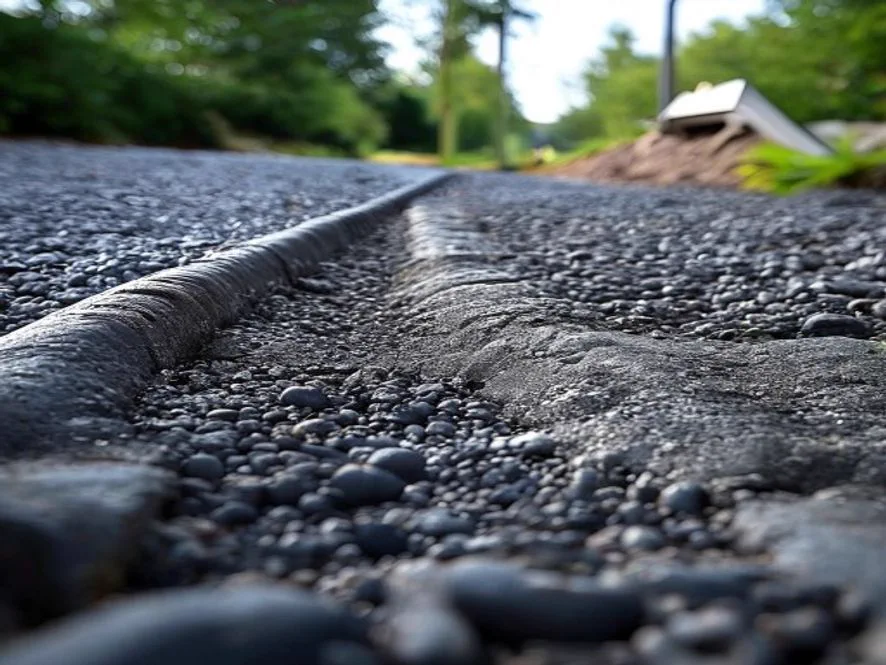
What a french drain does for a driveway
A french drain solves two problems at once. It intercepts surface water flowing toward the driveway, and it lowers the water table in the soil under and beside the slab so the base never stays saturated. Water is the single biggest enemy of asphalt. When the aggregate base and subgrade soak up moisture, they soften, the asphalt flexes, and you get rutting, alligator cracking, and standing water in low spots. In cold regions that trapped water freezes, expands, and lifts the pavement, the classic freeze thaw cycle behind so much winter cracking.
The drain works by gravity alone. Groundwater seeps through the surrounding soil, passes through the filter fabric into the gravel, drops into the perforated pipe through the down facing holes, and runs downhill to the outlet. There are no moving parts. If the slope is correct and the fabric keeps fines out, a well built drain runs quietly for decades. It is one of the most effective fixes in the broader toolkit of driveway drainage solutions.
French drain vs other drainage options
A french drain is not always the right tool. Choose by what kind of water you are fighting.
- French drain (drainage tile): Best for subsurface groundwater, a high water table, or a hillside seeping toward the driveway. Buried, invisible, handles steady seepage.
- Channel or trench drain: A surface grate set across the driveway. Best for fast sheet runoff, like the bottom of a sloped apron near a garage.
- Regrading and crowning: Often the cheapest fix. If water only ponds because the slope is wrong, fixing the grade and slope percent may beat any drain.
- Dry well or catch basin: A holding pit that stores water and lets it soak away slowly, used where there is no good daylight outlet.
Many driveways end up with a combination: a crowned surface to shed rain plus a perimeter french drain to keep the base dry. If your slab is already failing from trapped water, weigh repair against replacement in our resurface vs replace guide before you spend on drainage that a dying driveway will not reward.
How to design the drain: depth, width, and slope
Get three numbers right and the rest is digging. Depth controls how much water table you pull down. Width sets how much gravel storage you get. Slope is what actually moves the water.
- Depth: 18 to 36 inches. For a driveway, aim for at least 24 inches so the pipe sits below the asphalt base and pulls water out of the subgrade, not just the topsoil. In freezing climates, get the pipe below the local frost line where you can.
- Width: 8 to 12 inches. Wide enough to bed the pipe in gravel on all sides.
- Slope: at least 1 percent, which is about 1 inch of fall for every 8 feet of run. A continuous downhill fall to the outlet is non negotiable. No flat or uphill sections.
- Pipe: 4 inch perforated corrugated or rigid PVC drainage tile, holes pointing down, wrapped in a fabric sock.
- Gravel: washed three quarter inch to 1 inch clean stone. Skip rounded pea gravel mixed with fines, which clogs.
The down facing holes confuse people. A french drain collects water from below, so holes at the bottom let the pipe fill and drain from its lowest point. Wrapping the whole assembly in nonwoven filter fabric is what keeps soil fines from silting the system shut. The EPA treats managing stormwater at the source like this as a core way to protect both your property and local water quality.
French drain cost and material estimator
Enter the run length and pick how you will build it. This gives a rough material volume and an installed cost range. Confirm with local quotes and code before you dig.
How to install a french drain step by step
Whether you DIY or hire out, the sequence is the same. The order matters more than the muscle.
- 1. Plan the route and outlet: Trace where water collects and pick a downhill outlet, a low spot, dry well, or permitted storm tie in. Call 811 first to locate buried utilities.
- 2. Dig the trench to slope: 18 to 36 inches deep, 8 to 12 inches wide, falling at least 1 percent the whole way. Check it with a string line and level.
- 3. Line with fabric and bedding gravel: Lay nonwoven filter fabric, then 2 to 3 inches of washed gravel as a bed.
- 4. Lay the drainage tile: Set perforated pipe holes down, sloped to the outlet. Confirm fall before covering.
- 5. Backfill and wrap: Cover with washed gravel, then fold the fabric over the top to seal out soil.
- 6. Cap, connect, and test: Top with gravel, sod, or a grate, confirm the outlet daylights, and run a hose through to prove flow.
If the drain runs under or just inside the asphalt edge, it has to go in before paving and get compacted as part of the base. Retrofitting under an existing slab means sawcutting and patching, so most retrofits run the drain alongside the driveway instead. Either way, base prep and drainage are done together, which is why our base preparation guide and the layers explainer are worth reading before paving day.
What a french drain costs in 2026
Installed, a driveway french drain typically runs 25 to 60 dollars per linear foot, so a common 40 to 80 foot run lands around 1,500 to 4,000 dollars. DIY material cost is far lower, roughly 8 to 15 dollars per foot for pipe, washed gravel, and fabric, but you supply the labor and the disposal of spoil. The big cost swings come from depth, soil, and the outlet.
- Soil and rock: Easy digging in loam is cheap. Hitting rock, roots, or a high water table can double trenching cost.
- Length to daylight: A short run to a nearby low spot is simple. A long run to reach a legal outlet adds pipe, trench, and time.
- Storm connection: Tying into a municipal storm line, where allowed, adds permit and connection fees.
- Restoration: If you cut asphalt to retrofit, add patching, which our repair guidance can help you scope.
Treat drainage as part of the driveway budget, not an afterthought. It is often a buried line item, so when you collect bids, make sure each contractor spells out depth, pipe, gravel, and outlet. Run the written scope through the quote checker so a vague "improve drainage" line does not hide a thin, undersized drain. To sanity check the overall paving and base quantities, the asphalt calculator and the driveway cost calculator set realistic numbers before anyone quotes you.
Permits, discharge, and avoiding neighbor problems
Where the water goes is a legal question, not just a technical one. You generally cannot daylight a drain onto a neighbor's land or aim it back toward the house. Many municipalities regulate stormwater discharge and may require a permit to connect to a public storm system or to alter site drainage. Check with your local building or zoning office, and review any HOA rules in our HOA driveway rules guide. The EPA stormwater guidance and good site grading covered by the Federal Highway Administration both stress keeping runoff on your own property and moving it safely to a controlled outlet.
Maintenance and common mistakes
A french drain is low maintenance, not no maintenance. Flush the outlet once or twice a year and clear leaves and silt from any grate. The failures almost always trace back to install errors, not the design itself.
- Flat or backward slope: The number one killer. Water sits, silt settles, the pipe clogs.
- No filter fabric: Soil fines wash into the gravel and pipe and choke flow within a few seasons.
- Wrong gravel: Dirty or rounded stone with fines packs tight and stops draining.
- Holes facing up: The pipe never empties its lowest inch, so water lingers against the base.
- Bad outlet: A drain with nowhere to go just relocates the puddle.
Pair the drain with a properly sloped, sealed surface and you protect the whole structure. Keeping water off the top with good slope and routine sealing, and out of the base with a drain, is what stretches a driveway toward the 20 to 30 year mark. See how long you can expect from a well built and well drained slab in our driveway lifespan guide.
Bottom line
A french drain is a sloped gravel trench with perforated drainage tile that pulls water out of the soil and carries it downhill to a safe outlet. Dig at least 24 inches deep, hold a continuous 1 percent slope, point the holes down, wrap everything in filter fabric, and confirm where the water legally goes. Budget about 25 to 60 dollars per installed foot, or 8 to 15 for materials if you DIY. Done right, it is the cheapest insurance you can buy against a base that drowns. Standards and references are on the sources page.