An asphalt driveway is built in layers from the ground up. The compacted soil subgrade comes first, then 4 to 8 inches of crushed aggregate base, then the asphalt. The asphalt is a single surface course on light builds, or a coarse binder course plus a fine surface course on a full two-lift build. Each layer has one job.
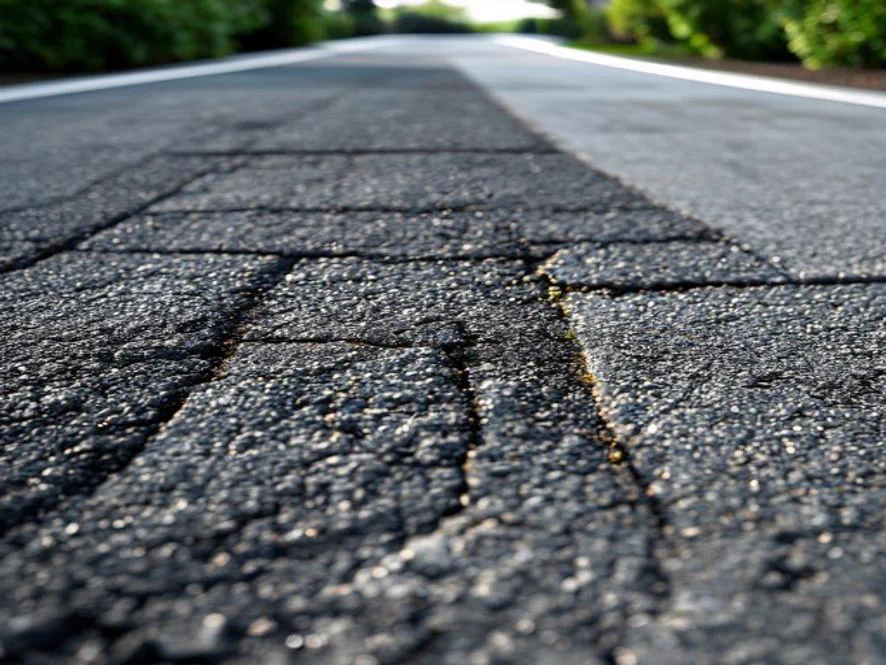
The four layers from the bottom up
People talk about asphalt like it is one thing. It is really a stack. Understanding the stack is the single best way to read a paving quote and spot a cut corner before it costs you. Here are the layers in the order they are built, which is bottom to top.
- 1. Subgrade. The native soil under everything. It is graded, compacted, and shaped to drain. This is the foundation, and weak subgrade dooms everything above it.
- 2. Aggregate base. 4 to 8 inches of crushed stone, often called crusher run or 21A. It spreads vehicle loads, drains water, and resists frost. This layer does most of the structural work.
- 3. Binder course. The lower asphalt layer, made with larger stone. About 2 inches thick. It carries the load and ties the surface to the base. Skipped on single-lift driveways.
- 4. Surface course. The top asphalt layer you walk and park on. Made with finer stone for a smooth, sealable finish. Usually 1 to 1.5 inches over binder, or 2 to 3 inches on its own.
So a driveway has either three working layers (subgrade, base, single asphalt course) or four (subgrade, base, binder, surface). Both are valid. Which one you get depends on the load, the budget, and the contractor. For how deep the asphalt portion should be, see our residential thickness guide.
What the subgrade does
The subgrade is the prepared native soil. It never gets the attention the black top does, but it decides whether your driveway lasts 8 years or 25. The crew strips out topsoil, organics, and roots, then grades the soil to slope for drainage and compacts it with a roller or plate compactor. On soft or clay-heavy soil they may add a geotextile fabric or undercut and replace bad dirt.
If the subgrade pumps, settles, or holds water, every layer above moves with it. That is where cracking and settling begins. Good base prep starts here. We cover the full process in the base prep guide.
Why the aggregate base is the real foundation
The crushed aggregate base is the layer most homeowners never think about and the one that matters most. It does three jobs at once. It spreads concentrated wheel loads over a wide area of soil. It lets water drain away from the asphalt instead of pooling under it. And in cold regions it acts as a frost blanket that reduces heaving.
A common residential base is 4 to 6 inches of compacted crushed stone. Heavy vehicles or weak soil call for 6 to 8 inches, and freeze-thaw climates with poor soil can justify 10 to 12 inches. A thick, well-compacted base under thin asphalt will outlast thick asphalt over a thin base every time. The Federal Highway Administration publishes pavement structural guidance that scales base depth with expected load and soil strength.
The key word is compacted. Aggregate dumped and spread loosely is not a base. It has to be rolled in lifts to lock the stones together. Most early driveway failures, the kind covered in our bad install problems roundup, trace straight back to a skipped or under-compacted base.
Binder course versus surface course
Here is the part that confuses people. The asphalt itself is often two different layers, and they are made of different stuff.
- Binder course (base asphalt). The lower lift. Built with a coarser mix that has larger aggregate, typically 3/4 inch stone. The bigger rock gives it strength and stability to carry the load. It is rougher and not meant to be the finished surface.
- Surface course (wearing course). The top lift. Built with a finer mix, usually 3/8 inch stone and more asphalt cement. The fine mix compacts to a tight, smooth, dark surface that sheds water, takes a sealcoat well, and looks good.
Think of it like flooring. The binder is the plywood subfloor. The surface is the finished hardwood. On a full driveway you want both. On lighter or budget jobs the contractor lays a single surface-type course, often 2 to 3 inches, that does both jobs at once. That is fine for cars on good soil. It is not ideal for heavy use. If you park an RV or work truck, read asphalt thickness for heavy vehicles. The National Asphalt Pavement Association has good background on how mix types are matched to each course.
Typical thickness numbers
Numbers vary by region and contractor, but these ranges cover most residential driveways. All asphalt figures are compacted thickness, not the loose depth before rolling.
- Standard car driveway, single lift: 4 to 6 inch base, 2 to 3 inch surface course.
- Standard car driveway, two lift: 4 to 6 inch base, 2 inch binder, 1 to 1.5 inch surface.
- Heavy vehicle or weak soil: 6 to 8 inch base, 2 to 2.5 inch binder, 1.5 inch surface.
- Cold freeze-thaw region: add 2 to 4 inches of base for frost protection.
Loose asphalt compacts down roughly 20 to 25 percent. So a crew spreads about 3 inches loose to get 2.4 inches compacted. If a quote lists a depth, confirm whether it is loose or compacted, because the difference is real material you are paying for.
Estimator
Driveway Layer Build-Up Estimator
Enter your planned base and asphalt depths to see the total excavation depth your crew needs to dig and a quick read on whether the build is light, standard, or heavy duty.
Rough planning aid only. Dig depth is base plus all asphalt courses. Build class is based on total compacted asphalt and base. Local soil, frost depth, and load can change the right numbers. Confirm specs with your contractor.
How the layers go down on paving day
Watching the build is the only sure way to know what you got. The order rarely changes. First the crew strips and grades the subgrade, then compacts it. Next they spread and roll the aggregate base in one or two lifts. Then a tack coat is sprayed so the asphalt bonds. The binder course is laid by the paver and rolled hot. Finally the surface course goes down and gets rolled to a tight finish. For a full walk-through of the day, read what to expect on paving day and how long it takes to install.
Temperature matters at every step. Asphalt has to be laid and compacted while hot, so cold mornings and late-season work raise the risk of poor compaction. The Asphalt Institute details the compaction temperature window that gives each lift its full density and strength.
Why you cannot see the layers later
Once the surface course is rolled, all you see is smooth black asphalt. You cannot eyeball whether the base is 3 inches or 6, or whether there is a binder course at all. The only ways to verify are to watch the build, take a core sample, or hold the contractor to a written spec. That is exactly why a clear, itemized quote matters. List base depth, binder depth, surface depth, and whether figures are loose or compacted. Run any quote through our quote checker to make sure the layers are spelled out before you sign.
Bottom line
An asphalt driveway is a layered system, not a slab of black. Subgrade carries it, base does the structural heavy lifting, binder adds strength, and surface gives you the smooth, sealable top. Spend on the base and you buy years of life. The cheapest way to get burned is to pay for asphalt you cannot see. Get every layer depth in writing, then price the build with the driveway cost calculator. References for the thickness and mix guidance are on the sources page.