An asphalt RV parking pad should be 4 inches thick over a 6 to 8 inch compacted stone base, sized at least 2 to 4 feet larger than your rig in each direction. Most homeowners spend 7 to 15 dollars per square foot installed. Heavy diesel motorhomes need 5 inches and a deeper base. Use our asphalt calculator to estimate tonnage.
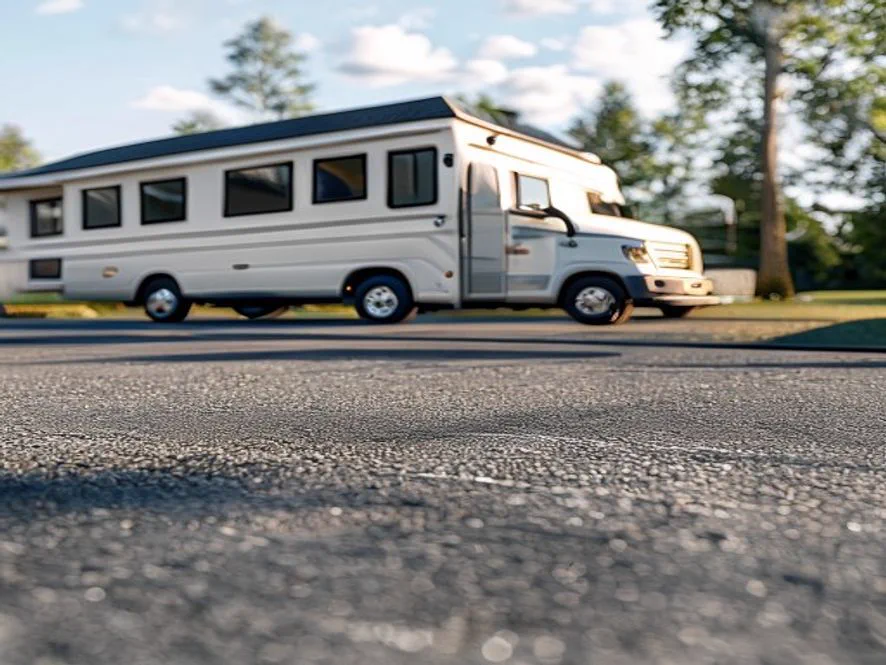
How thick should an asphalt RV pad be?
Thickness is the part people get wrong, and it is the part that fails first. A car spreads its weight across a wide footprint, but an RV concentrates tens of thousands of pounds onto four to six tire contact patches. That point load is what dents and ruts thin asphalt, so an RV pad needs more structure than a normal driveway lane.
- Travel trailers and small Class C (under 12,000 lbs): 3 to 4 inches of compacted asphalt over a 6 inch stone base is enough for occasional parking.
- Class A gas and fifth wheels (12,000 to 30,000 lbs): 4 inches of asphalt over a 6 to 8 inch base. This is the standard build most contractors quote.
- Diesel pushers and large Class A (30,000 lbs and up): 5 inches of asphalt over an 8 to 10 inch base, ideally with a stabilized subgrade.
These are compacted thicknesses, not loose. Fresh asphalt compacts down about 20 to 25 percent, so 4 inches finished means the crew lays closer to 5 inches loose. If you want the full breakdown of how load and thickness interact, our guide on asphalt thickness for RVs and heavy vehicles walks through the numbers, and the residential thickness guide covers normal driveways for comparison.
How big should the pad be?
Measure your rig with the slide-outs in and the awning retracted, then add clearance. The goal is room to walk around the unit, deploy slides, and park without hanging tires off the edge. Edges are the weakest part of any asphalt slab, so you never want a tire riding the lip.
- Length: add 4 to 6 feet to your RV length for a tongue, bumper, and a buffer at each end.
- Width: a single rig needs 10 to 12 feet. If slide-outs deploy on one side, go to 12 feet so the slide stays over pavement.
- Common sizes: 12 by 40 feet for a 35 foot rig, 12 by 45 feet for a 40 foot diesel, or 14 feet wide if you want a walking strip beside the door.
If you are adding the pad beside an existing driveway, check our driveway width and dimensions guide so the two surfaces line up. For tight lots, a turnaround and parking design can fold the RV spot into a backing area.
What does the base under the pad need?
The asphalt is only as good as what is under it. For an RV pad, base prep matters more than for a car driveway because the load is heavier and often static for months. A weak or wet base is the number one cause of pads that sink, rut, or crack within a year or two.
- Excavate and grade: strip topsoil and organic material, then grade for drainage. The National Asphalt Pavement Association covers why subgrade quality drives pavement life at asphaltpavement.org.
- Crushed stone base: 6 to 8 inches of dense-graded aggregate, compacted in lifts. Heavy soils or clay may need a geotextile fabric below the stone.
- Slope: a 1 to 2 percent grade sheds water so the pad does not sit in standing water that weakens the base.
For a deeper look at layers and prep, read our base prep guide and asphalt layers explained. Good drainage off the pad is covered in our drainage solutions post.
How much does an asphalt RV pad cost?
Installed cost runs 7 to 15 dollars per square foot, with most homeowners landing around 9 to 12 dollars once base prep and a proper 4 inch surface are included. Thin pads quoted cheaper than that usually skimp on the base or the asphalt depth, which is exactly where an RV pad fails.
- Small pad (10 by 30, 300 sq ft): roughly 2,100 to 4,500 dollars.
- Standard pad (12 by 40, 480 sq ft): roughly 3,400 to 7,200 dollars.
- Large pad (14 by 45, 630 sq ft): roughly 4,400 to 9,500 dollars.
Price drivers include thickness, base depth, site access for trucks, removal of old surface, and your local asphalt price. Run your own numbers with the driveway cost calculator, and if you already have a bid, paste it into the quote checker to see if it lines up with normal ranges. Regional differences are large, so our cost by state and region breakdown helps set expectations.
Mini-tool
RV Pad Size and Cost Estimator
Enter your RV length and the clearance you want. This estimates pad size, square footage, and a rough installed cost range.
Will an RV damage the asphalt over time?
A correctly built pad handles an RV for decades, but two things cause trouble. The first is summer heat. Asphalt softens above about 120 degrees surface temperature, and a heavy rig parked in one spot can press tires into the soft surface. The second is point loading from jacks and tongue jacks, which focus weight onto a small area.
- Use tire pads: place a board or molded RV pad under each tire to spread the load, especially in hot months.
- Block your jacks: set jacks on wide pads so the stabilizer foot does not punch a dimple into the asphalt.
- Seal and maintain: sealcoating every 2 to 3 years keeps the surface tough. See whether sealcoating is worth it for the cost and benefit.
If your climate runs hot, our post on why asphalt gets soft in summer explains how to time parking and protect the surface.
Permits, setbacks, and HOA rules
Before you pour, check the rules. Many municipalities count a parking pad as added impervious surface, which can trigger a permit or a stormwater review. The Environmental Protection Agency outlines why impervious area matters for runoff at epa.gov. Setback rules also limit how close the pad can sit to a property line.
- Permits: confirm whether your city requires one for a new pad. Our permit guide covers the basics.
- Setbacks: read our setback and property line rules before placing the pad.
- HOA storage rules: many associations restrict visible RV storage. See HOA driveway rules to avoid a fine or a forced removal.
Bottom line
Build the pad for the load, not for the look. Four inches of asphalt over a solid 6 to 8 inch stone base handles most RVs, with 5 inches for heavy diesels. Size it at least 2 to 4 feet bigger than your rig, slope it for drainage, and budget 7 to 15 dollars per square foot. Protect it with tire pads and jack blocks, sealcoat every few years, and clear permits and setbacks first. Do that, and the pad will outlast several RVs.