An asphalt driveway is beyond repair when the damage is structural, not surface deep. The clearest signs are widespread alligator cracking on more than 30 to 40 percent of the surface, sections that sink or flex under a vehicle, potholes that reopen after repairs, and an age past 20 to 25 years. Once the base under the asphalt fails, patching only buys months.
The one question that decides everything: is the base sound?
Almost every "repair or replace" decision comes down to a single question. Is the gravel and soil base under the asphalt still solid, or has it failed? The asphalt surface is only the top layer. Below it sits a compacted aggregate base, and below that the subgrade soil. When water gets under the asphalt and the base softens or washes out, the surface loses its support. No amount of new asphalt on top fixes a base that is moving underneath. That is why a beautiful new patch over a bad base cracks again within a season or two.
Every sign below is really a clue about base condition. Surface cracks and faded color are cosmetic. Movement, sinking, and recurring failure are structural. Learn to tell the two apart and the decision becomes obvious. If you want the side by side cost view first, see resurface vs replace.
Sign 1: Alligator cracking across more than 30 percent of the surface
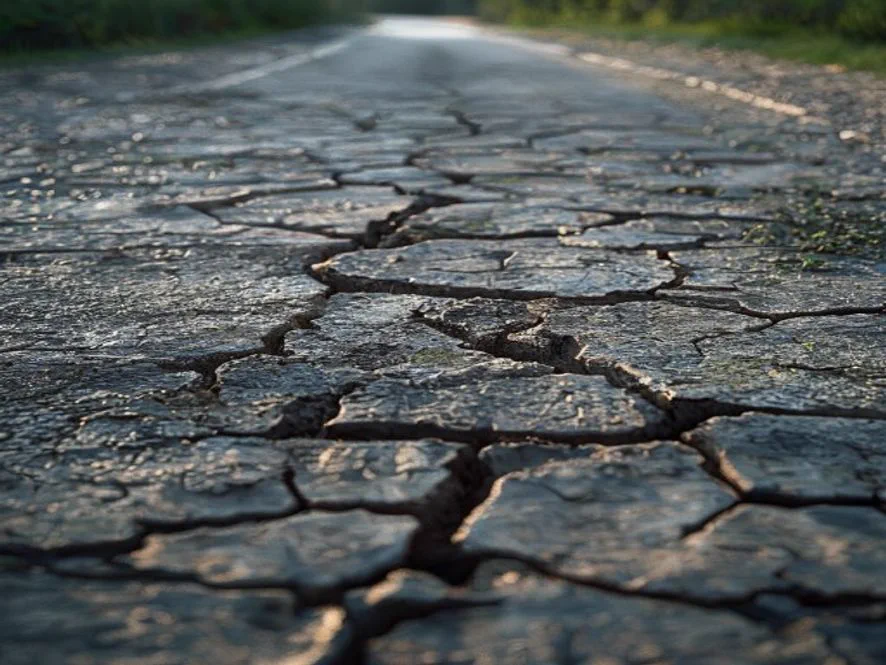
Alligator cracking is the interconnected web of cracks that looks like reptile skin. It is the single most important sign of base failure. A few small patches can be cut out and replaced. But when it spreads across 30 to 40 percent or more of the driveway, the base has failed across the whole surface, and a tear-out is the only lasting fix. Read the full breakdown in our guide to alligator cracking and the wider types of driveway cracks.
- Repairable: One or two isolated patches under 10 percent of the area, base still firm.
- Borderline: 10 to 30 percent, scattered. Cut-out repair plus an overlay may buy years.
- Beyond repair: More than 30 to 40 percent, especially if it spans high traffic lanes.
Sign 2: Sections that sink, flex, or pump under a vehicle
Walk or slowly drive the driveway and watch for movement. If a section visibly flexes, bounces, or pushes up water at the edges when a car rolls over it, the base under that spot has lost its strength. This is called pumping, and it is a clear structural failure. A surface patch cannot stop a section that moves. The fix is to dig out the failed base, recompact, and rebuild. When this shows up in several spots, the whole driveway is usually done. Related reading: driveway settling.
Sign 3: Potholes that keep reopening in the same spot
A pothole is the base poking through. If you patch the same hole twice and it returns within a year, the base in that location has failed and the patch has nothing solid to grip. One stubborn pothole over a soft spot can be cut out and the base repaired. But when potholes keep reopening across multiple locations, the base is failing in many places at once. Patching becomes a treadmill. See how to patch a pothole for when a patch is still worth it, and cold patch vs hot mix for the material choice.
Sign 4: The driveway is past 20 to 25 years old
A well built and maintained asphalt driveway lasts 20 to 30 years. Past the 20 to 25 year mark, the binder in the asphalt has oxidized, the surface is brittle, and small problems multiply fast. Age alone is not a reason to replace. Plenty of 25 year old driveways with sound bases still take an overlay well. But age combined with any of the structural signs above tips the decision firmly toward replacement. For the full lifespan picture, read how long an asphalt driveway lasts.
The National Asphalt Pavement Association notes that asphalt is fully recyclable, so a tear-out is not pure waste. The old material is milled and reused, which keeps replacement cost lower than many homeowners expect.
Sign 5: Standing water that pools after every rain
Asphalt and standing water do not mix. If water pools and sits on the surface after every rain instead of running off, two things are happening. The grade has flattened or the base has settled, and water is now soaking into the structure with every storm. Water under asphalt is the number one cause of base failure, especially through freeze-thaw cycles. The EPA explains how pavement and water interact and why drainage matters. If birdbaths and low spots have turned into base damage, it is often past repair. See standing water fixes and freeze-thaw damage.
Sign 6: The original install was too thin or built on a bad base
Some driveways were doomed from day one. A residential asphalt driveway needs at least 2.5 to 3 inches of compacted asphalt over 4 to 8 inches of compacted aggregate base. If a previous contractor laid 1.5 inches over bare dirt to save money, the driveway will fail early no matter how well you maintain it. You cannot repair your way out of a bad install. Probe a crack edge with a screwdriver and measure the thickness. If it is under 2 inches, an overlay has no structural depth to work with. More on this in problems from a bad install and the residential thickness guide.
Repair or Replace Scorer
Check the signs that apply to your driveway. The score tells you which way the evidence points. This is a guide, not a substitute for a contractor walking the slab.
Check the boxes that match what you see.
What replacement actually costs in 2026
If the signs point to replacement, here is the money. Full tear-out and rebuild runs about 7 to 15 dollars per square foot, or roughly 7,000 to 15,000 dollars for a 1,000 square foot driveway. Resurfacing over a sound base costs about half that, 3 to 7 dollars per square foot. The whole point of reading the signs correctly is to avoid paying for an overlay that fails, then paying again for the tear-out you needed all along. Run real numbers in the driveway cost calculator or the tonnage calculator to size the job.
- Patch a few spots: 200 to 800 dollars. Only worth it if the base is sound.
- Resurface (overlay): 3,000 to 7,000 dollars on 1,000 square feet. Needs a sound base.
- Full replacement: 7,000 to 15,000 dollars on 1,000 square feet. Resets the clock 20 plus years.
How to get an honest second opinion
Contractors who only sell tear-outs will call everything beyond repair. Contractors who only do overlays will call everything repairable. An honest one measures the existing thickness, probes the base, and reads the cracking pattern before recommending anything. Get two or three written quotes and compare scope, not just price. The Better Business Bureau is a quick way to check a contractor's track record before you let them on the property. Score every estimate with the quote checker and watch for the red flags of a bad contractor.
Bottom line
An asphalt driveway is beyond repair when the base has failed, and the six signs above are all clues to that one fact. Widespread alligator cracking, sinking sections, recurring potholes, age past 20 to 25 years, chronic standing water, and a too-thin original install. One sign on its own may still be repairable. Three or more usually means tear-out and rebuild. Use the scorer to gauge severity, then confirm with a contractor who actually measures the base. References for the cost ranges and lifespan figures are on the sources page.