The first 90 days of a new asphalt driveway tell you almost everything about whether it was installed well. Some of what you see is normal cure behavior. Some of it is contractor failure that needs to be fixed under warranty. This guide is the field checklist for telling them apart. If you have not signed yet, also read our asphalt paving scam warning signs and use the quote checker.
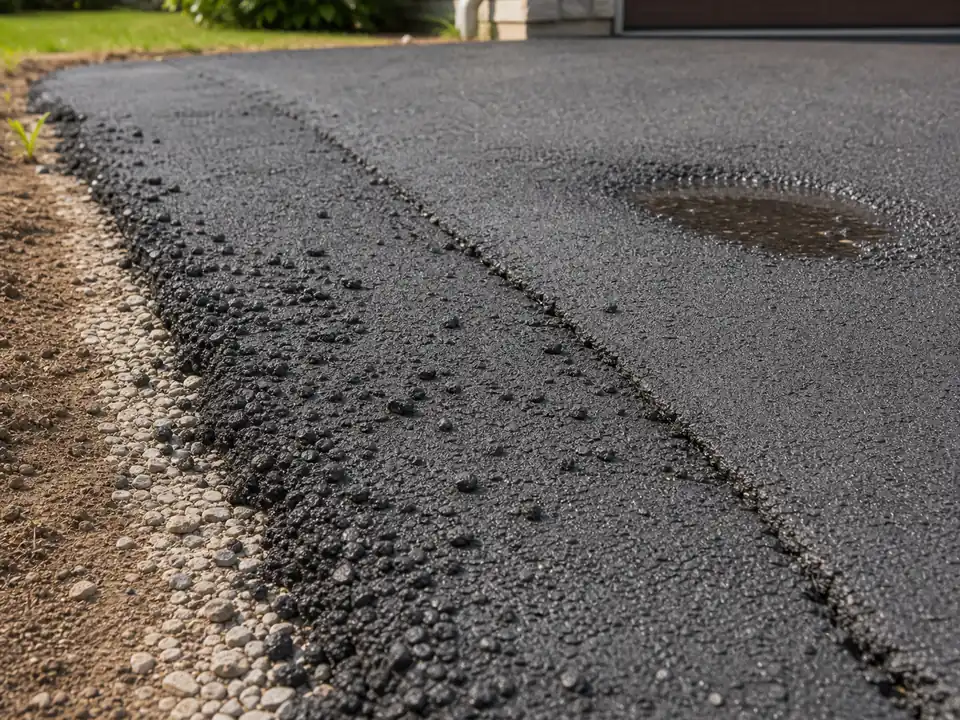
What a good new install actually looks like
- Surface is smooth and even. No visible humps, dips, or rolling waves.
- Color is uniformly black across the whole surface.
- Edges are clean, supported, and well finished.
- Water sheds off in a consistent 1 to 2 percent grade.
- Surface feels firm underfoot, not spongy or soft.
- Garage threshold and street transitions are clean and level.
- No loose stones, sand, or grit on the surface.
- No tire marks left from the contractor's roller or trucks.
What is normal in the first weeks
- Color lightening over months. Black goes slightly gray as oils evaporate. Normal.
- Slight tire marks at first. Until full cure, soft tire impressions can show. They lift over the first weeks.
- Faint roller marks visible at install. Fade in days.
- Slight softness in hot weather. Normal in the first month, especially above 85 degrees.
- Some surface aging in 6 to 12 months. Hairline cracks in year 2 or 3 are normal.
The 10 warning signs of a bad install
Document each of these with photos and the date you saw it.
- Uneven surface or rolling waves. Indicates poor paver operation or rushed compaction. Should not appear on a properly installed surface.
- Low spots that hold water. Indicates poor grading. Water pooling means base saturation is in your future.
- Soft or spongy areas. Persistent softness after 30 days indicates inadequate compaction or weak base.
- Raveling (loose stones on the surface). Indicates the mix was placed too cool, was wrong recipe, or was poorly compacted. Common contractor failure.
- Edge crumbling within months. Indicates no edge support, asphalt feathered too thin at edges, or rushed install.
- Color blotches (some areas darker than others). Indicates mix-temperature differences or seam handling failures during install.
- Visible cold seams within the body of the driveway. A cold seam is where two strips of asphalt meet at different temperatures. Visible cold seams predict cracking.
- Tire marks that do not fade after weeks. Indicates undercompaction or wrong mix design. Signed off as cured by month one.
- Cracks within the first year. Hairline aging cracks are slightly normal in year 2 or 3. Visible cracks within 12 months are not.
- Drainage that backs up against the garage or house. The grade is wrong. Will damage the structure if not fixed.
What "raveling" actually looks like
Raveling is the most-reported new-install defect on homeowner forums. The surface aggregate (small stones in the mix) breaks loose from the binder and sheds onto the driveway like loose gravel. You can sweep up handfuls of stone after the first rain. The Asphalt Institute classifies raveling as a primary indicator of poor placement or compaction. On a new install, raveling is a contractor problem.
What to do if you see warning signs
- Document with photos and dates. Every photo timestamped. Every defect noted in writing.
- Read the warranty terms. Most installs have a 1 to 5 year workmanship warranty.
- Contact the contractor in writing. Email or letter, not just phone. Describe each defect. Reference the contract and warranty.
- Request a site visit. Walk the driveway with the contractor. Get the response in writing.
- If denied, escalate. Local building department, Better Business Bureau complaint, state attorney general consumer division, or small claims court for amounts under the local limit. The FTC consumer site publishes the standard escalation path.
- Get an independent inspection. A neutral asphalt consultant or paving contractor for a 100 to 250 dollar fee. Their written report is leverage. The FHWA distress identification publications are the same reference inspectors use to grade the defects.
How to prevent the bad install in the first place
- Get three quotes. Compare against the same written scope.
- Run each quote through the quote checker.
- Verify license, insurance, and BBB rating before signing.
- Specify compacted thickness in writing. Loose vs compacted is the most common bait-and-switch. See our real bill breakdown.
- Specify base depth and material in writing.
- Specify mix temperature and rolling pattern in writing.
- Be on site during the pour. Take photos.
- Check temperature and weather. Walk if conditions are wrong. See best time to pave.
What about a "good enough" install?
Some defects are cosmetic and not worth the warranty fight. Slight color variation. Faint tire marks that lift over time. A minor seam that does not crack. A perfect install does not exist. The defects worth pursuing are the ones in the warning sign list above, especially soft spots, raveling, drainage failures, and cracks within year one. Those will shorten the driveway by years.
For real homeowner experiences with bad installs, see our regrets from homeowners post. References for the warning sign definitions are on the sources page.