A birdbath is a shallow low spot in an asphalt driveway where water pools instead of draining. They form when the base settles unevenly, the paver left a dip, or traffic compresses a soft area. Fix shallow ones yourself with self-leveling filler or fine cold patch, then sealcoat.
What exactly is a birdbath in a driveway?
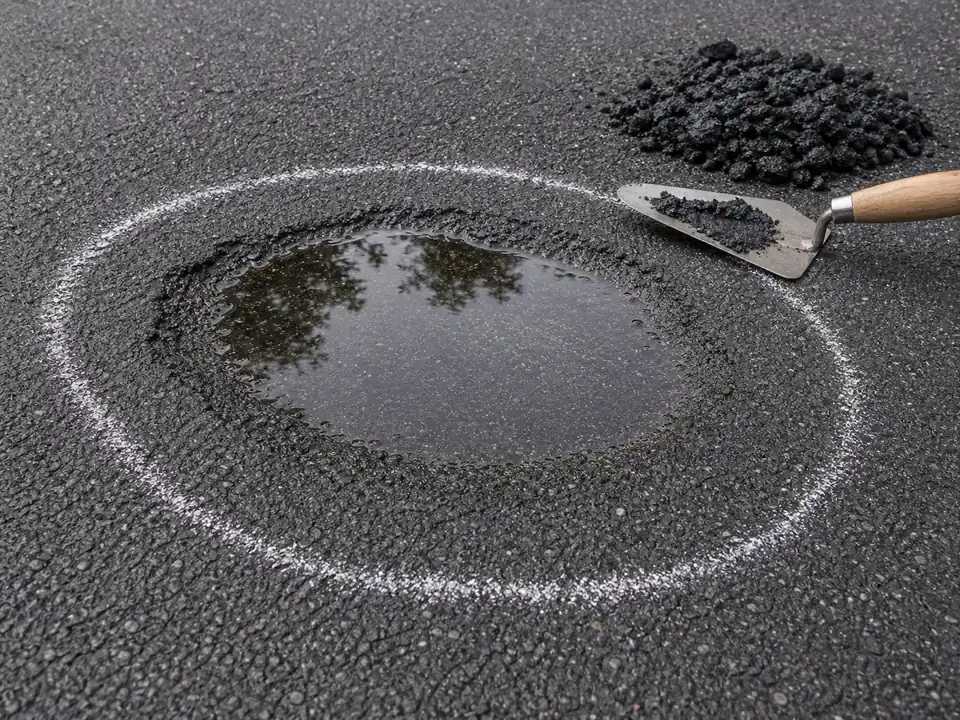
A birdbath is paving slang for a low spot that traps standing water. The name comes from the way birds gather to drink at the puddle. Technically it is any depression where water sits more than an eighth of an inch deep instead of running off to the edges. On a well graded driveway, water should clear within an hour of the rain stopping. If a spot still holds a visible pool the next morning, you have a birdbath.
The reason they matter is simple. Standing water is the slow enemy of asphalt. Water that lingers works into the surface, softens the binder, and during winter it freezes and expands inside the pavement. That cycle pries the mix apart and turns a harmless puddle into cracking and eventually a pothole. Catching a birdbath early keeps a cheap patch from becoming a costly repair.
Why do birdbaths form on asphalt?
Low spots almost always trace back to one of a few causes. Knowing which one you have tells you whether a surface fill will hold or whether the problem will come right back.
- Base settling. If the gravel base was not compacted evenly, soft pockets sink under traffic and the surface dips with them. This is the most common cause and a classic sign of a rushed install.
- Poor grading. A driveway needs a slope of at least 1 to 2 percent to shed water. A flat or slightly reversed section traps it. Our slope and grade guide explains the math.
- Soft subgrade. Clay soil and high water tables hold moisture and heave, leaving uneven settling underneath.
- Heavy static loads. A trailer tongue, dumpster, or vehicle parked in one spot for weeks can press a dent into asphalt that softens in summer heat.
- Bad paving joints. Where the paver overlapped two passes, the seam can sit low if it was not raked and rolled level.
The U.S. Federal Highway Administration notes that drainage and a stable base are the two biggest factors in how long a pavement lasts. You can read more on pavement performance from the FHWA pavements program and on mix and base practice from the National Asphalt Pavement Association.
How deep is too deep? Measuring the low spot
Not every puddle needs fixing. Use a simple depth test to decide. After rain, or after you flood the area with a hose, let the water settle and measure the deepest point with a ruler or a coin stack. Here is the rule of thumb most contractors use.
- Under a quarter inch: usually harmless. It evaporates fast. Watch it but no action needed.
- A quarter inch to one inch: a true birdbath. This is the do-it-yourself sweet spot for filler or cold patch.
- Over one inch, or a wide sunken area: the base has likely failed. This needs a contractor to cut out and regrade, not a surface fill.
To find the deepest point without rain, lay a straightedge or long level across the dip and measure the gap underneath at several points. Mark the outline with chalk so you know the exact area to treat.
Estimator
Birdbath Filler Estimator
Enter the size and depth of your low spot to get a rough idea of how much filler you need and whether it is a do-it-yourself job.
Rough estimate only. Average depth is taken as half the deepest point because a dish shaped birdbath is shallow at the edges. Always check the product label coverage.
How to fix a birdbath step by step
For any low spot from a quarter inch to about one inch deep, this is the full do-it-yourself process. Plan for an afternoon plus cure time, and pick a dry day with no rain in the forecast for at least 24 hours.
- Step 1. Map the low spot. Wet the area with a hose, let it settle, and chalk the edge of the pool so you know the exact size and depth.
- Step 2. Clean and dry. Sweep out grit, scrub off oil or moss with degreaser, rinse, and let it dry fully. Filler will not bond to a dirty or damp surface.
- Step 3. Prime deep spots. For fills over half an inch, brush a thin tack coat or filler primer inside the dip so the new material grips the old asphalt.
- Step 4. Fill the dip. Pour self-leveling filler into shallow spots, or shovel fine cold patch into deeper ones, mounding it slightly above grade to allow for compaction.
- Step 5. Level and compact. Screed self-leveling filler flush with a trowel, or tamp cold patch hard with a hand tamper or a 4x4 block, checking against a straightedge until it matches the surrounding slope.
- Step 6. Cure and seal. Let the patch cure per the label, keep traffic off, then sealcoat the whole driveway so the repair blends in.
The trick that separates a flat repair from a lumpy one is the straightedge check in Step 5. Drag a level or board across the patch from several angles. You want the new material to follow the natural slope of the driveway so water runs off, not to be dead flat, which can create a new low spot on a sloped surface.
Which material should you use?
Matching the product to the depth is half the battle. Using sealcoat to fill a dip is the single most common mistake. Sealcoat cures only about as thick as a sheet of paper, so it can never level a depression.
- Self-leveling asphalt filler. Best for shallow birdbaths under half an inch. It pours like thick syrup and finds its own level. Sets fast, blends well, and needs no compaction.
- Sand-fortified crack filler. Good for shallow spots that also have hairline cracks. Build it up in thin layers.
- Fine cold patch mix. The go-to for half an inch to one inch deep. Compacts into a durable plug. Choose a fine graded mix for a smoother finish than coarse pothole patch.
- Hot mix asphalt. For large or deep areas a contractor mills out. Not practical for a single small birdbath.
Whichever you choose, buy a little extra. Running short mid pour leaves a cold joint that never blends. If you are also tackling cracks the same day, read our guide on sealing driveway cracks so you batch the prep work.
How long it takes and what it costs
A single birdbath is a budget repair. The materials run about 20 to 60 dollars for a small jug of self-leveling filler or a bag of cold patch, and you likely already own the broom, hose, and trowel. Most homeowners finish the active work in one to two hours. Cure time is the long part.
- Self-leveling filler: foot traffic in 4 to 8 hours, light vehicles in 24 hours.
- Cold patch: usable almost right away, but it keeps hardening over 2 to 4 weeks. Avoid sharp turning over it at first.
- Sealcoat over the repair: wait until the patch is fully cured, often a few days, before you seal.
If the base has failed and a pro has to cut out and regrade a sunken area, costs climb to a few hundred dollars or more depending on size. You can sanity check any contractor estimate with our quote checker, and if you are weighing a full fix, see how the numbers compare in our resurfacing cost guide.
How to stop birdbaths coming back
Surface fills last when the cause was minor. To keep new low spots from forming, fix the drainage, not just the symptom. Make sure downspouts do not dump onto the driveway, keep the edges clear so water can run off, and address any settling base before it spreads. Standing water near the edges can also undermine the apron, so check our notes on driveway drainage solutions if puddles keep returning. A regular maintenance schedule with seal coating every 2 to 3 years also keeps the surface tight so water cannot work in.
Bottom line
A birdbath is a low spot that traps water, and it is an early warning that something under or on top of your asphalt is letting moisture sit. Measure the depth, and if it is from a quarter inch to about an inch, fill it yourself with self-leveling filler or fine cold patch, level it to the slope, and sealcoat. Anything deeper or a wide sunken area means the base has failed and needs a contractor. Either way, fixing it now is far cheaper than letting a puddle grow into a pothole.