To seal cracks in an asphalt driveway, clean each crack of weeds and grit, blow it dry, then fill it with a rubberized asphalt crack filler so the bead sits flush with the surface. Let it cure 24 to 72 hours before driving or sealcoating. Always fill, then seal.
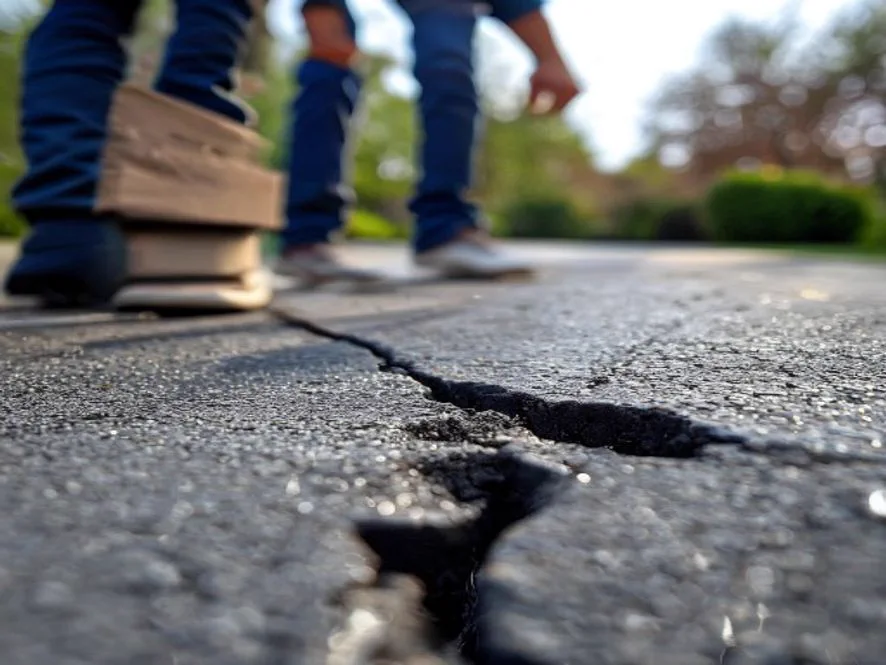
Sealing cracks early is the single cheapest way to extend a driveway's life. Open cracks let water reach the gravel base. Water freezes, expands, and pries the crack wider every winter. Stay ahead of that cycle and you avoid potholes and base failure later. If you want to understand why cracks appear in the first place, our guide on why driveways crack covers the causes. This post is the how-to.
What you need before you start
Crack sealing is a true DIY job for most homeowners. The whole kit costs about 40 to 80 dollars and seals a typical driveway's worth of cracks. Gather these before you open a bag or bottle.
- Crack filler: Rubberized pourable filler in a bottle or jug for narrow cracks. Hot-pour rubberized sealant or a heavier emulsion for wider ones. Expect 8 to 20 dollars per bottle or jug.
- Backer rod: Foam rope for deep cracks. It controls how much filler you use and stops it draining away. A few dollars per roll.
- Cleaning tools: A wire brush or flat screwdriver, plus a leaf blower or compressed air. A weed puller or spot weed killer if weeds are growing in the cracks.
- Application tools: A caulk gun for cartridge filler, a putty knife or trowel to smooth, and gloves. Hot-pour products need a melter or a specific applicator wand.
Picking the wrong product is the most common early mistake. A thin, water-based "all-in-one" sealer poured into a moving crack will fail by spring. If you are unsure which type fits your cracks, the sealer types comparison and coal tar vs asphalt emulsion guides explain the differences in plain terms.
Step 1: Inspect and measure the cracks
Walk the driveway and look at each crack. Width and depth decide the product and tell you whether this is even a crack-sealing job at all.
- Under 1/4 inch wide: Hairline and small surface cracks. Bottle or pourable filler.
- 1/4 to 1 inch wide: Heavier pourable or hot-pour rubberized sealant. Use a backer rod if the crack is deep.
- Over 1 inch wide, or interconnected: This is no longer crack sealing. Wide gaps need patching and interconnected "alligator" cracking points to base failure. See how to fix large cracks and alligator cracking repair for those.
Step 2: Clean the crack thoroughly
This is the step homeowners rush, and it is the one that decides how long the seal lasts. Filler bonds to clean, dry asphalt. It does not bond to dust, dirt, or roots.
- Remove vegetation: Pull or kill any weeds rooted in the crack. Filler poured over a live root fails fast. Our weeds in driveway cracks guide covers killing them for good.
- Scrape loose material: Drag a flat screwdriver or stiff wire brush down the crack to dig out grit, sand, and crumbled edges.
- Blow it clean and dry: Finish with a leaf blower or compressed air. The crack must be bone dry. Wait at least 24 hours after rain.
If the whole surface is dirty or stained, give it a wash first. The driveway cleaning guide and oil stain removal cover that without softening the asphalt binder.
Step 3: Prep deep cracks with backer rod
For cracks deeper than about half an inch, push a foam backer rod into the crack until it sits just below the surface. The rod gives the filler a floor to rest on, controls depth, and stops you from pouring filler endlessly into a deep void. Skipping this on a deep crack wastes material and leaves a fill that sinks as it cures.
Step 4: Fill the crack
Apply the filler in a steady bead, starting slightly below flush. Pourable products self-level, so give them a minute to settle, then top off so the filler sits even with the road surface. The goal is flush, never proud.
- Narrow cracks: Pour or squeeze filler straight in, let it level, add a second pass if it sinks.
- Wider cracks: Fill in two passes for cracks near an inch. Let the first set briefly so the second does not slump.
- Avoid humps: A raised bead gets sheared off by tires and pulls out the rest with it. Keep it flush.
Step 5: Smooth, then let it cure
Smooth the bead with a putty knife or trowel so it blends with the surface. Then leave it alone. Most cold pourable fillers are walkable in 24 to 48 hours and drivable in 24 to 72 hours, longer in cool or humid weather. Hot-pour sets in minutes but still needs a cool-down. Do not park, turn tires, or sealcoat over a fill that has not cured. The label cure time is the rule.
Crack filler estimator
Rough out how many bottles or jugs you need based on the total length of crack and the average width. This is a planning estimate. Always buy one extra.
Seal cracks first, then sealcoat
Crack sealing and sealcoating are two different jobs in a fixed order. Fill and cure cracks first. Then, if the surface is due, sealcoat the whole driveway. Sealer is a thin coating that protects the surface from sun and water. It is not a crack repair. If you sealcoat first and try to fill cracks afterward, the filler will not bond and the sealer re-cracks at the same lines. For the full coating job after your cracks cure, follow the sealcoat prep guide and estimate gallons with the sealer calculator.
Timing, weather, and how often to repeat
Seal cracks in dry weather between about 50 and 85 degrees Fahrenheit, late spring through early fall. Avoid filling right before rain or a hard freeze. Fall sealing before winter is ideal because it shuts water out before the freeze-thaw cycle widens the cracks. The U.S. EPA notes that proper pavement maintenance reduces runoff and surface degradation, and the National Asphalt Pavement Association treats timely crack sealing as core preventive maintenance. Plan to inspect cracks every spring and re-fill as needed; most fills last one to three years before a touch-up. Build it into a routine with our driveway maintenance schedule.
Bottom line
Sealing driveway cracks is simple if you respect the order: inspect, clean, prep, fill, cure. Match the product to the crack width, keep the fill flush, and never sealcoat over a crack you have not cured. Do it in dry, mild weather and check again each spring. A 40 dollar afternoon of crack sealing can push back a multi-thousand dollar resurface or replacement by years.