Paving a long rural asphalt driveway costs about 4 to 8 dollars per square foot, or roughly 7 to 15 dollars per linear foot for a 10 to 12 foot lane. A 500 foot drive often runs 20,000 to 55,000 dollars. Base prep, drainage, and access drive that range far more than the asphalt itself. Get a fast range from our driveway cost calculator.
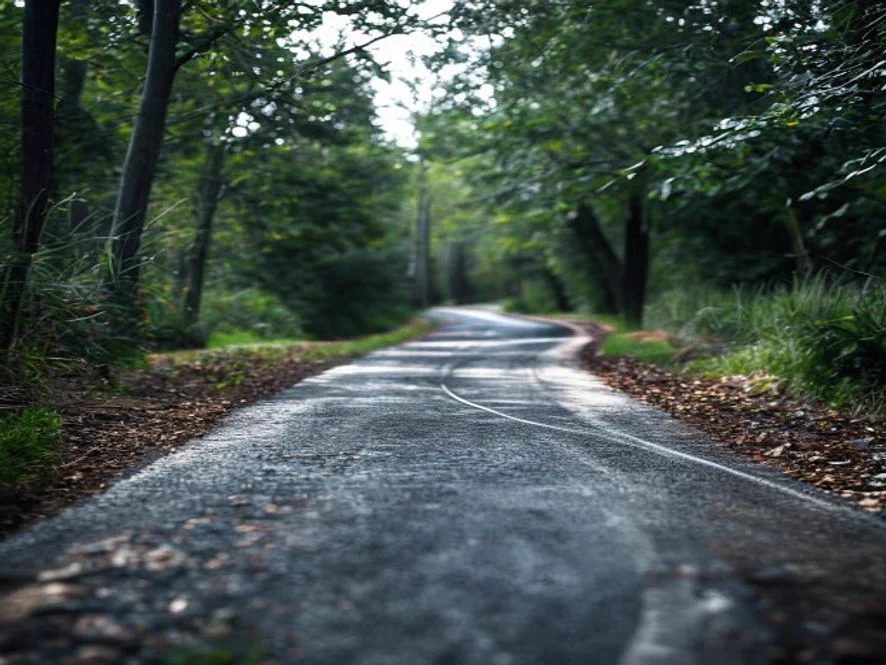
How much does a long rural driveway cost?
Cost on a country driveway is best measured per square foot, not per total job, because length and width swing the number so much. Installed asphalt over a proper base runs about 4 to 8 dollars per square foot. For a 10 to 12 foot wide lane, that works out to roughly 7 to 15 dollars per linear foot. The cheaper end assumes good access and an existing compacted base. The high end reflects new base, drainage work, and a remote site.
- 250 feet at 12 feet wide. About 3,000 square feet, or roughly 12,000 to 24,000 dollars installed.
- 500 feet at 12 feet wide. About 6,000 square feet, or roughly 24,000 to 48,000 dollars, often more with heavy base work.
- 1,000 feet at 12 feet wide. About 12,000 square feet, where the rate per foot drops but the total can pass 60,000 dollars.
One upside of length is scale. The crew pays to mobilize equipment and a paver once, so a long run spreads that fixed cost over more surface and lowers your per-foot price. To see how size alone moves the budget, compare your numbers against our cost by size table and your local market in the cost by region guide.
Why does rural paving cost more per trip?
Hot mix asphalt is a perishable material. It leaves the plant near 300 degrees and must be laid and compacted before it cools below a workable temperature. The farther you are from the plant, the less usable mix arrives per truck, and the more those haul miles cost. A site 40 minutes from the nearest plant is a different bid than one 10 minutes away.
Remote sites add other costs too. Narrow access roads, soft shoulders, low bridges, and tight tree lines can block the paver or the dump trucks. Moving heavy equipment to a far property carries a mobilization fee that a suburban job near town does not. These are the same reasons rural quotes look high, and they are normal. Our breakdown of why quotes vary so much covers the line items to watch, and the hidden costs guide flags the extras that surprise rural owners.
Asphalt, gravel, or millings for the length?
On a long rural drive, you do not have to pick one material for the whole run. Many owners pave the sections that need it and leave the rest cheaper. Match the material to the slope, the traffic, and the budget.
- Gravel. Cheapest upfront, often under 2 dollars per square foot, but it ruts, washes out, and needs regrading every year or two. Fine for flat, low-traffic stretches. See the full asphalt vs gravel comparison.
- Recycled asphalt millings. A middle option that binds tighter than loose gravel and costs less than new asphalt. Weigh it in our millings vs gravel guide and the recycled asphalt pavement notes.
- Hot mix asphalt. The most durable. Lasts 15 to 20 years, sheds snow cleanly, and plows without tearing up. Best for steep sections, curves, and the area near the house and garage.
- Tar and chip. A rustic, lower-cost paved look common on country lanes. Compare it in our asphalt vs tar and chip guide.
A common split is to pave the first and last few hundred feet, where you accelerate, brake, and turn most, and leave a long flat middle in millings or gravel. That alone can cut a five-figure project by a third.
How wide should it be, and where do you widen?
Width is a safety and cost decision at the same time. A single lane at 10 feet is the minimum, but 12 feet is the practical standard so delivery trucks, propane tankers, and emergency vehicles fit without dropping a wheel off the edge. Every extra foot of width across hundreds of feet of length adds real money, so plan it on purpose rather than guessing.
- Through lane. 10 to 12 feet for one vehicle. Go 12 if trucks visit often.
- Pullouts. Widen to 16 to 20 feet for 30 to 40 feet of length every few hundred feet so two vehicles can pass.
- Curves. Add 2 to 4 feet of width through bends. Long vehicles track wider through a turn than a car does.
- Turnaround. Build a paved apron or hammerhead near the house so trucks do not back the whole length. See our turnaround and parking design guide.
For the full sizing logic, including apron and edge treatment, read our driveway width and dimensions guide before you stake the route.
Base and drainage decide whether it lasts
On a long rural driveway, the asphalt is the thin part of the story. What carries the load and survives freeze and thaw is the compacted aggregate base under it. Plan on 2.5 to 3 inches of compacted asphalt over 6 to 8 inches of compacted crushed stone. If you take delivery trucks, an RV, or farm equipment, step the asphalt up to 3 to 4 inches and thicken the base. Our base prep guide and residential thickness guide walk through the numbers, and the heavy vehicle thickness notes cover loaded axles.
Water is the number one killer of long driveways. A drive that runs hundreds of feet across open ground collects a lot of runoff, and standing water under the surface destroys the base from below. The fixes are simple but non-negotiable.
- Crown the surface. A slight peak in the center sheds water to both sides instead of pooling in the wheel paths.
- Cut roadside ditches or swales. Carry runoff alongside the drive and away from the base.
- Add cross culverts. Pipe water under the driveway at low points so it does not dam against one side.
- Mind the grade. Keep slope between 2 and 8 percent where you can. See our slope and grade guide and drainage solutions.
The Federal Highway Administration and the National Asphalt Pavement Association both treat drainage and a solid base as the foundation of pavement that lasts, and that engineering logic scales straight down to a private country drive.
Rural Driveway Cost Estimator
Enter your driveway length and width to see a rough installed-asphalt range and the square footage. These are planning numbers for a paved lane over a proper base, not a quote.
Tips that keep a long rural drive healthy
The work does not end when the paver leaves. A long driveway has more surface exposed to sun, water, roots, and freeze cycles than a short suburban one, so the maintenance habits matter more.
- Keep the edges supported. Rural drives have no curb, so edges crumble first. Backfill the shoulders with gravel and keep grass off the asphalt. See our edge crumbling fix.
- Stay ahead of cracks. Seal cracks early before water gets into the base. Our crack sealing guide shows the routine.
- Watch the tree line. Roots from a wooded lane lift and crack pavement. Read about tree roots pushing up asphalt.
- Sealcoat on schedule. A long drive is a big sealing job, but skipping it shortens the life. Follow a maintenance schedule.
- Plow with care. Use a plow shoe and skid plate so you do not gouge the surface over a long winter season.
Hiring and budgeting for a big job
A long rural driveway is one of the larger paving jobs a homeowner ever buys, so the contractor choice and the contract matter. Not every crew is set up to haul mix far or work a remote site, so get bids from companies that pave rural roads, not just suburban driveways. Confirm the bid lists asphalt thickness, base depth, drainage work, and crown in writing, then run it through our quote checker and the paving contract checklist.
Because the totals are large, financing comes up often. Phasing the job, paving the critical sections now and the flat middle later, is one way to spread cost without leaving the drive unusable. Our financing options guide and how to compare quotes help you weigh the numbers and avoid the lowball traps in our lowball warning signs guide. You can also reference our full sources page for the data behind these ranges.
Bottom line
Paving a long rural asphalt driveway costs roughly 4 to 8 dollars per square foot, with a 500 foot lane landing near 24,000 to 48,000 dollars. The asphalt is the easy part. The base, the drainage, the width, and the access are what decide whether the drive lasts 20 years or falls apart in five. Build 2.5 to 3 inches of asphalt over a thick compacted base, crown the surface and cut ditches so water leaves, widen the lane at curves and pullouts, and consider paving the steep and high-traffic sections while leaving flat stretches in millings or gravel. Get the foundation right and a long country driveway pays you back every day you drive it.