Good asphalt driveway drainage comes from slope. Set a grade of at least 1 to 2 percent, about an eighth to a quarter inch of drop per foot, so water runs off instead of pooling. Where slope alone is not enough, add a trench or French drain at the low edge and redirect downspouts. Our slope guide covers the math.
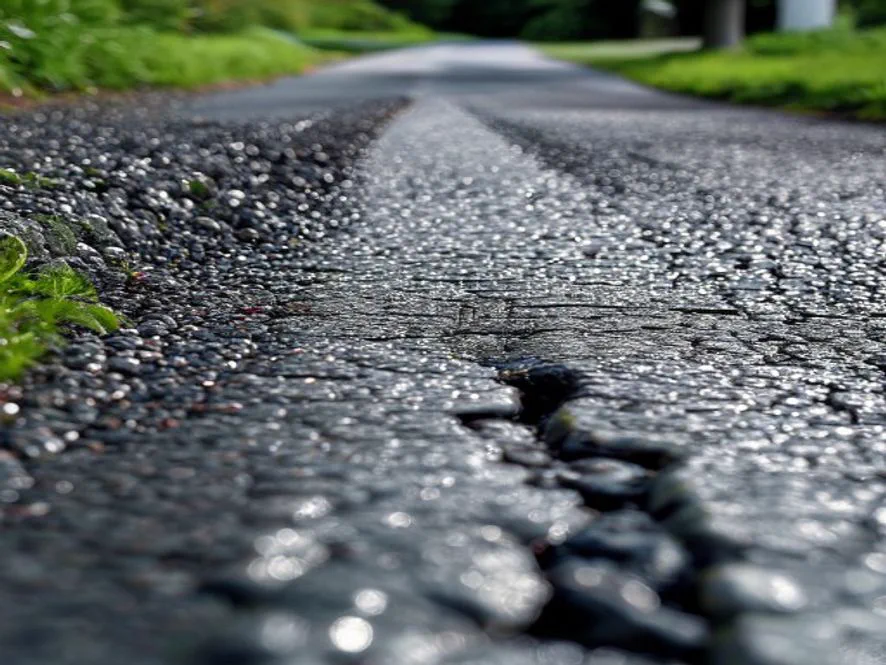
What slope does an asphalt driveway need to drain?
The single most important number in driveway drainage is the slope. Asphalt needs a grade of at least 1 to 2 percent to move water off the surface reliably. In plain terms, that is an eighth of an inch of fall for every foot of run at the low end of the range, and a quarter inch per foot at the high end. Over a 20 foot driveway, a 2 percent slope drops about 5 inches from top to bottom. That feels almost flat to walk on but is plenty to keep water sheeting toward the edge.
You have two basic ways to shed water. A driveway can pitch lengthwise, draining from the garage down to the street, or it can carry a cross slope that sends water sideways to one edge. Many driveways combine both. The Federal Highway Administration treats drainage and a stable base as the two biggest drivers of pavement life, and you can read more from the FHWA pavements program and on mix and base practice from the National Asphalt Pavement Association. Anything under about 1 percent risks pooling, and anything over 12 to 15 percent gets steep enough to scrape low cars and shed gravel.
Why does water pool on my driveway?
Pooling is a symptom, and the cure depends on the cause. Walk the driveway during a rain or flood it with a hose and watch where the water collects. One of these is almost always to blame.
- Flat or reverse grade. The surface was paved too level, or it actually slopes back toward the house or garage. This is a grading mistake at install and a classic sign of a rushed job.
- Settled base. A soft pocket in the gravel base sinks under traffic, leaving a dip. These low spots are called birdbaths.
- Downspouts dumping on the driveway. Roof runoff concentrated onto asphalt overwhelms even a decent slope.
- Yard draining toward the pavement. If the surrounding soil pitches toward the driveway, water pools at the edge and seeps under.
- Clogged or missing edge drains. Water that should run to a swale or drain has nowhere to go.
Whatever the cause, the damage path is the same. Standing water softens the asphalt binder, works through hairline cracks into the base, and during winter it freezes and expands. That freeze thaw cycle pries the mix apart and turns a harmless puddle into cracking and eventually a pothole.
How to measure your driveway slope
You do not need a survey crew to check your grade. You need a tape measure, a string, and a string line level, which costs a few dollars. Here is the field method contractors use.
- Set the string. Tie a string from the high point of the driveway to a stake at the low end, pulled tight and level using the line level bubble.
- Measure the run. Measure the horizontal distance the string covers in feet. This is your run.
- Measure the drop. At the low stake, measure straight down from the level string to the pavement. This is your rise, in inches.
- Do the math. Slope percent equals rise in inches divided by run in inches, times 100. So a 5 inch drop over 20 feet is 5 divided by 240, times 100, which is about 2 percent.
Check several lines across the driveway, not just the center, because a low spot or reverse pitch often hides off to one side. The estimator below does the math for you.
Estimator
Driveway Slope Checker
Enter the length of your driveway run and the drop from the high end to the low end to see if your slope drains well.
Rough guide only. Aim for 1 to 2 percent. Under 1 percent risks pooling. Over 12 percent gets steep. Always confirm with a contractor before regrading.
How to fix driveway drainage step by step
Work from cheapest to most involved. Many drainage problems are solved by redirecting the source before you ever touch the asphalt. Plan a dry weekend and tackle these in order.
- Step 1. Find where water goes. Flood the driveway with a hose or watch it during rain. Mark every spot that pools and note which way the surface drains.
- Step 2. Measure the slope. Use the string line method above to find your slope percent and spot any reverse pitch.
- Step 3. Redirect the source. Extend downspouts past the driveway with flexible piping and regrade nearby soil so the yard drains away from the pavement, not onto it.
- Step 4. Level low spots. Fill shallow birdbaths with self-leveling filler or fine cold patch, sloped to match the driveway so water runs off rather than sitting.
- Step 5. Add a drain at the low edge. Cut in a trench or channel drain across the low end, or install a French drain along the edge to catch and pipe water to daylight or a dry well.
- Step 6. Regrade if the pitch is wrong. If the whole surface slopes the wrong way, have a contractor mill and overlay or repave to set a clean 1 to 2 percent grade.
Steps 3 and 4 fix most homeowner complaints. Steps 5 and 6 are for structural slope problems that no amount of patching will solve. If you reach the regrade stage, treat it like any paving job and use our paving contract checklist so drainage targets are written into the scope.
Which type of drain is right for your driveway?
Once the slope and runoff are handled, a drain catches whatever is left. The right one depends on whether you are dealing with surface runoff or groundwater.
- Trench or channel drain. A long grated channel set across the low end of the driveway. Best for sheet flow running down a sloped driveway toward a garage or street. It catches a wide band of water and pipes it away.
- French drain. A gravel filled trench with a perforated pipe that collects groundwater along the edge. Best when the problem is water soaking in from the side or a high water table. See our French drain guide for the build.
- Catch basin. A boxed grate inlet that sits at a single low point and drops water into a buried pipe. Good for one stubborn dip you cannot regrade out.
- Swale or grade break. A shallow grassed channel beside the driveway that carries water away on the surface. The simplest option when you have room in the yard.
A permeable surface is a different approach entirely, letting water pass through the pavement into a stone reservoir below. If you are repaving anyway, weigh the permeable asphalt option. The U.S. Environmental Protection Agency explains how permeable pavement manages stormwater at the EPA site.
Special cases: hills, long, and shared driveways
Some layouts need extra drainage planning. A driveway on a slope sends a lot of water fast, so a channel drain at the base and a trench across the apron keep it from flooding the garage. Our notes on a driveway on a hill and the steep driveway paving guide cover the grade limits.
Long rural driveways often run alongside ditches and culverts that must stay clear so the driveway does not act like a dam during heavy rain. A shared driveway needs an agreement on who maintains the drains, since one neighbor's clogged channel floods both properties. In every case, the goal is the same: give water a clear, sloped path off the asphalt and to a safe outlet.
How much does fixing drainage cost?
Costs scale with how deep the problem runs. Surface fixes are cheap. Structural regrading is not.
- Leveling a low spot: 50 to 200 dollars in materials if you do it yourself.
- Extending downspouts and minor yard regrading: 100 to 500 dollars, often a weekend project.
- Channel or trench drain installed by a contractor: typically 1,000 to 3,000 dollars depending on length and how the asphalt is cut and patched.
- French drain along an edge: 1,500 to 4,000 dollars depending on length and outlet distance.
- Milling and regrading or repaving for slope: several thousand dollars, scaling with driveway size.
Before you sign anything, get the slope target in writing and sanity check the bid with our quote checker. If a full repave is on the table, size the job with the driveway cost calculator so you know whether the drainage fix is a patch or a rebuild.
Bottom line
Drainage is mostly about slope. Set the surface to fall at least 1 to 2 percent, keep downspouts and the surrounding yard from dumping water on the pavement, and level any low spots that trap puddles. When slope alone is not enough, a trench, channel, or French drain at the low edge carries the rest away. Fixing drainage now is far cheaper than letting standing water crack the surface and fail the base, so measure your grade today and start with the cheapest fix that works.