Asphalt driveway edges crumble because the outer edge has no lateral support. The unconfined edge sits on soft soil, water erodes the base, tires ride over it, and freeze and thaw cycles loosen the bond. Fix it by squaring the edge, patching in lifts, then building a supportive shoulder or border.
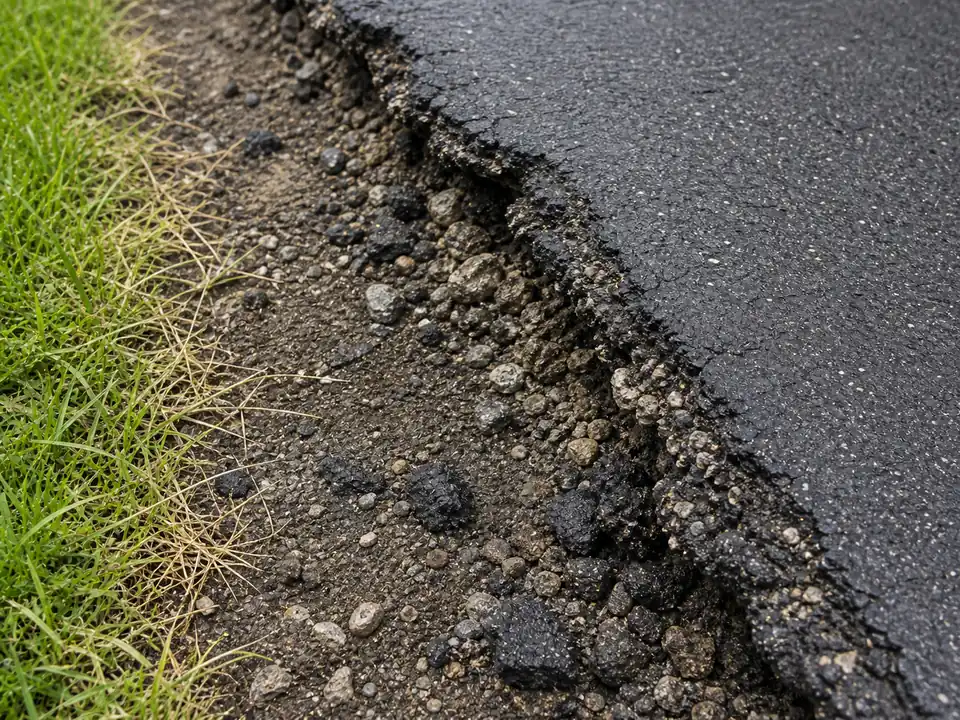
Why asphalt driveway edges crumble first
The edge is the weakest part of any asphalt driveway. The middle of the slab is confined on all sides, so the aggregate and binder stay locked together under load. The outer edge has asphalt on one side and open air or soft dirt on the other. That missing confinement is the root cause of nearly every crumbling edge you will ever see.
Several forces pile on top of that weak point at the same time:
- No lateral support. If the soil or gravel shoulder beside the edge is lower than the asphalt, the edge has nothing to push against. It cracks off in chunks.
- Water erosion. Runoff that sheets off the edge washes out the base material underneath. Once the base is gone, the unsupported asphalt snaps. See our drainage solutions guide for fixes.
- Tire loading. Drivers who cut the corner and ride the last two or three inches of edge crush it. Edges were never meant to carry a wheel.
- Freeze and thaw. Water that soaks into the porous edge expands when it freezes and pries the aggregate loose. This is called raveling. The U.S. Federal Highway Administration documents how freeze and thaw drives pavement edge breakdown.
- Thin or untapered edges. A good install tapers or thickens the edge. A cheap one leaves a thin feathered edge that fails in the first year.
Crumbling edge or something worse? How to tell
Most edge crumbling is cosmetic and local, which means a simple patch fixes it. But the same symptom can signal a deeper problem, so look closely before you grab the cold patch.
- Surface raveling only. Loose stones and a rough, sandy edge with the slab still solid underneath. This is the easy fix.
- Edge breaking off in chunks. Pieces lifting away usually means base washout or no shoulder support. You will need to rebuild support too.
- Cracks running inward from the edge. If the damage connects to larger cracking patterns, treat the cracking first.
- Sinking near the edge. A dropping edge points to a base or grading failure. Compare with our settling repair guide.
If the edge damage is widespread, paired with deep cracks across the whole surface, and the driveway is past 20 years old, repair may be throwing money at a dying slab. Our guide on when a driveway is beyond repair walks through that decision.
How to fix a crumbling asphalt edge step by step
This is a weekend do it yourself project for most homeowners. Pick a dry day above 50 degrees Fahrenheit. You need cold patch or hot mix, tack coat, a tamper, and gravel or soil for the shoulder.
- Step 1. Clean and remove loose material. Sweep and vacuum out every loose stone and crumb until you reach sound, solid asphalt. A clean cavity is the difference between a patch that lasts five years and one that pops out by spring.
- Step 2. Square the edge. Use a circular saw with a masonry blade or a sharp spade to cut the ragged edge back to a straight vertical face on solid asphalt. Patches bond to a clean wall, not to crumbs.
- Step 3. Apply tack coat. Brush asphalt tack coat or emulsion onto the cut face and the exposed base. This glue layer bonds new asphalt to old and stops the patch from peeling.
- Step 4. Fill and compact in lifts. Pack cold patch or hot mix in two inch lifts. Compact each lift hard with a hand tamper or plate compactor before adding the next. Skipping compaction is the number one reason patches fail.
- Step 5. Feather and seal. Shape the surface flush with the driveway, compact one final pass, and seal the joint after it cures. Our crack sealing guide covers the joint seal step.
- Step 6. Build shoulder support. Pack compacted gravel or topsoil against the new edge, level with the asphalt surface. This is the step most people skip, and it is why their edge crumbles again.
For a related corner failure, the same method applies in our corner damage repair. If the edge is part of a larger pothole, switch to the pothole patching method instead.
Estimator
Edge Repair Material Estimator
Enter the length of crumbling edge and how deep and wide the damaged channel is. This estimates the cold patch you need and a rough cost.
Rough planning estimate only. A 50 lb bag of cold patch covers about 0.5 cubic feet compacted. Buy 10 to 15 percent extra for waste and compaction.
How to stop the edges from crumbling again
Patching the edge without adding support is a temporary fix. The reason the edge failed is still there. Lock the repair in with one or more of these:
- Build a flush shoulder. Compacted gravel or topsoil packed level with the asphalt gives the edge something to lean on. This alone solves most repeat failures.
- Add a paver or brick border. A hard border confines the edge permanently and looks sharp. See paver border ideas and broader edging options.
- Fix the drainage. Grade the soil to run water away from the edge. A french drain handles stubborn runoff.
- Keep tires off the edge. Reflective markers or a border keep wheels off the vulnerable last few inches.
- Seal on schedule. Sealcoating protects the porous edge from water. Follow a real maintenance schedule so the edge never dries out and ravels.
What edge repair costs
A do it yourself edge repair is cheap. Expect about 30 to 120 dollars for cold patch bags plus a tamper rental if you do not own one. The estimator above gives a tighter number for your exact edge.
A professional edge repair runs roughly 300 to 1200 dollars depending on the length of edge, depth of damage, and whether shoulder grading or a paver border is added. A full edge re-pour on a long driveway can reach the upper end. If a contractor quotes you a full driveway replacement for an edge problem, get a second opinion and run the number through our quote checker. The Better Business Bureau is a good place to vet a contractor before you sign.
Bottom line
Crumbling edges are normal because the edge is the least supported part of the driveway. The fix is straightforward. Clean it, square it, tack it, patch it in compacted lifts, then add the lateral support that was missing in the first place. Skip the support step and you will be patching the same edge next year. Add it once and the repair holds for years. For broader context on why driveways break down, the National Asphalt Pavement Association publishes solid homeowner guidance.