A 3,500 dollar bid on a driveway the other two contractors priced at 7,000. It looks like a steal. It is almost never a steal. A lowball bid wins by cutting something out. This guide names the nine things lowball bids most often cut, what each one costs you later, and how to spot the cuts before the paver shows up. For broader contractor warning patterns see red flags of a bad paving contractor. To audit a single quote, run it through the quote checker and benchmark the price against the 2026 Asphalt Driveway Cost Report.
How cheap is too cheap in 2026
The 2026 national average for installed residential asphalt is 5 to 10 dollars per square foot. Any quote under 5 is hiding scope. A 600 sq ft driveway should cost 3,000 to 6,000 dollars at the low end. Anything under 3,000 is a lowball trap. Read more on per sq ft anchors in asphalt cost per square foot in 2026. The cheapest quote on a clean scope is rarely more than 15 percent below the median. If it is 40 percent below, the math has to come from somewhere. Here is where it comes from.
1. Thin asphalt (under 2 inches compacted)
The fastest way to drop a quote is to thin the asphalt. A 1.5 inch compacted lift saves 40 percent on material versus 2.5 inches. The contractor pockets the difference. Most homeowners cannot see the thickness once the asphalt is rolled. The problem shows up in year two or three. Thin asphalt cracks at the edges, alligators in the wheel paths, and starts to potholing by year five. Real residential asphalt is 2.5 inches compacted minimum. Anything less is a future tear-out and re-pave at your cost. The National Asphalt Pavement Association publishes minimum lift thickness guidance.
2. No real base aggregate
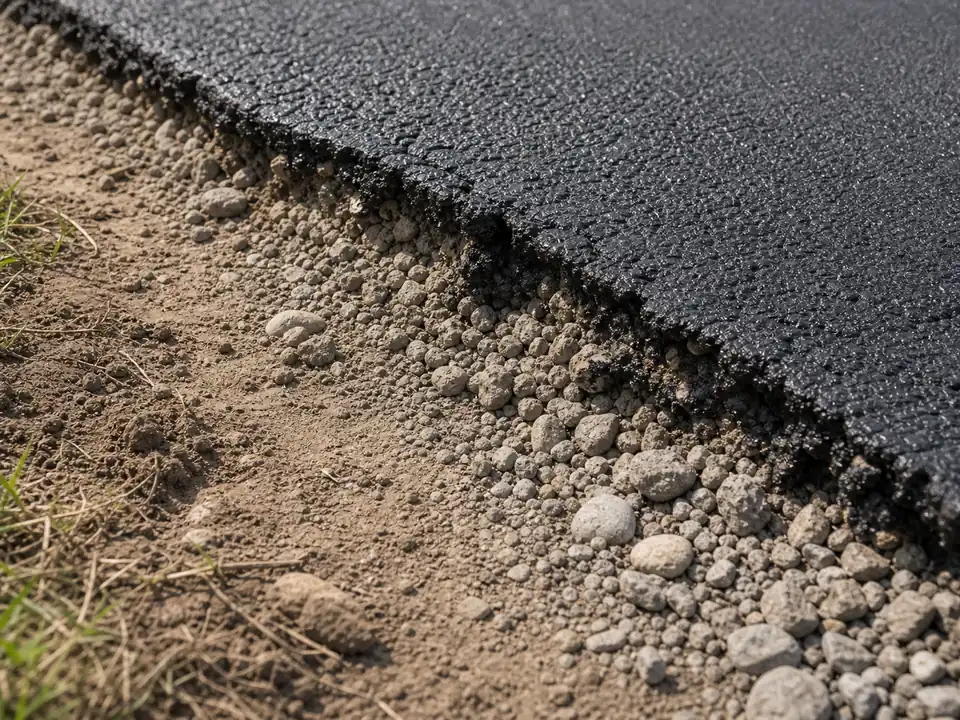
The second-fastest cut. The base aggregate under the asphalt is half the life of the driveway. A standard residential base is 4 to 6 inches of compacted dense-graded crushed stone. Lowball jobs skip this entirely, or roll one inch of stone into the existing soil and call it a base. Without a real base, the driveway settles unevenly within two winters. Tree roots come through. Water pools in the low spots. The fix is to tear out the entire driveway and start over. See asphalt driveway problems from a bad install for the failure timeline.
3. No tear-out of the old surface
Overlay over a cracked old driveway looks like new asphalt on day one. By month six, every old crack has telegraphed through the new layer. This is called reflective cracking. It is the most common reason a homeowner says "the new asphalt cracked in the first year." It did not. The new asphalt is fine. The old crack came up through it. A reputable contractor either tears out the old asphalt or refuses to overlay a heavily cracked surface. A lowball quote pretends overlay is the same product as a tear-out and replace. It is not.
4. Skipped drainage work
If your driveway sheds water against the garage, into a flower bed, or onto the public sidewalk, drainage is part of the job. A lowball bid grades for surface runoff and stops there. The actual drainage hardware (culvert, trench drain, French drain, catch basin) is either not in the quote or is "by others." The driveway is fine for two winters. Then the water finds the base and the freeze-thaw cycle takes it apart from below. Lifespan drops by 5 to 10 years. The hidden costs guide has typical drainage adders.
5. No permit pulled
Permits are required when the work touches the public right of way, adds a curb cut, or expands the apron. The fee is small (20 to 200 dollars). A lowball contractor skips the permit and the inspection. You save 100 dollars on day one. You can lose 5,000 dollars at sale time when the inspector finds an unpermitted curb cut and orders it torn out and re-poured. The FTC home improvement contract guide recommends permits on any work that touches utilities or the right of way. Ask which permits are required and who is pulling them. Get the answer in writing.
6. No warranty (or one that excludes everything)
Real residential asphalt warranties are 1 to 5 years on workmanship. A lowball contractor either offers no warranty or offers a "lifetime" warranty with so many exclusions that nothing is covered. Read the exclusions before you read the headline. Common voiding clauses on lowball warranties include heavy vehicles, sealcoat by another company, cracks from "natural settling," and any oil stain at all. If everything voids it, you do not have a warranty. See the warranty guide for how to read past the headline.
7. Uninsured crew (and no worker's comp)
Liability insurance and worker's comp run a real contractor 8 to 15 percent of revenue. Skip both and the bid drops by 1,000 dollars on an average job. The problem is that if a worker is hurt on your property and there is no worker's comp, the homeowner's policy is the next stop. Your insurance company can sue the contractor, but you may pay the deductible and the rate hike first. Call the carrier on the quote and confirm the policy is active. The Better Business Bureau tracks insurance complaints in contractor records.
8. Leftover hot mix pitch on paving day
This is the oldest paving scam in the book. A truck rolls up your driveway unannounced. The crew says they just finished a big job down the street and have leftover hot mix they can lay cheap. The pitch sounds like a deal. The reality is the mix is often the wrong residential spec, has been sitting in the truck for hours and is cooling fast, and gets rolled in a rush over no base prep. Lifespan is 2 to 5 years. The BBB publishes annual warnings on this exact pitch every paving season. Real paving jobs are scheduled, measured, and quoted in writing. A door-knock with same-day install is a no.
9. Bait-and-switch on paving day
The lowball bid wins your signature at 3,500. The crew shows up. Halfway through, the foreman finds "unexpected" soft spots, hidden concrete, or root mass. The change order comes with a 3,000 dollar adder, take it or leave it. The driveway is half torn out at this point. Most homeowners pay. The bid that looked cheap is now 6,500. Sometimes more than the honest bids you turned down. The cure is a written scope of work with named change-order triggers. See paving contract checklist for the change-order clauses to insist on.
How to test a cheap quote before signing
You do not have to walk away from every cheap quote. Some local contractors are honestly cheaper. The way to tell is to ask five questions and read the answers carefully.
- What is the compacted asphalt thickness in inches?
- What is the base aggregate depth in inches?
- Is the old surface coming out? Who hauls?
- Who pulls the permit and pays the inspection fee?
- What is the warranty length and what voids it?
If the answers match the other two quotes you have, the cheap bid is real. If the answers are vague, the bid is a lowball trap. Run the answers through how to compare 3 paving quotes and read a quote like a pro. For why three honest bids on the same job still spread 4,000 dollars, see why quotes vary so much.
The math of "cheap" on a real driveway
A 600 sq ft suburban driveway in 2026 at honest market rates lands at 4,200 to 5,400 dollars for a clean job. A lowball bid wins at 2,800. Year five timeline:
- Year 1: Looks fine. You feel smart.
- Year 2: Edge crumbling. Hairline cracks. Sealcoat masks it.
- Year 3: Alligator cracks in wheel paths. Potholes start.
- Year 4: Sinkholes from drainage you did not pay to fix.
- Year 5: Tear-out and replace. Add 5,500 dollars.
Total over 5 years: 8,300. The honest bid at 4,800 would have lasted 15 to 20 years. See how long a driveway actually lasts for the lifespan math.
Bottom line
A cheap asphalt driveway bid is not a deal. It is a future bill. The contractor took 40 percent off the median price by cutting something. Thin asphalt, no base, no tear-out, no drainage, no permit, no warranty, no insurance, leftover material, or a paving-day surprise. Knowing where the cut lives lets you ask the question that exposes it. A real cheap bid (shoulder season, shared mobilization, low overhead local contractor) is fine. A lowball cheap bid is the trap. Range references and lifespan data are on the sources page.