A standard residential asphalt driveway should be 2.5 to 3 inches of compacted asphalt over a 4 to 8 inch crushed stone base. Light passenger use works at 2.5 inches. Trucks, RVs, weak soils, or freeze-thaw climates push the surface to 3 to 4 inches and the base to 8 inches or more. Confirm the depth in your paving contract.
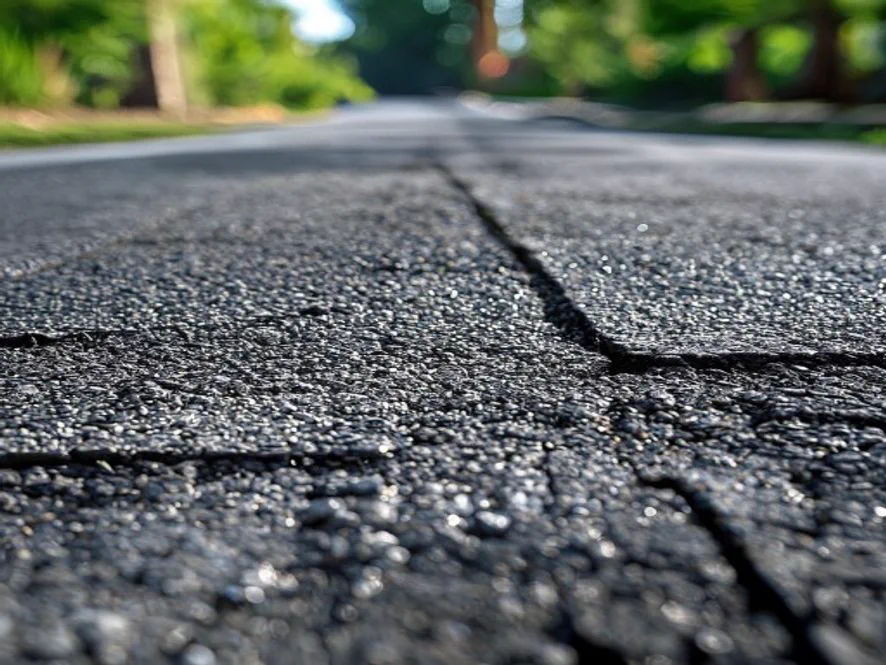
What is the standard residential asphalt driveway thickness?
For a typical home driveway parking cars and small SUVs, the widely accepted standard is 2.5 to 3 inches of compacted asphalt riding on 4 to 8 inches of compacted crushed aggregate base. That two-layer system is what most reputable contractors quote, and it is what the National Asphalt Pavement Association describes for light residential traffic.
The surface layer is what you see and drive on. The base layer underneath is the structural foundation that spreads vehicle weight into the soil. People focus on the asphalt because it is visible, but the base depth is the bigger lever for how long the driveway survives. A thin driveway over a deep, well-compacted base beats a thick driveway over a shallow base almost every time.
- Light passenger use (cars, small SUVs): 2.5 inches compacted asphalt over 4 to 6 inches base.
- Standard recommended build: 3 inches compacted asphalt over 6 to 8 inches base. This is the safe default.
- Trucks, vans, occasional heavy loads: 3 to 4 inches compacted asphalt over 8 inches base.
- RVs, boats, sustained heavy point loads: 4 inches compacted asphalt over 8 inches or deeper base. See our heavy vehicle thickness guide.
Is 2 inches of asphalt enough for a driveway?
Two inches is the floor, not a target. A single 2 inch layer can be acceptable for light passenger use only when it sits on an excellent, deep, properly compacted base. The trouble is that many problem driveways were laid at 1.5 to 2 inches by a contractor cutting corners, and they fail early. If you want a 20 to 25 year driveway, treat 2.5 inches as your minimum and 3 inches as your default.
Where thin installs go wrong shows up as alligator cracking, edge crumbling, and rutting under tires within a few years. Those are classic symptoms of a surface too thin to spread load. If you are looking at a quote that specs under 2 inches, read our breakdown of lowball warning signs before signing.
How thick should the base layer be?
The base is compacted crushed stone, usually a graded aggregate like crusher run or dense-graded aggregate. It carries the structural job of distributing load down into the subgrade so the asphalt above it does not flex and crack. A good base prep job is the single biggest predictor of driveway lifespan.
- Firm, well-drained soil: 4 to 6 inches of compacted aggregate base.
- Average residential soil: 6 to 8 inches is the comfortable default.
- Clay, silt, or poorly drained soil: 8 to 10 inches, often with a geotextile fabric to separate base from soft soil.
- Freeze-thaw climates with weak subgrade: 10 to 12 inches to resist frost heave and spring thaw softening.
The Federal Highway Administration publishes pavement design guidance showing that required structural depth scales with both the load and the strength of the soil underneath. In simple terms: softer soil and heavier vehicles both mean more base.
What affects the right thickness for your driveway?
There is no single number that fits every home. Four factors move the dial, and a good contractor will ask about all of them before quoting a depth.
- Vehicle weight and frequency: Daily heavy trucks or an RV stored on the pad need more surface and base than a two-car household.
- Soil type and drainage: Strong, well-drained soil supports a thinner build. Clay and standing water demand a deeper base. Plan drainage before you decide depth.
- Climate: Freeze-thaw cycles crack thin sections over weak base. Hot southern climates soften asphalt, so thickness and mix design both matter.
- Slope and use: A steep driveway or one used for turning and parking trailers concentrates stress and benefits from extra depth.
Compacted vs laid thickness: the number that trips people up
Hot mix asphalt is dumped and spread loose, then rolled with a heavy compactor. It compresses roughly 20 to 25 percent during compaction. So if your contract says 3 inches, you need to know whether that is 3 inches compacted (correct) or 3 inches laid loose, which rolls down to about 2.3 inches. That difference is the gap between a driveway that lasts and one that fails early.
Always write compacted inches into the contract. A simple rule: laid loose depth equals compacted depth divided by 0.8. For 3 inches compacted, that is about 3.75 inches loose before rolling. If you watch the install and the loose mat already looks thin, ask the foreman to measure before they roll.
Decision tool
What Thickness Does My Driveway Need?
Answer three quick questions and get a recommended compacted asphalt depth and base depth for your driveway.
Planning guidance only. A local contractor should confirm depth against your soil test and load. Specify compacted inches in the contract.
How thickness affects cost and lifespan
Thickness is one of the biggest levers on your install price, and the math is simple. Each extra inch of compacted asphalt adds roughly 1 to 2 dollars per square foot. Going from 2.5 to 3 inches on a 600 square foot driveway adds about 300 to 600 dollars. Extra base aggregate adds another 0.50 to 1.50 dollars per square foot for every 2 inches of added depth.
- Extra inch of asphalt: about 1 to 2 dollars per square foot.
- Extra 2 inches of base: about 0.50 to 1.50 dollars per square foot.
- Payoff: the right depth can move a driveway from a 10 to 12 year life to a 20 to 25 year life. That is the cheapest insurance in the whole project.
Spending a few hundred dollars on the correct depth is far cheaper than a premature full replacement in year 10. Plug your area and depth into the driveway cost calculator to see how the numbers move, and run any written estimate through the quote checker to confirm the depth matches the price.
How to verify thickness on install day
Thickness is the easiest spec for a contractor to quietly shave, because you cannot see it once the surface is rolled. Protect yourself with a few simple checks.
- Get the depth in writing: compacted inches of asphalt and base, both stated in the contract.
- Measure the loose mat: before rolling, a 3 inch compacted target should read about 3.75 inches loose.
- Check the edges after: a clean edge lets you see the finished surface depth. Thin spots show up here first.
- Ask about base compaction: the base should be compacted in lifts, not dumped and paved over.
For the full list of pre-pour and on-site checks, our contractor questions guide covers what to ask before and during the job. References for the thickness ranges are on the sources page.
Bottom line
For a residential asphalt driveway, build 2.5 to 3 inches of compacted asphalt over 6 to 8 inches of compacted base as your default, and go thicker on both layers for heavy vehicles, soft soil, or freeze-thaw climates. Spend on base depth first, write compacted inches into the contract, and verify the loose mat before it gets rolled. The right thickness is the difference between a driveway that lasts a decade and one that lasts a quarter century.