To prevent potholes in an asphalt driveway, keep water out of the asphalt. Seal cracks within one season, fix low spots where puddles form, and sealcoat every two to four years. Water that reaches the base layer, freezes, and expands is what hollows out the ground and collapses the surface above it.
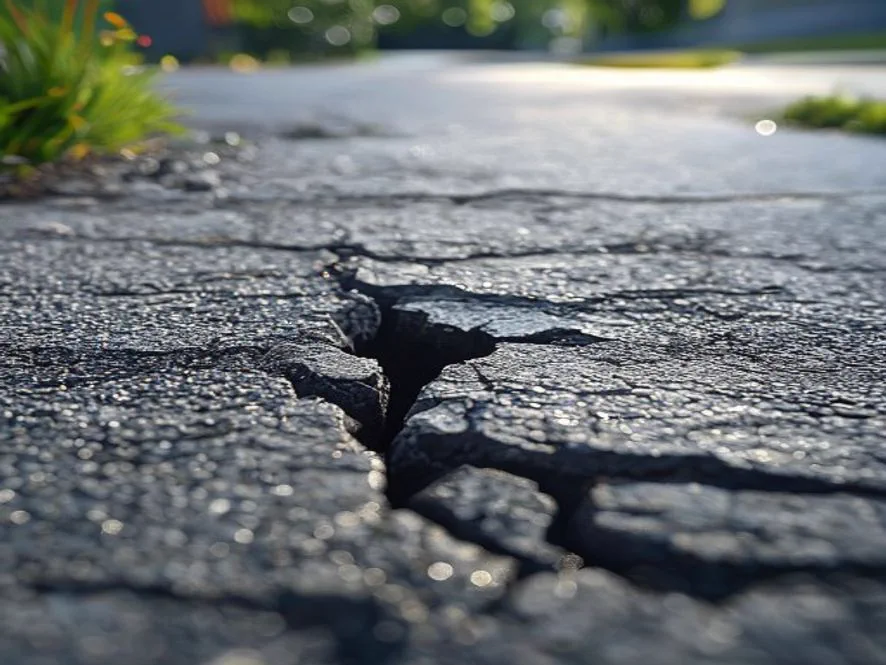
What actually causes potholes in a driveway?
A pothole is the last step in a chain that starts with water. Asphalt sits on a compacted gravel base. That base is what carries the weight of your car. When the base stays dry and tight, the surface above it lasts for decades. When water gets in, the base softens, shifts, and washes away. The asphalt loses its support and caves in under load.
The water gets in through three doors. The first is cracks. The second is the edges, where unsupported asphalt crumbles and lets runoff sneak underneath. The third is low spots where puddles sit for hours instead of draining. In cold climates the damage speeds up because trapped water freezes and expands, then thaws, over and over. The U.S. Federal Highway Administration describes this same freeze-thaw cycle as the leading cause of road pavement failure, and your driveway works the same way.
- Cracks left open. Even a hairline crack is a funnel straight to the base. See our guide to the different crack types so you know which ones need fast action.
- Poor drainage. Standing water has all day to soak through. A driveway needs a slope of at least 1 to 2 percent to shed water.
- Weak or thin base. A bad install with too little gravel or poor compaction fails early no matter how you maintain it.
- Heavy point loads. An RV or delivery truck parked in the same soft spot presses the surface down until it opens.
How do I stop water before it starts a pothole?
Sealing cracks is the highest-value habit you have. A tube of crack filler costs a few dollars and a single afternoon protects the spots most likely to fail. Walk the driveway each spring and fall. Any crack wider than a pencil tip gets filled. Our step-by-step on sealing driveway cracks covers cleaning, filling, and curing so the repair actually holds. For wider damage, read how to fix large cracks before they connect into an alligator pattern.
Drainage is the second door. If you see puddles that linger more than an hour after rain, the surface has a low spot or the grade is wrong. Small birdbaths can be leveled with patch material. Larger drainage failures may need a channel drain or regrading. Our drainage solutions guide walks through the options, and a French drain can pull groundwater away from the base on problem sites.
Edges are the quiet third door. Asphalt with no support along the sides crumbles, and runoff slips under the crumbled edge to reach the base. Pack soil or gravel against the edges so they are supported, and keep that backfill graded away from the surface so water runs off rather than in.
How does sealcoating fit into pothole prevention?
Sealcoating is your top-surface armor. It blocks the sun that dries asphalt brittle, repels fuel and oil that soften it, and slows the day-to-day weathering that opens new cracks. Most residential driveways do well on a two to four year cycle. New asphalt should cure for several months before its first coat. If you want the full picture, what sealcoating actually does and how often to sealcoat explain the timing.
Be clear about what sealcoat does not do. It is a thin coating, not a structural fix. It will not bridge an open crack, repair drainage, or rescue a wet base. Sealcoat over an unfilled crack and the crack telegraphs right back through. The order matters: fill cracks first, fix drainage, then sealcoat over a sound surface. The National Asphalt Pavement Association stresses that surface treatments only work when the underlying pavement and base are intact.
What seasonal habits keep potholes away?
Potholes form fastest in the freeze-thaw months, so your calendar matters. Build a light routine around the seasons and you catch problems while they are still cheap to fix. Our full maintenance schedule lays out a year-round plan, and the spring inspection checklist is the single most useful walk you can do.
- Spring. Inspect after the last frost. Winter opens new cracks. Fill them now, before spring rain feeds the base all season.
- Summer. Sealcoat in warm, dry weather. Clean oil and fuel stains promptly, since they dissolve the binder that holds asphalt together.
- Fall. Seal any remaining cracks before the first freeze. This is your last chance to keep water from freezing inside the pavement.
- Winter. Plow with care and choose your de-icer wisely. See winter protection tips and how freeze-thaw damage works for the details.
Pothole risk checker
Answer five quick questions about your driveway. The tool scores your current pothole risk and tells you the next fix to make.
What if a pothole has already formed?
If you already have a hole, prevention shifts to stopping the next one. A small pothole is repairable in an afternoon. Clean out the loose debris, square the edges, and pack a cold patch or hot mix in lifts, tamping each layer. Our walkthrough on patching a pothole and the comparison of cold patch versus hot mix help you choose the right material for the season.
The catch is that a surface patch only lasts if the base under it is sound. If the same hole keeps returning, the base is wet or washed out and needs digging out and rebuilding. Repeated failures across the whole driveway can mean the surface is beyond repair, at which point you weigh sealcoat versus resurface versus replace. Catching problems early is what keeps you out of that decision.
Bottom line
Potholes are preventable, and the prevention is cheap compared to the cure. Keep water out: fill cracks within a season, fix puddles and drainage, support your edges, and sealcoat every few years over a sound surface. Do a spring and fall walk, handle problems while they are small, and your asphalt will stay smooth for 15 to 20 years or more.