To fix a large asphalt driveway crack, clean it down to bare walls, press closed-cell backer rod into any crack deeper than an inch, then fill with rubberized crack sealant or bagged cold patch in lifts and compact each one. Let it cure two to seven days, then sealcoat the whole surface. Wider than two inches usually means base failure.
What counts as a "large" crack?
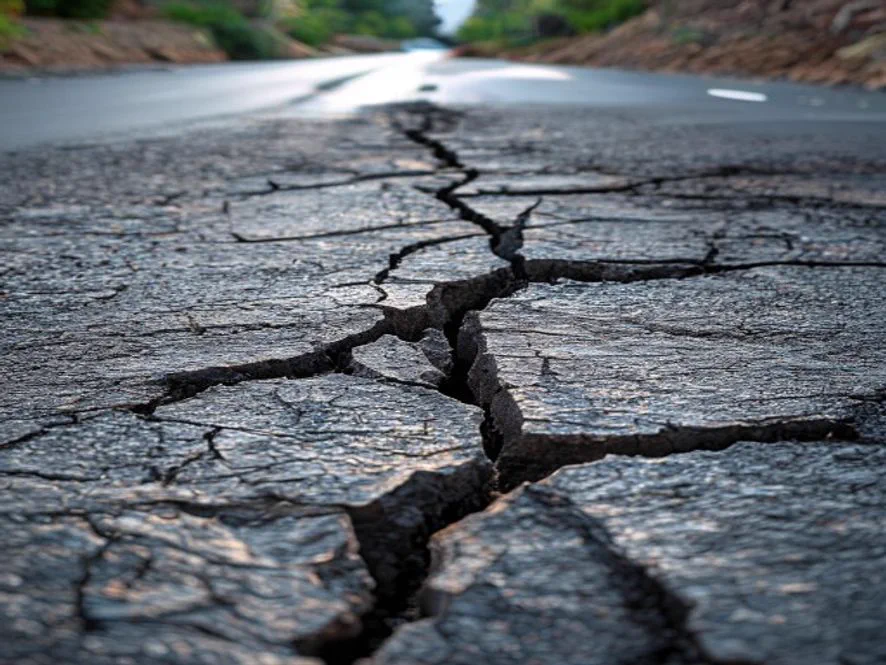
Crack size decides the method. A hairline crack takes bottle filler and five minutes. A large crack is a different repair because depth and movement matter. Measure before you buy anything.
- 1/2 inch to 1 inch wide: Large but still a clean fill. Use rubberized or hot-pour crack sealant. Add backer rod if it is deeper than an inch.
- 1 inch to 2 inches wide: Backer rod is required, then sealant or bagged cold patch packed in lifts and compacted.
- Over 2 inches wide, or crumbling edges: This is usually a structural problem, not a surface one. See crack types explained to confirm what you are looking at.
- Interconnected, web-like cracking: That is alligator cracking and it means the base under the asphalt has failed. Filling it is cosmetic.
If you are not sure why the cracks formed in the first place, our guide on why driveways crack walks through freeze-thaw, thin asphalt, and poor drainage as the three usual causes.
Tools and materials you need
A large-crack repair is cheap on materials but it lives or dies on prep tools. Budget about 30 to 60 dollars for a single driveway if you already own a brush and blower.
- Cleaning: Wire brush or an angle grinder with a wire wheel, plus a leaf blower or compressed air. A weed puller if anything is rooted in the crack.
- Backer rod: Closed-cell foam cord sized about 25 percent wider than the crack. A few dollars for a long roll.
- Fill: Rubberized crack sealant in a tube or pour bottle for cracks up to about an inch. Bagged cold patch for wider gaps, around 15 to 25 dollars per 50 pound bag.
- Compaction and finishing: Hand tamper for small jobs, or a rented plate compactor for a long crack. A putty knife or trowel to strike the fill flush.
Hot-pour sealant lasts longer than cold-pour but needs a melter, so most homeowners use a rubberized cold sealant. The trade body NAPA notes that sealing cracks early is the single most cost-effective way to extend pavement life, which is why this small repair is worth doing right.
Step by step: filling a large crack
Pick a dry day above 50 degrees Fahrenheit with no rain in the forecast for 24 hours. Cold or damp asphalt will not let the sealant bond.
- Measure and sort the crack. Confirm it is under two inches wide and the edges are solid. If chunks lift out, you have a patch job, not a fill. See pothole patching for that case.
- Clean it out. Pull any rooted weeds, scrub both walls with the wire brush, and blow every speck of dust and grit out. This step alone doubles how long the fill lasts.
- Install backer rod. For any crack deeper than an inch, press the foam rod down so its top sits about a quarter inch below the surface. The rod stops the sealant from bonding to the bottom, so it can stretch instead of tearing.
- Fill in lifts. Pour sealant over the rod, or pack cold patch in one to two inch layers. Do not try to fill a deep crack in one shot. It will sink and crack again.
- Compact and level. Tamp each cold patch lift hard. With sealant, overfill slightly then strike it flush with the putty knife. Nothing should stand proud, since tires will shear off any hump.
- Cure, then seal. Let it cure two to seven days per the label. Once hard, sealcoat the whole driveway so the repair blends in and stays protected.
The order matters most at the end. Always fill and cure first, then seal. Read our sealcoat prep guide for the full pre-seal checklist.
Large crack fill estimator
Enter the crack length, width, and depth to see roughly how much sealant or cold patch you need and a rough material cost. Numbers are planning estimates, not exact buy lists.
When DIY stops and a crew takes over
Filling buys time, but some cracks are telling you the structure is gone. Stop patching and call a contractor when you see any of these.
- Cracks wider than 2 inches or so wide you can see soil. The base has shifted.
- Cracks that reopen every year at the same line no matter how well you fill them. Movement underneath will defeat any surface fix.
- Alligator cracking over more than a few square feet. The fix is cut-out and re-pave, covered in our alligator cracking guide.
- Cracks plus standing water, sinking, or settling. Water is getting into the base and freezing, which widens cracks fast.
At that stage the real choice is resurface versus replace. The federal pavement program at the FHWA publishes the same distress-rating logic that contractors use, if you want to understand how a pro grades your driveway before quoting. Get a planning number from the driveway cost calculator before you accept any bid.
How long the repair lasts and how to protect it
A clean fill with backer rod and quality sealant holds for three to five years before a top-up. Cold patch in a wide crack lasts two to four years if you compacted it well. The single biggest lifespan factor is water control. Keep water out of the base and the repair lasts; let water pond on it and freeze and the crack will widen again by next spring.
Sealcoating the whole driveway every two to three years is the cheapest protection. Use the sealer calculator to plan gallons, and follow a maintenance schedule so small cracks never get to be large ones. In freeze-prone regions, our winter care guide covers the freeze-thaw cycle that opens most large cracks in the first place.
Bottom line
Large does not mean hopeless. A crack from half an inch to two inches wide is a one-afternoon DIY fix: clean it, back it with foam rod, fill it in lifts, compact, cure, and seal. Past two inches, or once cracks web out into alligator patterns, you are looking at base failure and should price out a contractor repair instead. Either way, sealing the surface afterward is what makes the work last.