Homeowners want a clean rule. Sealcoat every 2 years. Or every 3. Or whenever it looks faded. The truth is more useful than any single number. Most driveways sit on a 2 to 4 year cycle. The exact spot in that range depends on your climate, how much traffic the driveway takes, and one simple test you can run with a garden hose. Size your sealer order on the sealer calculator and check timing with the when to sealcoat tool.
The 2 to 4 year baseline
For a typical home driveway, plan on a sealcoat every 2 to 4 years. That covers most asphalt emulsion sealers, most climates, and most traffic loads. A first seal goes on 6 to 12 months after the driveway is paved. After that, the cycle repeats. The lifespan guide shows how this cadence stretches a driveway from 15 years to 25.
When to stretch toward 4 years
Some driveways can run a 3 or 4 year cycle without losing protection. Look for these conditions.
- Mild climate. Few hard freezes. Coastal or Pacific Northwest, southern California, the Sun Belt.
- Low traffic. One or two cars. No daily commercial vehicle. No RV pad.
- Garage-kept vehicles. Cars sit inside, not parked on the slab all day.
- Mostly shaded. UV is the second-biggest sealer killer after water.
- Premium acrylic sealer was used last cycle. Acrylics can reach 5 to 7 years.
When to tighten toward 2 years
Other driveways need a 2 year cadence to keep the surface protected.
- Harsh winters. Repeated freeze-thaw. Salt and plow contact.
- Heavy use. Three or more cars. Daily delivery trucks. Trailer or boat parked overnight.
- Steep slope. Water flows fast and strips sealer at the downhill edge.
- RV or commercial vehicle pad. Static heavy loads tear sealer at the contact points.
- Full-sun exposure. UV bleaches and embrittles sealer in 18 to 24 months.
The water-bead test
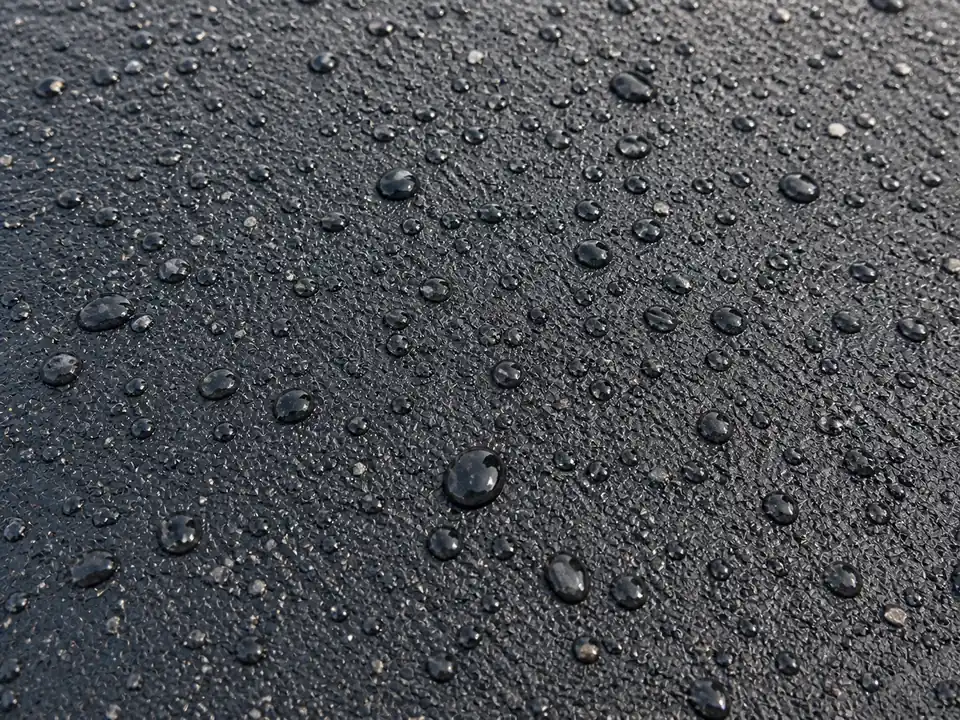
The cleanest test for whether your sealcoat is still working is a garden hose. Spray a 2 ft by 2 ft area. Watch what the water does. If it beads up and runs off, the sealer is still bonded and the surface is protected. If the water soaks in and darkens the pavement, the sealer is gone. Time to re-seal. Run the test in spring before deciding on the year's schedule.
Next sealcoat due date
Enter your last seal date, your climate, and your traffic. The calculator returns the recommended next sealcoat date.
The over-sealing trap
More is not better. A driveway sealed every year builds up coat thickness. The top coat cures faster than the layer underneath. Over time the surface cracks in an alligator pattern that comes from the sealer, not the asphalt. Sealcoat is a sacrificial layer. It is supposed to wear off in 2 to 4 years. If you re-seal before the prior coat has worn down, you are stacking instead of replacing. The DIY mistakes guide covers this in detail.
Climate map, in plain words
Climate sets the upper bound of your schedule. A rough map.
- Northeast and upper Midwest: 2 years. Freeze-thaw and road salt drive the short cycle.
- Mid-Atlantic and lower Midwest: 2 to 3 years. Mixed winters. Moderate UV.
- South: 3 years. Mild winters but strong UV bleaches sealer faster.
- Pacific Northwest: 3 to 4 years. Rain is constant but freeze cycles are mild.
- Southwest and southern California: 3 to 4 years. UV is the main concern, not water.
For local pricing on each cycle see sealcoating cost in 2026.
Seasonal timing within the year
The right month matters as much as the right year. The window is late spring through early fall. Pavement and air should both be above 50 degrees Fahrenheit for 24 hours after application. No rain in the forecast for 24 hours. Avoid direct midday sun in summer, which flash-dries the surface and prevents a clean bond. The best time to pave guide covers the broader seasonal logic.
How long does the sealcoat actually take to set up?
Foot traffic returns in 4 to 8 hours. Cars in 24 to 48. Full cure takes 30 days. See the sealcoat dry time guide for the full breakdown with temperature and humidity adjustments.
A sample 5 year schedule
A typical Midwest homeowner with a 600 sq ft driveway, 2 cars, no RV, modest slope.
- Year 0. New asphalt installed.
- Year 1 (spring). First sealcoat. See when to sealcoat new asphalt.
- Year 3 (early fall). Second sealcoat. Crack fill any hairline cracks first.
- Year 5 (late spring). Third sealcoat. Edge cleanup and weed treatment.
- Year 7. Fourth sealcoat. Begin watching for spots that need a patch.
Five sealcoats in 10 years adds about 25 percent to driveway life. For brand selection see best sealer brands 2026.
Which sealer for which schedule
Coal tar stretches the cycle but is restricted in 17 states. Asphalt emulsion is the universal default. Acrylic costs more upfront but lasts 5 to 7 years on the right driveway. See sealer types compared and the older coal tar vs asphalt emulsion post for the chemistry decision.
Bottom line
Plan on a sealcoat every 2 to 4 years. Stretch toward 4 in mild climates with garage-kept low-traffic cars. Tighten toward 2 in harsh winters, heavy use, or full sun. Run the water-bead test every spring. Skip a year if water still beads. Add a year if water soaks in. Do not seal more often than every 2 years. The is sealcoating worth it post has the cost-benefit math on the full cycle.
For technique and chemistry references, the National Asphalt Pavement Association publishes maintenance guidance. The Asphalt Institute has technical notes on sealer chemistry and surface preparation.