To protect an asphalt driveway in winter, seal every crack before the first freeze, fix drainage so meltwater never pools, switch to calcium or magnesium chloride ice melt instead of rock salt, and clear snow with a plastic shovel. These four steps stop the freeze-thaw cycle that causes most winter damage. Run the full winter care routine below.
Why winter is so hard on asphalt
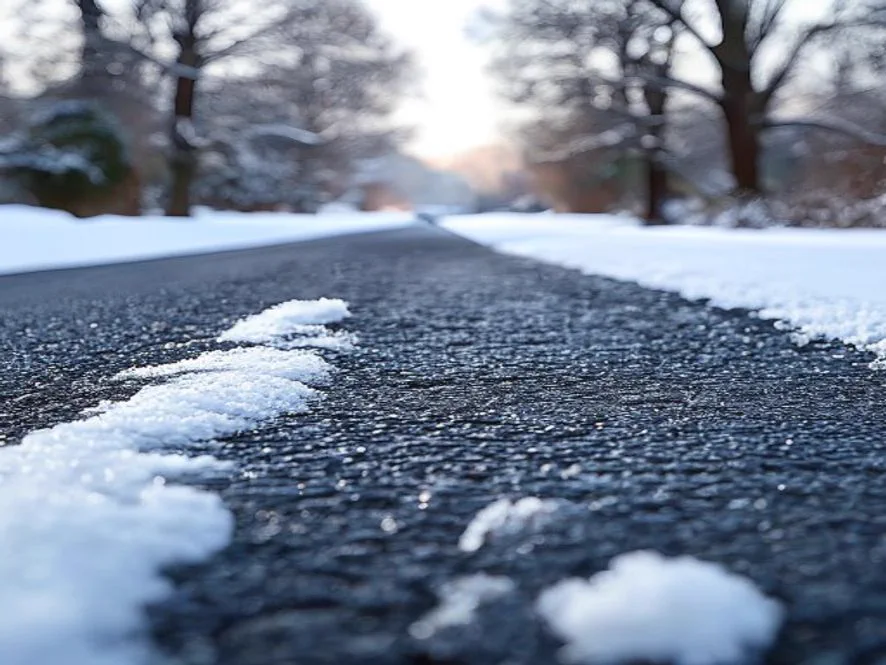
Asphalt fails in winter for one main reason: water gets into a crack, freezes, and expands by roughly 9 percent. That expansion pushes the crack wider. When it thaws, water seeps deeper, then refreezes. This freeze-thaw cycle can repeat dozens of times in a single winter in cold climates, and each cycle does a little more damage. The Federal Highway Administration tracks this same mechanism on public roads, which is why FHWA guidance puts so much weight on sealing and drainage. A hairline crack in November can be a pothole by April. You can read the full mechanism in our explainer on freeze-thaw damage.
The good news is that the fixes are cheap and the timing is forgiving. Almost everything that protects asphalt is about keeping liquid water out of the surface and the base. Do that, and your driveway sails through winter. Skip it, and you pay for repairs in spring.
The winter prep checklist (do this before the first freeze)
Work through these six steps in order during a dry stretch in early to mid fall. Most homeowners finish the whole list in a weekend for under 60 dollars in materials.
- Step 1. Inspect and clean. Walk the driveway in daylight, sweep off leaves and grit, and mark every crack, low spot, and crumbling edge with chalk. A clean, dry surface is the only one crack filler will bond to. Use our inspection checklist as a template.
- Step 2. Fill all cracks. Fill anything wider than a quarter inch with rubberized crack filler. This is the single highest-value step. See the full method in how to seal cracks and, for bigger gaps, how to fix large cracks.
- Step 3. Patch potholes and low spots. Use cold patch for small holes and level any birdbath spots that hold water. Standing water that freezes is how small defects turn into big ones.
- Step 4. Fix drainage. Clear gutters, point downspouts away from the slab, and clean any channel drains. Our drainage solutions guide covers the common fixes. Water that runs off cannot soak the base.
- Step 5. Stock the right supplies. Buy calcium chloride or magnesium chloride ice melt and a plastic shovel before the first storm, not during it. More on product choice below.
- Step 6. Clear snow promptly and gently. Remove snow soon after it falls so it cannot pack into ice, and apply ice melt sparingly only where you need traction.
Which ice melt is safe for asphalt?
Plain rock salt (sodium chloride) does not chemically dissolve asphalt the way it corrodes concrete and rebar, so asphalt is more salt-tolerant than concrete. The problem is indirect: rock salt only works down to about 20 degrees Fahrenheit, so you use more of it, and every melt-and-refreeze cycle it triggers feeds freeze-thaw damage. We break the trade-offs down in does salt damage asphalt.
- Calcium chloride. Works down to about minus 25 degrees Fahrenheit and needs far less product. The gentlest common choice for asphalt.
- Magnesium chloride. Effective to about minus 10 degrees Fahrenheit, less corrosive to metal and plants, and easy on pets and paws.
- Sand. Adds traction without melting anything. Pair it with a melt product on the coldest days. See sand vs salt for traction.
- What to skip. Heavy rock salt on a new driveway. For the full ranking, read the best ice melt guide.
Whatever you choose, apply it thin. More product does not melt faster, it just runs off into your soil and groundwater. The EPA notes that excess deicer is a real water-quality problem, so a light, even scatter is better for your driveway and your yard.
Removing snow without damaging the surface
How you clear snow matters as much as what you melt it with. The top layer of asphalt is the wear course that protects everything underneath, and a metal blade strips it. Our full method is in snow removal without damage, but the essentials are short.
- Use plastic. A poly or plastic-edge shovel will not gouge the surface or chip soft edges.
- Raise the plow. Set a snow blower skid shoes or a plow blade a quarter inch off the surface, ideally with a rubber or poly cutting edge.
- Clear early. Remove snow before foot and tire traffic packs it into ice that bonds to the surface.
- Watch the edges. Driveway edges crumble first because they lack lateral support. If yours are already going, read how to fix crumbling edges.
Mini tool
Winter Readiness Score
Check the steps you have finished to see how protected your driveway is heading into winter.
How much does winter prep cost and save?
A full DIY winter prep runs about 30 to 60 dollars: a tube or two of crack filler, a bag of cold patch, and a bag of ice melt. Compare that to repairs. A single pothole patch by a pro can run 100 to 300 dollars, and resurfacing a damaged driveway can climb into the thousands. You can size any repair budget with our driveway cost calculator and sanity-check a contractor bid with the quote checker. Skipping prep is the most expensive choice you can make.
Winter prep is also part of a year-round rhythm. Sealcoating belongs in late summer, crack filling in fall, and inspection in spring. Our maintenance schedule lays out the calendar so nothing slips.
Special case: a brand new driveway
Fresh asphalt is still curing and stays softer through its first winter, so it needs extra care. Do not sealcoat it yet, wait at least 6 to 12 months. Avoid turning your wheels while stopped, keep heavy trucks off it, and clear snow promptly so meltwater never pools. The full first-season playbook is in protecting a new driveway through its first winter.
Bottom line
Winter does not destroy asphalt. Water that freezes inside it does. Seal the cracks, route the water away, pick a gentle ice melt, and clear snow with plastic, all before the first freeze. That short checklist costs less than 60 dollars and prevents the spring potholes that cost ten times as much. Do it in the fall and your driveway will look the same in April as it did in October.