For a homeowner patching a driveway pothole, cold patch is the right material. It needs no special equipment, costs 10 to 20 dollars a bag, and is drivable immediately. Hot mix lasts much longer but requires a paver, a roller, and a hot delivery you cannot buy at residential scale, so it stays contractor only. See how to patch a pothole for the steps.
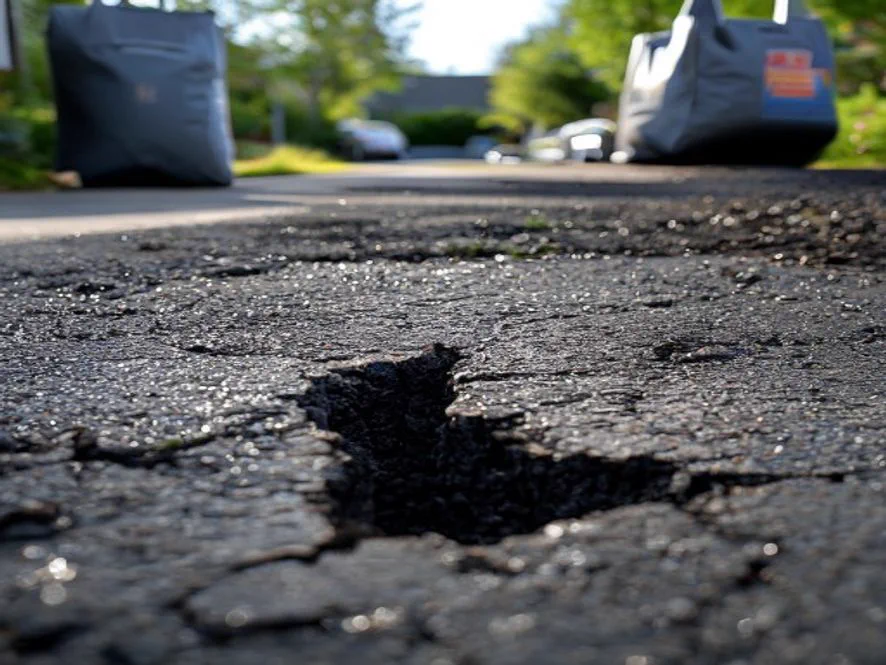
What is the actual difference between cold patch and hot mix?
The difference is how the binder works. Hot mix asphalt is heated to 250 to 300 degrees so the asphalt cement flows, coats the aggregate, and locks together as it cools. It is the same material that paves roads and driveways. Cold patch uses a modified binder with solvents or emulsifiers that stay workable at air temperature. You open the bag, pour it in, and compact. No heat, no plant, no timing pressure.
That single difference drives everything else. Hot mix has a narrow placement window. Once it drops below about 185 degrees it stops compacting properly, so a crew has roughly an hour from the plant. Cold patch has no clock. You can place it in July or January, and a half open bag keeps until next year. For the broader picture of what your driveway is made of, see asphalt driveway layers explained.
How long does each one last?
This is where hot mix wins. Numbers below assume a sound base under the hole. If the base has failed, no patch of any kind holds for long.
- Cold patch: 1 to 5 years on a driveway when cleaned, squared, and compacted well. Treat it as a durable repair, not a forever fix.
- Hot mix: 10 years or more, often matching the life of the surrounding pavement, because it bonds and densifies the way the original surface did.
- Cheap unbranded cold patch: sometimes under a year. The binder quality varies a lot between brands, so buy a name you recognize.
The Federal Highway Administration separates these as throw and roll cold patch versus semi permanent hot mix for the same reason: one buys time, the other rebuilds the surface. If the same hole keeps reopening, the issue is the base, not the patch. Read pothole prevention for the root causes.
What does each cost?
Cold patch is cheap and DIY. Hot mix carries equipment, crew, and minimum load charges that make it expensive for one small hole.
- Cold patch, DIY: 10 to 20 dollars per 50 pound bag. One small pothole is 10 to 40 dollars and about 45 minutes of work.
- Cold patch, several holes: 40 to 100 dollars in material for a driveway with a handful of potholes.
- Hot mix, contractor: 300 to 1,200 dollars for driveway pothole work, driven by minimum tonnage, equipment mobilization, and crew time, not the material itself.
- Hot mix, infrared repair: a middle option where a crew reheats and reworks existing asphalt. See infrared asphalt repair.
If you are getting a contractor number, sanity check it against typical regional rates before you sign. Our quote checker flags figures that look off.
How hard is each to install?
Cold patch is genuinely a homeowner job. Clean the hole, square the edges so they are vertical, fill in 1 to 2 inch lifts, and compact each lift with a hand tamper or by driving a tire over plywood laid on top. The full procedure is in how to patch a pothole, and it sits inside the wider repair playbook.
Hot mix is not realistic to install yourself. You would need a plant willing to sell a small load, transport that holds heat, and a plate compactor or roller to densify it before it cools. Miss the temperature window and you have a stiff, useless pile. This is why hot mix on a driveway is always a crew with a truck, not a weekend project.
Will the patch bond to the old asphalt?
Bond is what separates a patch that lasts from one that pops out in three months, and the two materials bond differently. Hot mix fuses to the surrounding asphalt as it cools because both are the same hot, sticky material, especially when the crew brushes a tack coat onto the sides of the hole first. Cold patch bonds mostly mechanically. It wedges against squared vertical edges and locks under compaction. That is why edge prep matters far more with cold patch than with hot mix.
Three things make any patch hold, regardless of material. First, a clean hole with no loose debris, dirt, or standing water. Second, square edges rather than feathered ones that thin toward zero and break out under tire load. Third, real compaction in 1 to 2 inch lifts so the inside of the patch densifies, not just the top. Skip any of these and even good hot mix fails early. For deeper holes, brushing an emulsion tack coat onto the walls adds chemical grip to a cold patch and closes much of the durability gap.
Which holds up in cold weather?
Cold patch wins here, which is the source of its name and its biggest practical edge. It is formulated to place and bond at low temperatures, including below freezing, so a pothole that opens in February can be patched the same day. Hot mix plants often shut down in winter, and hot mix placed in cold conditions cools too fast to compact. If you live where winters bite, read freeze thaw damage explained to understand why holes appear in spring.
The tradeoff is cure speed. Cold patch hardens with traffic and with warmth, so a winter patch firms up more slowly. Drive over it gently for the first week and it will set. Hot weather speeds the cure for both materials.
Decision tool
Which Patch Material Should I Use?
Answer three quick inputs about your hole and get a material recommendation for your driveway.
Guidance only. A recurring hole almost always means base failure, which no surface patch fixes for long.
When is hot mix actually worth it?
Hot mix earns its cost in a few specific cases. Large holes deeper than 4 inches, several holes clustered together, or a driveway you plan to keep for a decade and want done once. In those situations a contractor mobilization is justified because the per hole cost drops and the repair lasts. If most of the surface is failing rather than one or two spots, you are past patching entirely and should weigh an overlay or replacement. Compare paths in resurface vs replace.
Quick side by side
- Cost: cold patch 10 to 40 dollars DIY. Hot mix 300 to 1,200 dollars contractor.
- Lifespan: cold patch 1 to 5 years. Hot mix 10 years plus.
- Equipment: cold patch needs a tamper. Hot mix needs a paver and roller.
- Temperature: cold patch any season. Hot mix warm season only, narrow window.
- Who installs it: cold patch DIY. Hot mix contractor only on a driveway.
- Best use: cold patch for one or two holes. Hot mix for deep, clustered, or permanent repairs.
The National Asphalt Pavement Association describes the same split between maintenance grade cold mix and structural hot mix used in road work, which mirrors the homeowner decision on a smaller scale.
Bottom line
For nearly every homeowner with a driveway pothole, cold patch is the answer. It is cheap, forgiving, weatherproof, and you can do it this afternoon. Hot mix is better material, but it only makes sense when a contractor is already on site for deep or clustered repairs, or when you want a one time permanent fix. Match the material to the job size, fix the base if the hole keeps returning, and full sourcing is on the sources page.