To inspect an asphalt driveway before buying, walk the full surface for cracks and potholes, confirm it drains away from the house, check the edges for crumbling, and test soft spots for base failure. Ask the seller its age, then get a written repair quote so you can price the work and negotiate.
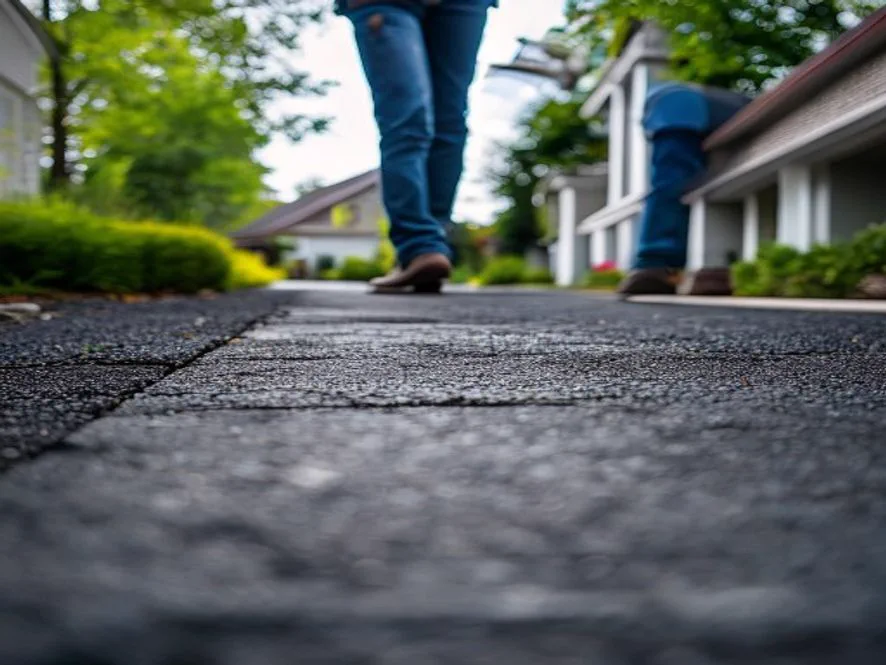
Why the driveway deserves its own walkthrough
Most home inspectors give the driveway a 30 second glance. It is technically outside the structure, so it rarely gets the attention a roof or furnace does. That leaves a gap for buyers, because a tired driveway can hide thousands of dollars in coming repairs. A full tear out and replace runs about 3 to 7 dollars per square foot, so a common 600 square foot driveway can cost 1,800 to 4,200 dollars to redo. You want to know that before you sign, not after the first hard winter.
The good news is that asphalt tells you a lot if you slow down and look. Surface flaws are usually cheap and cosmetic. Base and drainage problems are the expensive ones. Learning the difference takes about ten minutes of walking. For deeper background on what a healthy slab looks like, the National Asphalt Pavement Association keeps a homeowner resource at asphaltpavement.org.
Step 1: Walk the full surface
Start at the street and walk the whole driveway slowly, eyes down. You are sorting what you see into two buckets: surface wear and structural failure. Single line cracks, fading gray color, and a few small patches are normal aging. They are cheap to seal and not a reason to worry. The full menu of crack shapes is covered in our guide to types of asphalt driveway cracks.
- Hairline and single cracks. Normal. A bag of crack filler and an afternoon fix these.
- Potholes. Repairable, but note how many. One is a patch job. Several suggest a failing base.
- Faded gray surface. Cosmetic. A sealcoat brings the color back. See restoring driveway color.
- Fresh patches. Could mean good upkeep or a seller hiding a problem. Ask about each one.
Step 2: Check drainage and slope
Drainage is where the real money lives. Asphalt fails fastest when water sits on it or runs under it. Look for dark stained low spots, moss, or a tide line of dried silt that shows where puddles form. Then check direction: the driveway should shed water toward the street or a yard, never toward the house or foundation. Water pooling against the home is a foundation risk, not just a driveway one. If you spot trapped water, read our fix for standing water on a driveway to gauge the work involved.
A correct driveway slope sits around 1 to 5 percent away from the structure. You can check it loosely by eye or with a level. Our note on driveway slope and grade explains the target numbers. The EPA explains why managing runoff at home matters at epa.gov.
Step 3: Inspect the edges
Edges are the first place a thin or weak driveway shows its age. Walk both sides and look for crumbling, raveling loose stone, and spots where the soil has washed out from under the lip. Healthy edges are firm and supported. Edges that flake apart under a shoe point to a base that was never built wide enough or compacted properly. The repair path is laid out in fixing crumbling driveway edges.
Step 4: Test for base failure
This is the difference between a 300 dollar fix and a 4,000 dollar one. Press a foot on any soft, spongy, or sunken area. A solid driveway feels rigid. If it flexes or you see a web of interconnected cracks resembling reptile skin, that is alligator cracking, and it signals the base below has failed. A surface patch will not hold; the section needs rebuilding. See alligator cracking repair and driveway settling fixes for what that involves.
- Spongy or sinking sections. Base or drainage failure. Budget for partial rebuild.
- Alligator cracking. Failed base. A patch is a band aid, not a cure.
- Tree roots lifting the slab. Recurring problem. Review root damage repair.
- Birdbath low spots. Often fixable with an overlay. See low spot repair.
Step 5: Ask the seller for history
Two questions tell you most of what you need. When was it paved, and when was it last sealed? A well kept asphalt driveway lasts 15 to 25 years, so a 20 year old surface is near the end of its run even if it looks fine. Ask for any receipts. Regular sealcoating every 2 to 3 years is a sign of a careful owner and a longer remaining life. Our driveway lifespan guide puts the age ranges in context.
Step 6: Estimate the cost and negotiate
Once you know the condition, put a number on it. Sealcoating runs roughly 0.15 to 0.30 dollars per square foot, resurfacing 2 to 4 dollars, and full replacement 3 to 7 dollars. Use our driveway cost calculator to size the bill from the square footage, and the tonnage calculator if you want a material check. If the work is real, get one written contractor quote during your inspection window and ask for a seller credit equal to it. A concrete number is far more persuasive than a complaint. For more on deciding the repair tier, see sealcoat vs resurface vs replace.
Quick estimate
Driveway Repair Budget Estimator
Enter the driveway size and pick the condition you observed. This gives a rough repair range to bring to the negotiating table.
What is a deal breaker and what is not
Very little about a driveway should kill a deal. Cracks, fading, and surface wear are normal and negotiable. The rare true deal breakers are total base failure across the whole slab, sinkholes, or grading that drives water into the foundation. Even those usually become a credit, not a walkaway. Buyers who panic over a cosmetic driveway often regret passing on a good home; buyers who ignore drainage often regret the opposite. Our roundup of homeowner driveway regrets is a useful gut check before you decide.
Bottom line
Spend ten minutes walking the driveway with intent. Sort what you find into surface wear, which is cheap, and base or drainage trouble, which is not. Ask the seller for the age and sealing history, price any real work with a written quote, and turn that number into a credit. Done right, a driveway inspection costs you nothing and can save thousands. For a related angle from the seller side, read repair or replace before selling.