A cold-climate asphalt driveway needs a thicker base, better drainage, and warm-season paving. Use 8 to 12 inches of compacted crushed stone over fully thawed subgrade, slope the surface at least 2 percent, and lay 3 to 4 inches of asphalt when air temperatures stay above 50 degrees. See our base prep guide and asphalt calculator for numbers.
Why cold climates are harder on asphalt
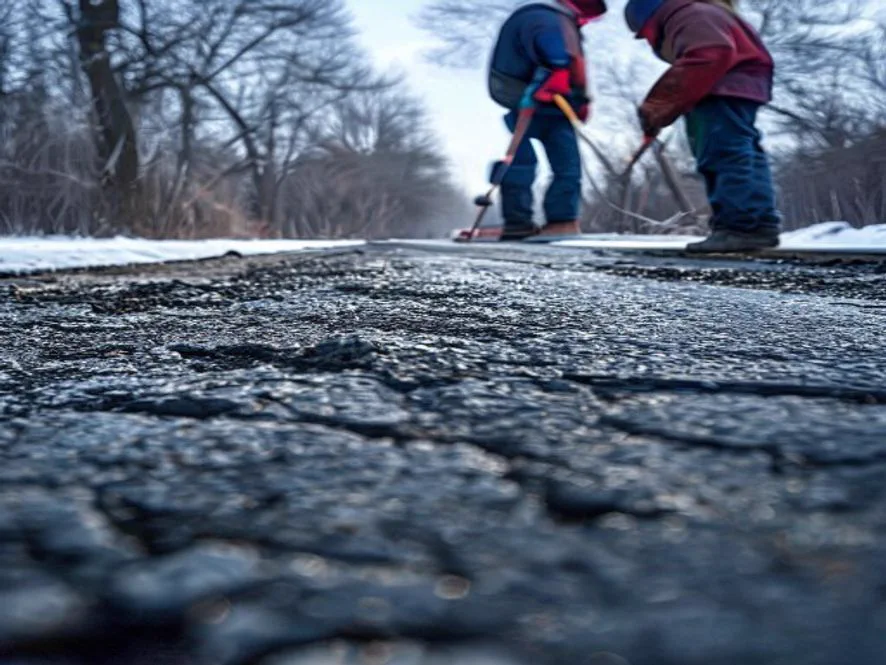
Asphalt itself handles cold fine once it cures. The problem is what happens underneath it. When water in the soil freezes, it expands about 9 percent in volume. That expansion lifts the ground, and anything sitting on top, including your driveway. This is called frost heave, and over a winter it can lift sections of pavement by an inch or more. When the ground thaws in spring, those sections drop back down, but rarely evenly. The result is cracking, settling, and the rough patches northern homeowners know well.
The freeze-thaw cycle does the real damage. In a single winter, many northern regions cross the freezing point dozens of times. Each cycle pries existing cracks a little wider and pushes water deeper. The Federal Highway Administration tracks this kind of seasonal damage on roads, and the same physics applies to your driveway. You can read more about the mechanism in our freeze-thaw damage explainer. The takeaway for install day is simple. You cannot stop frost, so you build a driveway that moves with it and drains before it can freeze.
How deep should the base be?
The base is the most important decision you make. In mild climates a contractor might lay 4 to 6 inches of crushed stone. In freeze-thaw country, plan on 8 to 12 inches of compacted aggregate. The deeper layer does two jobs. It spreads the load and the frost movement over a wider area so no single spot heaves, and it gives water somewhere to drain instead of pooling right under the asphalt.
- Standard cars, stable soil: 8 inches of compacted crushed stone is usually enough.
- Clay or silty soil: go 10 to 12 inches, because these soils hold water and heave the most.
- Trucks, RVs, or heavy loads: 12 inches plus a thicker asphalt mat. See our thickness for heavy vehicles guide.
Material matters as much as depth. Use angular crushed stone, often called dense-graded aggregate or 3/4 inch crusher run, not smooth river gravel. Angular stone locks together when compacted and drains well. The base must be compacted in lifts of 3 to 4 inches at a time, not dumped all at once, and each lift gets rolled before the next goes down. A poorly compacted base is the root of most failures we cover in driveway problems from a bad install. For a full walk-through of layer order, see asphalt driveway layers explained.
The subgrade must be thawed and dry
Never let anyone pave over frozen ground. It is one of the fastest ways to ruin a driveway. If the subgrade is frozen when the base goes down, that ice melts later in the season and the ground settles unevenly under the finished surface. You get sinkholes, low spots, and cracks within the first year. The ground has to be fully thawed, compacted, and free of standing water before any stone or asphalt is placed.
In northern regions the frost line can sit 3 to 5 feet deep by late winter, and the top of the soil does not fully thaw and dry until well into spring. This is why timing is not just about the air temperature. The contractor should check that the subgrade is firm and dry, not soft and muddy. If you have soft or organic soil, a geotextile fabric placed under the base helps separate the stone from the dirt and stops the base from sinking into the mud over time.
When to pave in a northern climate
The paving window in cold regions is shorter than most people expect. Hot mix asphalt comes out of the plant around 300 degrees and has to be spread and compacted before it cools too far. In cold air it cools fast, and asphalt that cools before it is rolled cannot be compacted properly. That leaves voids the surface that let water in.
- Air temperature: aim for 50 degrees Fahrenheit and rising. Most reputable crews stop new installs once daytime highs drop into the 40s.
- Ground temperature: the base should be above 32 degrees and dry. Cold ground pulls heat from the mix even on a mild day.
- Best months: roughly May through September across most of the northern US and Canada. Late spring and summer give the mix time to cure before winter.
Avoid late-fall paving if you can. A driveway laid in October may not fully cure before the first hard freeze, and a soft mat is more vulnerable that first winter. We break the calendar down further in the best time to pave a driveway. If you do end up with a fall install, follow our first-winter protection tips closely.
Drainage is the make-or-break detail
If you take one thing from this guide, make it drainage. Water that cannot drain away will freeze under or beside your asphalt and heave it. The fixes are not expensive, but they have to be planned before paving, not added later.
- Slope: grade the surface at a minimum 2 percent, which is about 1/4 inch of fall per foot, so water runs off instead of pooling. See slope and grade percentages.
- Edge drains: keep the soil at the edges lower than the driveway so runoff has somewhere to go.
- French drains: on flat lots or at the base of a slope, a buried perforated pipe carries water away. See our french drain guide.
Standing water is the warning sign that drainage failed. If you see puddles that linger after rain, fix the grade before winter, because that water will freeze and lift the slab. Our drainage solutions article covers the common layouts. The National Asphalt Pavement Association also publishes guidance on subsurface drainage and base design that backs this up, and the Asphalt Institute details how mix temperature and compaction relate to long-term durability.
Quick estimate
Cold-Climate Base Depth Helper
Pick your soil and load to get a rough base depth and asphalt thickness for a freeze-thaw region. This is a planning estimate, not an engineering spec.
What a cold-climate install costs
A deeper base and more drainage work add to the price, but they are cheaper than redoing a heaved driveway in three years. Expect a northern install to land in the upper part of the national range because of the extra excavation and stone. A typical residential driveway runs in the low-to-mid four figures, with the base and drainage adding a few hundred to over a thousand dollars depending on soil and slope. Run your own numbers with the driveway cost calculator and compare bids against our quote checker so nobody trims the base to win the job.
Watch for lowball quotes that skip the deep base or proper drainage. Those are exactly the corners that fail in freeze-thaw country. Our list of lowball warning signs walks through what to look for on the bid.
Bottom line
In a cold climate the asphalt is the easy part. Win or lose on the base and the drainage. Build 8 to 12 inches of compacted angular stone over thawed, dry subgrade, slope the surface at least 2 percent, move water away with edge or french drains, and pave between May and September when the air stays above 50 degrees. Do that and your driveway will ride out the freeze-thaw cycle for 15 to 20 years instead of cracking apart in three.