To protect a new asphalt driveway through its first winter, keep heavy loads off the soft edges, plow with a rubber-edged blade lifted slightly off the surface, choose sand for traction over heavy ice melt, and clear standing water so it cannot freeze and crack the pavement. Do not sealcoat yet. Wait until next summer.
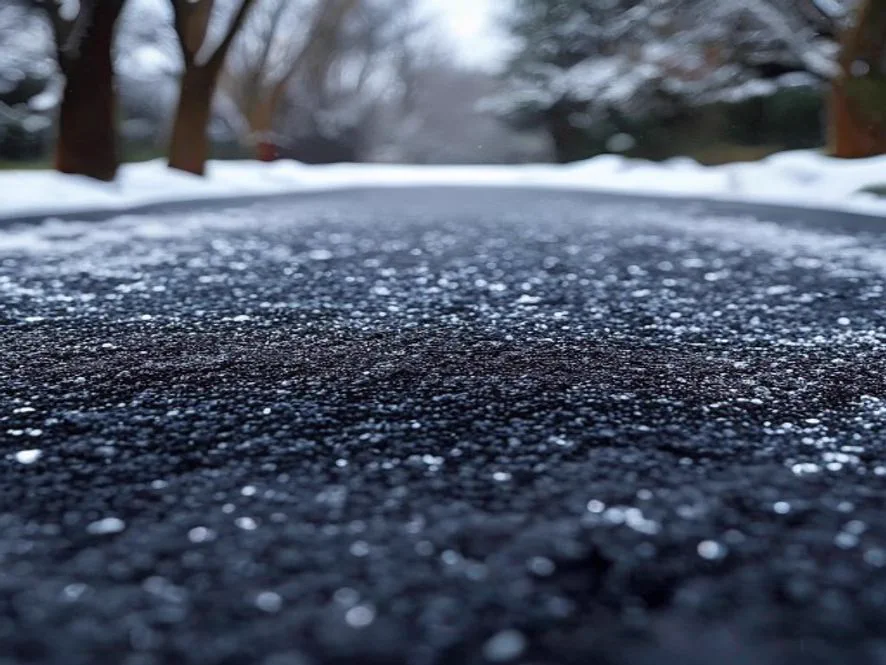
Is fresh asphalt actually at risk in winter?
The cold itself is not the enemy. Asphalt is laid hot and gets stiffer as temperatures drop, so a winter surface is harder and more scuff resistant than a July one. The risks in the first winter come from three things: the pavement is still curing and releasing oils, the base under it is still settling, and your habits with the plow and the salt bag set the tone for the next 20 years.
New asphalt stays a little soft for the first 6 to 12 months. You can park on it after the first 1 to 3 days, but power steering turns, kickstands, jack stands, and trailer tongues can all press dents into the surface while it is young. Read our full first year care guide for the warm-weather side of this, and the curing time guide for exactly how long each stage takes.
How do I plow or shovel a new driveway safely?
Plow gouges are the most common first-winter damage we see. A metal blade that drops too low catches the still-firming surface and chunks it, especially at the edges where asphalt is thinnest. Get ahead of it before the first storm.
- Tell your plow service it is new. Ask for a rubber or polyurethane cutting edge, or plastic shoes that hold the steel blade a quarter inch off the pavement.
- Mark the edges. Push reflective driveway stakes in along both shoulders before the ground freezes so the operator can see where pavement ends and lawn begins.
- Shovel or blow when you can. A snow blower set with skid shoes and a plastic shovel are both gentler than a truck plow for the first season.
- Push, do not chop. Never use a metal spade to chip stuck ice off the surface. You will dig craters that turn into spring potholes.
- Lift, then turn. Tell anyone driving on it to roll forward before cranking the wheel so tires do not twist divots into soft spots.
If you do end up with a scrape or a small chunk, our guide on snow removal without damage walks through prevention, and patching a pothole covers the spring fix.
Salt, sand, or ice melt: what is safe on new asphalt?
Here is the good news that surprises most homeowners. Rock salt does not chemically attack asphalt the way it pits and spalls concrete. Asphalt is a petroleum product and shrugs off chloride salts. So the question is not really about corrosion, it is about freeze thaw cycling. The U.S. Federal Highway Administration has long documented that freeze thaw action is what breaks pavement apart, and any melt-refreeze cycle inside a hairline crack widens it.
For a first winter, lean on traction first and melting second:
- Sand or grit. Cheap, gives instant traction, and does nothing to the pavement. Sweep it up in spring. See our sand vs salt comparison.
- Calcium chloride or magnesium chloride. Work down to about minus 20 F and need less product than rock salt, so fewer freeze refreeze cycles. The cleanest melt choice.
- Plain rock salt (sodium chloride). Fine for asphalt itself, but only melts down to about 15 F and you tend to over apply it. Use sparingly.
- Skip the cheap blends. Some bargain ice melts include fillers and clays that leave a slick residue. Check our best ice melt picks before you stock up.
Whatever you spread, the goal is a clear surface where water drains off, not a slushy puddle that refreezes overnight. For more on the chemistry, see whether salt damages asphalt.
Why does water matter more than cold?
Water is the single biggest threat to a first-winter driveway. When it pools in a low spot, soaks into a seam, or sits along an edge and then freezes, it expands roughly 9 percent and pries the pavement apart. Do this a few dozen times across one winter and a hairline becomes a crack. The U.S. EPA notes that managing stormwater runoff protects both pavement and the soil under it.
Before the first hard freeze, walk the driveway after a rain and look for puddles that do not drain within an hour. Those birdbaths are where freeze thaw will hit first. If you find any, plan a fix in spring. Our guides on standing water and drainage solutions cover the options, from regrading to a french drain.
First-winter readiness
Quick Winter Prep Score
Check the steps you have done. The tool scores how ready your new driveway is for season one.
What should I avoid doing the first winter?
A short list of don'ts saves more driveways than any product you can buy.
- Do not sealcoat. New asphalt needs 6 to 12 months to cure and off-gas before its first seal. Sealing in autumn traps oils and softens the surface. Wait for the right window next summer.
- Do not park heavy equipment on the edges. RVs, dumpsters, and loaded trailers concentrate weight where the asphalt is thinnest. Keep them centered or off entirely.
- Do not chip ice with metal tools. Use sand and a plastic shovel instead.
- Do not pile plowed snow in one spot. A giant melting pile feeds water into one seam all winter. Spread it.
- Do not ignore the base. Frost heave comes from a weak base, so if you see the surface lift, note it for a spring frost heave fix.
What does a first winter cost to manage?
Prepping for winter one is cheap compared to repairs. A bundle of reflective driveway markers runs about 15 to 30 dollars. A bag of calcium chloride is 20 to 40 dollars and a bag of play sand is under 10 dollars. A rubber plow edge upgrade, if your contractor adds one, is usually 50 to 150 dollars. Compare that to spring crack repair or resurfacing if you skip the prep. If you are still budgeting the whole project, our winter care overview and the driveway cost calculator help you plan ahead.
Bottom line
A new asphalt driveway handles its first winter without trouble as long as you respect that it is still young. Keep heavy loads off the edges, plow with a lifted rubber edge and marked shoulders, favor sand and chloride melts over a flood of rock salt, and make sure water drains instead of pooling. Save the sealcoat for next summer. Get those five habits right and your pavement starts year two as good as the day it was poured.