Frost heave lifts an asphalt driveway when water in the soil under the base freezes, expands, and forms ice lenses that push the pavement upward. To fix it, wait for full thaw, cut out the cracked section, replace the wet soil with compacted gravel, add drainage, and repave. Stopping water is the real cure. Use our asphalt calculator to plan the patch and our freeze-thaw guide for related cracking.
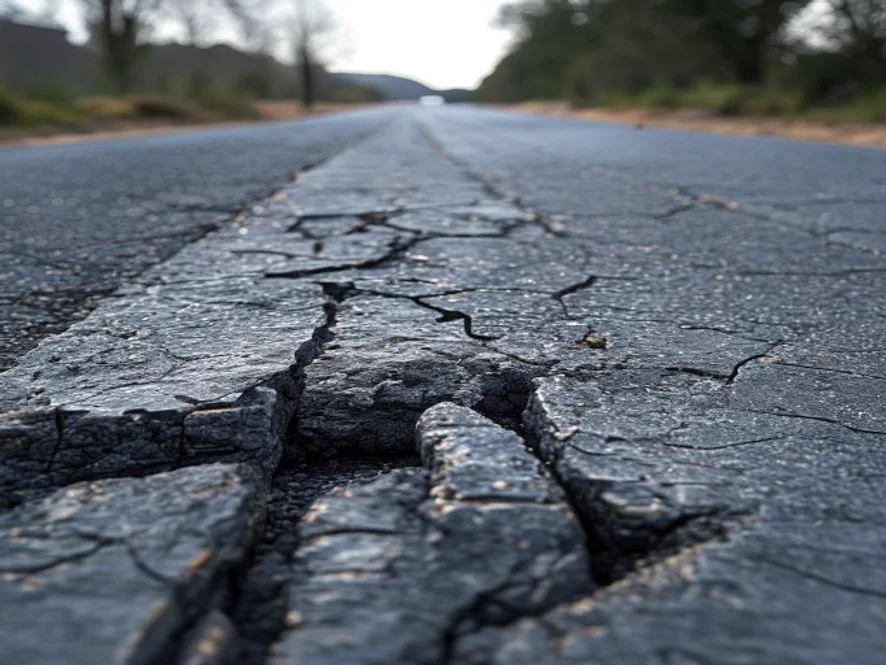
What is frost heave and why does it lift asphalt?
Frost heave is the upward movement of the ground caused by freezing water in the soil. As the temperature drops, water in the dirt below your driveway base freezes into thin layers called ice lenses. Water expands about 9 percent when it turns to ice, and the lenses keep growing as more water is drawn up from below by capillary action. That growing ice has to go somewhere, so it pushes the soil, the gravel base, and the asphalt above it straight up.
Three things have to line up for heave to happen. You need freezing temperatures that reach down to the soil, you need water present in that soil, and you need frost-susceptible soil that can wick water upward. Silt and clay-heavy silt are the worst offenders. Clean gravel and coarse sand drain too fast to hold the water that feeds ice lenses, which is exactly why a proper gravel base matters so much. The U.S. Federal Highway Administration describes the same mechanics in its road research because frost heave wrecks highways the same way it wrecks driveways. You can read the agency overview at fhwa.dot.gov.
How to tell frost heave from other driveway damage
Heave looks different from ordinary cracking. Watch for these signs:
- Seasonal lift. A bump or ridge that appears in deep winter and shrinks or vanishes in spring is heave, not settling.
- A raised ridge or dome. A whole section sits higher than the rest, often along a wet edge or low corner.
- Cracks radiating from the bump. The asphalt bends until it splits, so cracks fan out from the high point.
- Doors and gates catching. If a gate that swings over the driveway suddenly drags only in winter, the slab moved up.
Heave is the opposite of settling, where a section sinks. It is also different from freeze-thaw cracking, where surface water seeps into existing cracks and pries them wider. The two often appear together, so it helps to read both before you start a repair. If you are unsure whether the surface damage is even fixable, our guide on when a driveway is beyond repair walks through the cutoff.
How to fix a frost-heaved asphalt driveway, step by step
Real repair means fixing the base, not just the surface. Patching over a heave without touching the wet soil below just lets it heave again next winter. Here is the full procedure.
- Step 1. Wait for full thaw and assess. Let the ground thaw completely, usually mid to late spring. Mark the high area and check if it dropped back flat or stayed raised and cracked. Minor heave that settles flat may only need crack filling.
- Step 2. Cut out the damaged section. Saw-cut a clean rectangle around the cracked, heaved asphalt and remove the broken pavement down to the base.
- Step 3. Dig out the bad soil. Excavate the wet silty or clay soil that held the ice lens. This is the step most people skip and the reason heave returns.
- Step 4. Add drainage. Install a perimeter or French drain, or regrade so water runs away from the base instead of pooling under it.
- Step 5. Build and compact a thick gravel base. Lay 8 to 12 inches of crushed stone, compacting in 3 to 4 inch lifts so the base is dense and free draining.
- Step 6. Repave and compact. Place hot mix or a thick cold patch, feather the edges into the surrounding pavement, and compact so the patch bonds and sits flush. See our patching tutorial for technique.
- Step 7. Seal and maintain. Seal the seams and crack-fill every fall so water never gets back into the new work.
For a wider raised area where the asphalt is still sound, a contractor may lift it with mudjacking or polyurethane foam instead of cutting it out. That can work, but it does not fix wet soil, so it is best paired with new drainage.
Quick check
Frost Heave Risk Estimator
Answer three quick questions to see how likely your driveway is to heave and what to prioritize.
Lower risk. Keep water moving away and seal cracks yearly.
What does frost heave repair cost?
Cost depends on how much base work you need. A small surface patch over an area that dropped mostly flat runs about 150 to 600 dollars. Cutting out a heaved section, replacing soil, adding drainage, and repaving runs roughly 800 to 3,000 dollars. Mudjacking a sound but raised slab sits in the middle. If heave keeps coming back across the whole driveway, you may be looking at a full replacement with a corrected base. Run real numbers with our driveway cost calculator before you call anyone, and use the quote checker to flag bids that skip the base.
How to prevent frost heave for good
Prevention is cheaper than repair, and it all comes down to keeping water and frost-susceptible soil away from the base. The core moves:
- Thick, clean gravel base. In cold climates a compacted base of 8 to 12 inches of crushed stone gives water somewhere to drain and ice room it cannot fill.
- Remove bad soil. If the subgrade is silt or wet clay, dig it out and replace it. See base prep for the right approach.
- Grade for drainage. A slope of about 2 percent moves water off the surface. Pair it with drainage solutions at the edges.
- Keep gutters and downspouts away. Roof water dumped near the driveway feeds the ice lenses directly.
- Seal and crack-fill yearly. Stopping surface water keeps it out of the base. Our winter protection guide covers the fall routine.
If you are installing new, talk to your contractor about the local frost line. The asphalt industry group NAPA publishes guidance on base and drainage design at asphaltpavement.org, and the EPA covers permeable paving and stormwater that reduce pooling at epa.gov. A driveway built right the first time rarely heaves at all.
Bottom line
Frost heave is not a surface problem, it is a water and soil problem. Ice lenses in wet, frost-susceptible ground push the pavement up, and the only lasting fix is to remove that water and that soil. Cut out the damage, rebuild a thick gravel base, add drainage, repave, and seal. Do the base work once and the bump stops coming back. Skip it, and you will be patching the same spot every spring.