Asphalt wins in cold and freeze-thaw climates because it flexes with the ground and shrugs off salt. Concrete wins in hot, dry, low-salt regions because it stays cool and lasts 30-plus years. Match the material to your weather first, then compare cost and lifespan.
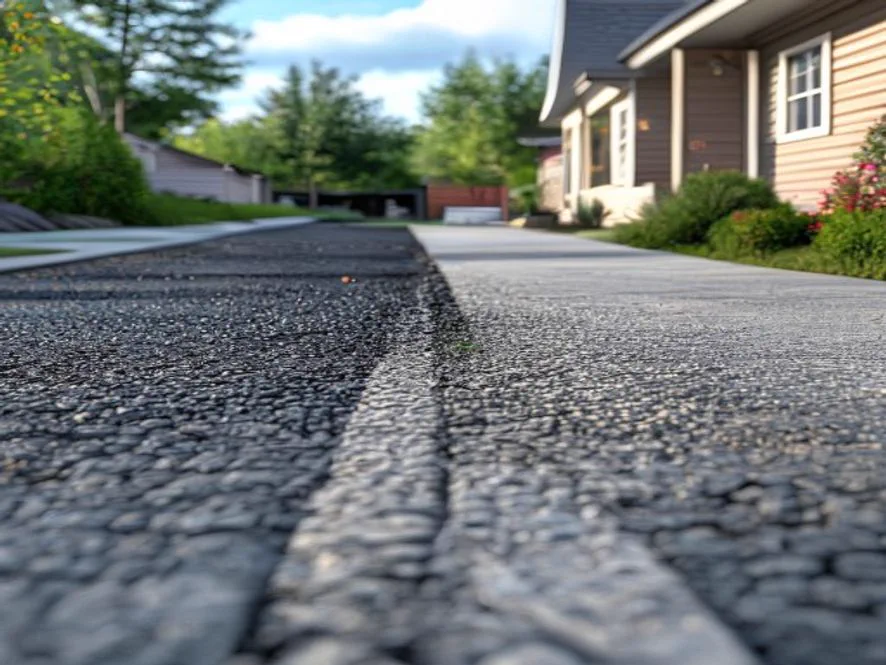
Which material wins in cold and freeze-thaw climates?
If you live anywhere that sees hard winters, repeated freezing, and road salt, asphalt is usually the smarter pick. Asphalt is a flexible material. When the ground swells and shrinks through the seasons, the surface moves with it instead of snapping. Concrete is rigid, so the same ground movement that asphalt absorbs can crack a slab right across.
Freeze-thaw is the real enemy in northern states. Water seeps into tiny pores, freezes, expands about 9 percent, and pries the surface apart. The U.S. Federal Highway Administration documents how these cycles drive most cold-climate pavement damage on its research pages. Concrete is especially prone to surface flaking, called spalling, when de-icing salt and freeze-thaw work together.
- Salt tolerance. Asphalt is not bothered by de-icing salt. Concrete can spall and pit when salt brine soaks in, so many cold regions ban or limit salt on new slabs.
- Crack behavior. Asphalt cracks are easy and cheap to fill. Concrete cracks are harder to hide and often need full slab replacement.
- Plowing. A steel plow blade chips concrete edges and joints faster than it damages asphalt.
For the full winter picture, see our guides on freeze-thaw damage and whether salt damages asphalt before you commit to either surface.
Which wins in hot and desert climates?
Flip the map to the Sun Belt and the answer flips too. Concrete is the better long-term choice across hot, dry regions like Arizona, Nevada, and inland Texas. Asphalt is held together by bitumen, a petroleum binder that softens as temperatures climb. Above roughly 120 degrees Fahrenheit at the surface, soft asphalt scuffs under tires, kickstands, and trailer jacks.
Concrete reflects more sunlight and stays firmer in heat, so it shows fewer dents and dimples. It also runs cooler underfoot, which matters if kids or pets use the driveway. We cover the heat side of the trade-off in why asphalt goes soft in summer and whether asphalt gets too hot.
- Surface temperature. Dark asphalt can read 40 to 60 degrees hotter than air on a sunny day. Lighter concrete stays closer to air temperature.
- UV breakdown. Constant sun dries asphalt binder and fades it gray, so hot-region asphalt needs sealcoating more often.
- Softening. Heavy vehicles parked on hot asphalt can leave permanent ruts and tire prints.
Asphalt still works in hot climates if you commit to maintenance. Our hot-climate care guide walks through sealing schedules and parking habits that keep it firm.
What about wet, mild, and coastal climates?
In the Pacific Northwest, the Southeast, and coastal zones, the deciding factor is not heat or freeze. It is drainage. Both materials survive in mild, wet climates, so base prep and slope matter more than the surface you choose. Standing water erodes the base under any driveway and shortens its life.
Asphalt sheds water naturally and is forgiving to patch when a low spot forms. Concrete resists standing water on the surface but cracks if the soil below it shifts from constant moisture. Aim for at least a 2 percent slope so water runs off. Our drainage solutions guide shows how to keep water moving in rainy regions.
Cost and lifespan by climate
Sticker price favors asphalt almost everywhere. Asphalt runs about 7 to 13 dollars per square foot installed, while concrete runs about 8 to 18 dollars per square foot. But lifespan changes the math by region. Concrete lasts 30 to 40 years in friendly climates; asphalt lasts 15 to 25 years and longer with regular sealcoating.
In cold or salty regions, concrete often fails early, which erases its lifespan edge. In hot, dry regions concrete delivers the full 30-plus years and the premium pays back. Run your own numbers with the driveway cost calculator and compare regional pricing in our cost by state and region breakdown.
Quick decision
Climate Match Picker
Pick the description that fits your area. The tool suggests the material that usually wins there and why.
Maintenance differences that matter by region
Both materials need upkeep, but the kind and timing depends on climate. Asphalt wants sealcoating every 2 to 4 years to replace binder lost to sun and water. Concrete needs joint sealing and a penetrating sealer to fight salt, especially in cold zones. Skipping either step cuts years off the surface.
- Cold regions. Seal asphalt cracks before winter so water cannot freeze inside them. Keep salt off new concrete for the first winter.
- Hot regions. Sealcoat asphalt more often, every 2 to 3 years, because UV dries the binder faster.
- Wet regions. Clear gutters and grade so water never pools on either surface.
Build a routine with our maintenance schedule, and if you want to know whether sealing earns its keep, read is sealcoating worth it. The Asphalt Pavement Association also publishes homeowner care basics at asphaltpavement.org.
Bottom line
Let your weather lead. Choose asphalt in cold, snowy, salt-heavy, and freeze-thaw climates where flexibility and easy repair win. Choose concrete in hot, dry, low-salt regions where it stays cool and runs the full 30 to 40 years. In mild wet zones, fix drainage first and either material works. Match the surface to the climate and you will not repave early.