A full driveway replacement in 2026 runs 7 to 15 dollars per square foot for asphalt, or about 7,000 to 15,000 dollars for a typical 1,000 sq ft driveway, figures drawn from our 2026 Asphalt Driveway Cost Report. That price covers tear-out, disposal, base rework if needed, and the new install. This guide walks each line item, the cost by material, and the rule for when replacement beats another round of repair. For a quick area-based total, use the driveway cost calculator.
The 2026 number, by material
Replacement is a different price than install only. The install-only real bill covers a new driveway on a fresh subgrade. Replacement adds tear-out, hauling, and disposal. Material ranges below are 2026 US averages installed.
- Asphalt replacement: 7 to 15 dollars per sq ft. A 1,000 sq ft driveway runs 7,000 to 15,000 total.
- Concrete replacement: 10 to 22 dollars per sq ft. Heavier tear-out drives the lift over asphalt. A 1,000 sq ft job runs 10,000 to 22,000.
- Gravel replacement: 2 to 5 dollars per sq ft. Mostly fresh stone plus regrading. A 1,000 sq ft job runs 2,000 to 5,000.
- Paver replacement: 18 to 35 dollars per sq ft. Labor heavy on both tear-out and install. A 1,000 sq ft job runs 18,000 to 35,000.
For a side-by-side on the install-only side, see asphalt vs concrete. For the per-sq-ft buckets behind the new install half of the bill, read asphalt cost per square foot in 2026.
Line items in a replacement quote
A replacement quote rolls up six buckets. Each bucket is a place a thin quote can hide a skipped step.
- Tear-out (1 to 5 dollars per sq ft): Mill or break the old surface. Asphalt is lightest. Concrete and pavers are heaviest.
- Hauling and disposal (300 to 1,500 dollars): Trucking the old material to a recycler or landfill. Tipping fees vary by region.
- Base inspection and rework (0 to 3 dollars per sq ft): Probe the base. Pull soft spots. Add granular fill and compact. Skipping this is the most common replacement shortcut.
- New material (25 to 40 percent of total): Hot mix asphalt, ready-mix concrete, pavers and bedding, or stone.
- Labor and equipment (25 to 35 percent of total): Paver, roller, crew. Wage data for paving operators is published by the U.S. Bureau of Labor Statistics.
- Permits, mobilization, overhead (10 to 20 percent of total): Permit at cost. Mobilization rolls in. Insurance and margin sit here too.
Tear-out by material
The old driveway has to leave before the new one can arrive. Tear-out price tracks how hard the material is to break and how heavy it is to haul.
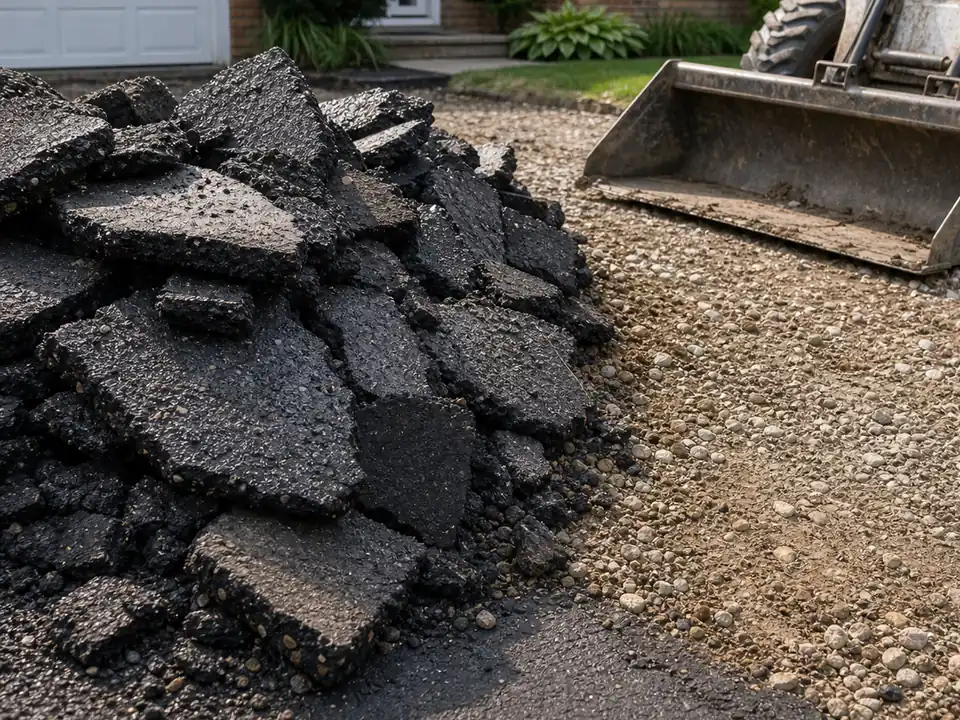
- Asphalt tear-out: 1 to 2 dollars per sq ft. Cold planer mills the old surface. Often recycled, which can credit 50 to 200 dollars back on a residential job. The cost to remove an old asphalt driveway guide walks the line items.
- Concrete tear-out: 2 to 4 dollars per sq ft. Heavier. Often needs a jackhammer or hoe ram. Reinforcing steel adds a step.
- Paver tear-out: 2 to 5 dollars per sq ft. Labor heavy. Pavers and bedding sand have to be hand-pulled or lifted in panels.
- Gravel tear-out: 1 to 2 dollars per sq ft. Mostly grading and hauling. Old stone can sometimes stay as part of the new base.
Base rework: the line that hides
After tear-out, the base is exposed. A good crew probes it with a steel rod, identifies soft spots, removes them, and adds compacted aggregate. Skipping this step is why a five-year-old driveway can fail. The bad install problems guide covers the symptoms. Expect 1 to 3 dollars per sq ft if base rework is needed. Reputable replacement quotes carry this as a contingency line, not as a fixed cost, because the base condition can only be confirmed after tear-out. The National Asphalt Pavement Association publishes base design references on what compaction and stone gradation look like for a residential subbase.
When to replace instead of repair
The rule is base condition plus surface condition plus age. Walk the driveway and check three things.
- Age: Asphalt over 20 years and concrete over 30 are inside replacement window territory. See how long an asphalt driveway lasts.
- Alligator cracking: If more than 30 percent of the surface shows interconnected map-pattern cracking, the base has failed. Surface repair is throwing money away. Read fixing cracks for the diagnostic photos.
- Settled areas: Two or more low spots that hold water mean base failure under those zones. Patching the surface does not fix the base.
The detailed decision tree is in resurface vs replace. Short answer: isolated cracks and a sound base mean repair or resurface. Widespread alligator cracking and multiple low spots mean replace.
Replacement vs resurface, by the dollars
A 1,000 sq ft driveway shows the gap clearly.
- Sealcoat only: 200 to 400 dollars. Cosmetic and surface protection. Not a fix.
- Crack fill plus sealcoat: 400 to 800 dollars. Buys 2 to 4 more years if cracks are isolated.
- Overlay (1.5 to 2 in new asphalt over sound base): 3,000 to 7,000. See asphalt resurfacing cost.
- Mill and overlay: 4,000 to 8,000. Removes top 1 to 2 inches first.
- Full replacement: 7,000 to 15,000.
The math is simple. If replacement adds 15 to 25 years of life and overlay adds 8 to 12, the per-year cost can land close. The decision pivots on base condition, not on price alone.
Hidden adders in replacement
The base price covers a clean replacement. Real lots come with surprises. The hidden costs guide covers every line. The top five on a replacement project:
- Drainage and grading rework: 500 to 3,000. If the original install had bad slope, fix it now.
- Apron at the street: Often a separate permit and concrete sub. 300 to 1,200.
- Retaining edges or curbs: By the linear foot. 25 to 60 per ft installed.
- Tree root removal: 200 to 1,000. Skipping this means the new driveway cracks in the same place.
- Premium thickness for heavy vehicles: See thickness for RV and heavy vehicles.
How to bid a replacement project
Hand each contractor the same scope sheet. Same area, same compacted thickness, same base depth, same drainage scope. The quote comparison guide walks the line-by-line method. Use the quote checker to score scope. Check the contractor on the Better Business Bureau for complaint history. Pull a written contract with payment milestones. The FTC home improvement contract guide is the consumer-side standard for what to put in writing. The contractor selection guide covers the vetting steps before you sign.
Replacement cost by driveway size
The per-sq-ft rate moves with area. Small jobs carry a fixed mobilization cost that lifts the rate. Big jobs dilute it. Apply the ranges below to your own area as a planning step.
- 200 sq ft pad replacement: 1,800 to 3,000 dollars. Rate near 9 to 15 per sq ft. The mobilization line is the biggest single cost.
- 500 sq ft small driveway replacement: 4,000 to 7,500. Rate 8 to 15 per sq ft.
- 1,000 sq ft standard residential replacement: 7,000 to 15,000. Rate 7 to 15 per sq ft.
- 1,500 sq ft mid-size suburban replacement: 10,500 to 21,000. Rate 7 to 14.
- 2,000 sq ft long rural replacement: 14,000 to 28,000. Rate 7 to 14. Add 1 to 2 per sq ft if the plant is more than 30 miles away.
The cost by size table covers the install-only side. Replacement adds the tear-out and disposal lines on top of those numbers.
Timing and the paving season
Most US markets have a five to seven month paving season. Asphalt plants need overnight temperatures above 50 F to produce hot mix that lays well. April through October is the busy window. The best time to pave guide covers shoulder-season pricing that can drop the total 5 to 15 percent. For a replacement, sequencing matters more than for a fresh install. Tear-out, base inspection, and new install often span 2 to 4 working days. A wet stretch in the middle can stall the project. Pull a written start window in the contract, not a single date. The driveway lifespan guide covers the curing window after the new install.
Bottom line
A driveway replacement in 2026 is a 7,000 to 15,000 dollar project for a typical asphalt residential job, more for concrete or pavers. Tear-out, disposal, base rework, and the new install are the four buckets to look for on a quote. Replacement is the right call when alligator cracking is widespread, the base has failed, or the driveway is past its useful life. For the install-only side of the math, see the real bill breakdown. For tear-out only, see the removal cost guide.
Cost ranges, base aggregate planning, and disposal references are on the sources page.