Sand gives an asphalt driveway instant traction with no chemistry and no melt-refreeze cycle, so it is the safer choice for the pavement. Salt actually melts the ice but can drive freeze-thaw damage into cracks. Use sand for grip and a light deicer only to clear ice.
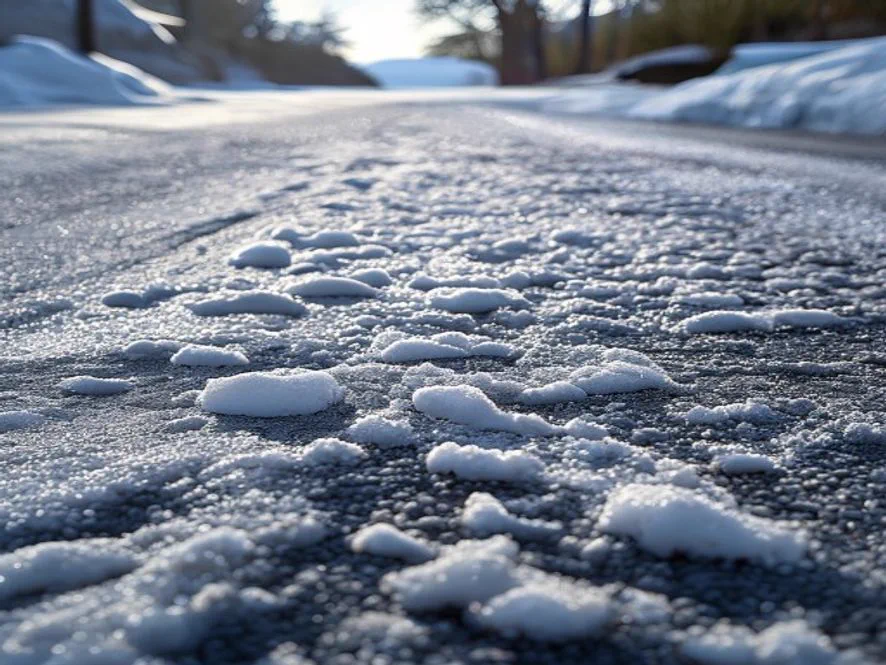
Sand and salt do two different jobs
Most homeowners treat sand and salt as competing products for the same task. They are not. They solve different problems, and once you separate the two jobs the choice gets simple.
- Sand provides traction. It does not melt anything. It sits on top of ice and gives your tires and boots a rough, gritty surface to bite into. The ice stays put, but you can walk and drive on it. Grip is instant the second you scatter it.
- Salt provides melting. Rock salt and other deicers lower the freezing point of water, so ice turns back to liquid that can drain or evaporate. The result is bare pavement, but it takes time and works only within a temperature range.
- The honest summary. If you want the ice gone, you need salt or another deicer. If you just need the surface walkable and drivable right now, sand does it with no chemistry and no risk to the asphalt.
Because asphalt is held together by flexible petroleum binder, salt cannot chemically eat it the way it scales concrete. The real risk is meltwater seeping into pores and cracks, then refreezing. We unpack that fully in does salt damage an asphalt driveway.
Why sand is gentler on asphalt
From the pavement's point of view, sand is almost a non-event. It introduces no chemistry and no extra water, which is exactly why it is the lowest-risk traction option you can pick.
- No chemical pathway. Sand is inert silica. It does not react with bitumen binder or aggregate, so it cannot degrade the surface at any concentration.
- No melt-refreeze cycle. Salt creates brine that flows into cracks and refreezes there, prying them wider. Sand creates no liquid, so it adds nothing for freeze-thaw to push around. Northern climates see 30 to 80 freeze-thaw cycles per winter, and the Federal Highway Administration names that cycle the top cold-climate pavement killer.
- Pet and plant friendly. Sand will not burn paws or kill the grass along the driveway edge the way concentrated chloride runoff can. The EPA snow and ice resources push homeowners toward lower-chloride approaches to protect streams and groundwater.
The one real cost of sand is cleanup. It does not disappear when the snow melts. You sweep it up in spring rather than letting it wash into storm drains, and that is the price of zero chemistry.
Sand vs Salt Picker
Answer three quick questions and this tells you whether sand, salt, or a mix fits your situation. It is general guidance, not a lab result.
When salt is the right call
Sand is the gentler product, but there are clear cases where you genuinely want the melting power that only a deicer brings.
- You need bare pavement. A sloped or steep driveway can be dangerous even with sand on top of ice. Melting the layer off is safer. See steep driveway considerations for grade-related traction issues.
- Thin ice or light frost. A light deicing clears a glaze fast, where sand would just sit on a sheet you still slip on.
- Before a refreeze. If meltwater is going to refreeze overnight, a small amount of deicer keeps it liquid long enough to drain. Clearing standing water first matters most. See standing water fixes.
When you do reach for a deicer, the product matters. Calcium chloride and magnesium chloride are asphalt-safe and work at far lower temperatures than rock salt, which quits around 15 to 20 degrees Fahrenheit. Our best ice melt for asphalt guide ranks them, and how to melt ice without damage covers technique.
The smart combo most homeowners should use
You do not have to pick a single product for the whole winter. The approach that protects asphalt best uses each one for the job it is good at.
- Sand as your default. For everyday grip on packed snow or a thin glaze, scatter sand. It is cheap, asphalt-safe, and works instantly at any temperature.
- Deicer only to clear ice. When you actually need the ice gone, apply a light dose of calcium chloride. A thin scatter melts as well as a heavy pile and leaves far less brine behind.
- A pre-mixed blend for storms. Mixing roughly three or four parts sand to one part asphalt-safe deicer gives instant traction plus slow melting in one scoop. It is the classic municipal recipe scaled down.
Roughly one 50 pound bag of sand covers 500 to 800 square feet for traction, so a typical 600 square foot two-car driveway needs well under a bag per icing. To check your driveway's square footage for any winter product math, the asphalt calculator handles the area, and the driveway cost calculator helps with bigger seasonal budgets.
Protecting the surface either way
Whether you choose sand, salt, or a blend, the durable defense is the same: keep water out of the pavement so freeze-thaw has nothing to pry on.
- Sealcoat every 2 to 4 years. A sound seal closes pores so brine and meltwater cannot wick in. Estimate gallons with the sealer calculator.
- Fill cracks every fall. The highest-leverage task before freeze-thaw season. Open cracks are direct highways for any meltwater you create.
- Use a plastic shovel. Avoid gouging the surface with a metal edge, and sweep sand up in spring rather than washing it into drains.
For the full cold-season routine, follow our winter protection guide, and tie it into your year-round maintenance schedule.
Bottom line
Sand vs salt is not really a contest, because they do different jobs. Sand gives instant traction with zero chemistry and zero risk to your asphalt, but it never melts ice. Salt and other deicers melt ice but can feed freeze-thaw damage into unsealed cracks. Lead with sand for grip, use a light asphalt-safe deicer only when you need bare pavement, keep the surface sealed, and your driveway will get through winter undamaged. References are on the sources page.