The best ice melt for an asphalt driveway is calcium magnesium acetate (CMA), because it is chloride free and does the least to drive freeze-thaw cracking. Magnesium chloride and calcium chloride rank next and are fine in moderation. Heavy rock salt is the riskiest common choice. For traction alone, plain sand stays the safest option.
How ice melt actually affects asphalt
Asphalt is a flexible mix of stone and a petroleum binder. Unlike concrete, it does not get chemically chewed up by chloride salts. So the real risk from ice melt is indirect. Every deicer turns ice into liquid water on a surface that may refreeze hours later. That melt water seeps into surface pores and hairline cracks, then expands the next time it freezes. Over a winter that runs 30 to 80 freeze-thaw cycles in the northern US, the cracking adds up. If you want the mechanism in depth, read freeze-thaw damage explained and the companion piece on whether salt damages asphalt.
So "safe vs risky" comes down to three things: how much chloride a product dumps into the pavement, how aggressively it pulls water in, and whether you apply a sane amount. A premium product used heavily can do more harm than a cheap one used lightly. Dose matters as much as chemistry.
The safe-to-risky ranking
Here is the short version, gentlest first. Working temperatures are approximate because humidity and ice thickness change real-world performance.
- Calcium magnesium acetate (CMA). Safest. Chloride free, so it does not corrode metal or feed freeze-thaw cracking. Pet safe and plant safe. Works to about 20 degrees Fahrenheit, so it slows in deep cold. Most expensive, often 30 to 60 dollars for a small bag.
- Magnesium chloride. Low risk. Works to about minus 5 degrees Fahrenheit. Less corrosive than rock salt and easier on plants and concrete walks. A solid all-rounder for most homeowners.
- Calcium chloride. Low to moderate risk. The cold-weather workhorse, melting to about minus 25 degrees Fahrenheit. Asphalt friendly in normal amounts but it pulls water aggressively, so overuse leaves a slick, refreezing film. Fast acting.
- Rock salt (sodium chloride). Risky in volume. Cheap, 5 to 15 dollars a bag, and only works to about 15 to 20 degrees Fahrenheit. Heavy loading speeds freeze-thaw cracking, corrodes nearby metal, and damages concrete sidewalks and lawn edges.
- Plain sand. Asphalt safe (no melt). Adds grip but melts nothing. Perfect for new pavement, deep cold below your deicer's range, or a quick traction fix on a slope. Pair with a light deicer for icy conditions.
The Asphalt Institute and the National Asphalt Pavement Association both note that chloride deicers harm asphalt through water intrusion rather than direct chemical attack, which is why the gentle picks all reduce chloride load or skip it entirely. See the Asphalt Institute for pavement chemistry background.
Ice melt picker
Enter tonight's low temperature and your priority. The tool suggests a product and flags anything to avoid.
How much should you actually apply?
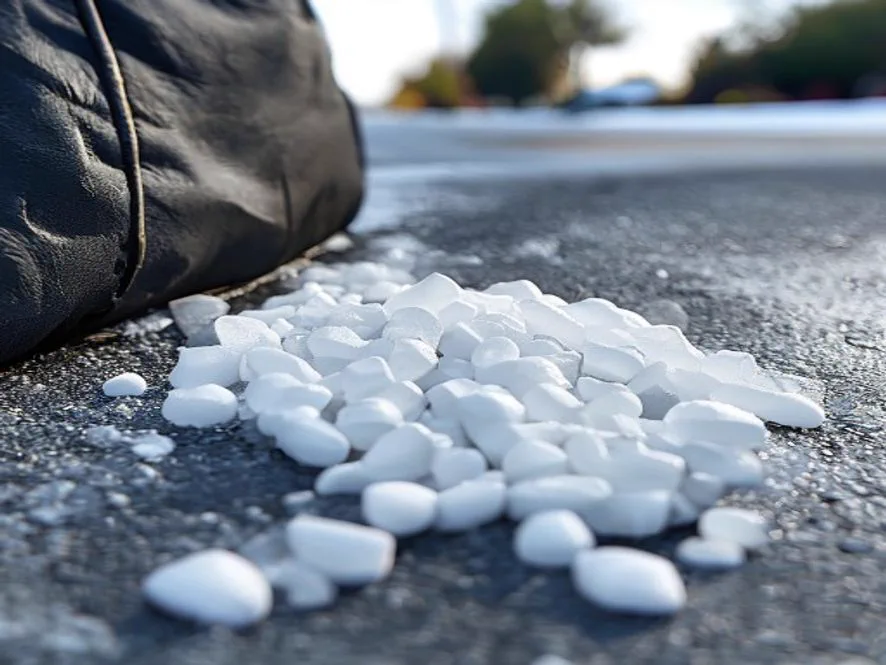
Most homeowners use two to five times too much deicer. A light, even scatter is the goal. The general target is about 2 to 4 ounces per square yard, which is roughly one coffee mug spread over a single parking-space-sized patch. If you can see pellets piled up or a white crust forms after melt, you over-applied. Extra product does not melt faster. It just wicks more chloride and water into the pavement, raises your cost, and runs off into soil and storm drains. The EPA's snow and ice management resources push the same "less is more" message for protecting waterways.
- Pre-treat when you can. A light scatter before the storm stops ice from bonding to the surface, so you need far less product later.
- Scatter, do not pile. A handheld broadcast spreader gives an even coat with no clumps.
- Sweep up the leftovers. After the melt, sweep dry pellets off the surface so they cannot refreeze or wash into the lawn.
In real quantities, a typical 16 by 40 ft driveway is about 71 square yards, so a single light treatment at 2 to 4 ounces per square yard works out to roughly 9 to 18 pounds. A standard 50-pound bag of deicer therefore covers about 3 to 5 storms, not one. If a bag disappears after a single application, you are using far too much.
Cost per winter, compared
For a typical two-car driveway used through a northern winter, the all-in deicer spend is small next to the cost of repairs. Rough seasonal ranges for an average homeowner:
- Rock salt: about 20 to 50 dollars a season. Cheapest up front, most indirect wear.
- Calcium or magnesium chloride: about 50 to 120 dollars a season. The practical sweet spot for most people.
- CMA: about 120 to 250 dollars a season. Gentlest, priciest. Many people use it only on the high-traffic apron and walkways.
- Sand: about 10 to 30 dollars a season. No melt, pure traction. Cheapest and gentlest, but you still shovel.
Set that against a single crack-fill afternoon or a future patch. One winter of heavy rock salt rarely ruins a driveway, but five winters of it, on unsealed pavement, is a real difference in lifespan. A current sealer calculator run plus a fall crack-fill protects the surface far more than switching brands ever will.
Pair ice melt with the right winter habits
The product is one lever. The bigger wins are keeping water out of the pavement and never gouging the surface. A few habits matter more than which bag you buy:
- Seal and fill before winter. A sound seal coat and filled cracks stop melt water from getting in. See how to protect asphalt in winter for the full pre-season list.
- Shovel and plow gently. Use a plastic or rubber-edge blade, not bare metal. Our guide on snow removal without damage covers blade and skid-shoe setup.
- Clear standing water before a freeze. A frozen puddle in a low spot becomes a crack. The same logic drives melting ice without damage.
- Lean on sand for traction. Below your deicer's range, sand beats dumping more chloride. Compare the trade-offs in sand vs salt for traction.
Special cases worth flagging
- Brand-new driveway. Asphalt under a year old is soft and porous. Use sand only for that first winter. Details in protecting a new driveway through its first winter.
- Pets in the household. Chloride pellets crack and burn paw pads. CMA or a pet-rated magnesium chloride blend is worth the premium near doors and walkways.
- Concrete apron or steps nearby. Rock salt attacks concrete directly. If your asphalt meets a concrete walk or garage slab, switch to a chloride-light or chloride-free product on that zone.
- Deep cold snaps. Below minus 10 degrees Fahrenheit, most products quit. Calcium chloride holds longest, but plowing and sand often beat chasing a melt that will not come.
Bottom line
If you want one rule: buy magnesium chloride for everyday use and keep a bag of calcium chloride for deep cold and a bag of sand for traction. Skip heavy rock salt, especially near concrete and plants, and reserve premium CMA for paws and walkways. Then apply a light, even dose, sweep up the excess, and let your fall sealing and crack-filling do the heavy lifting. The bag you choose matters less than the dose you use and the water you keep out. References for deicer chemistry and freeze-thaw data are on the sources page.