To remove snow from an asphalt driveway without damage, choose your tool by depth. Use a poly shovel for light snow, a snow blower with raised skid shoes for moderate snow, and a plow with a floating blade and rubber edge for long driveways. Always leave a thin layer and never scrape bare. Pair removal with a good winter protection routine and a smart ice melt choice.
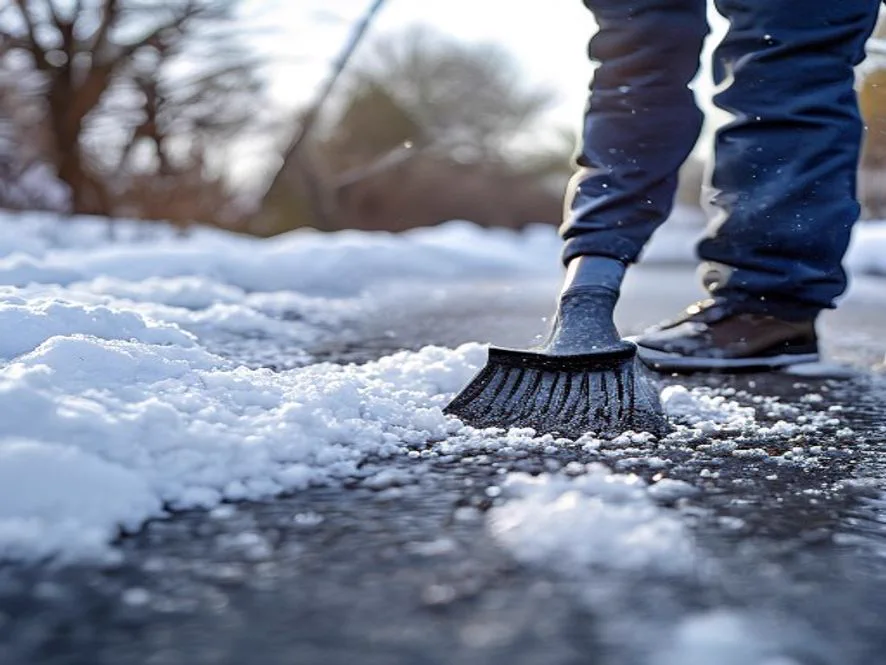
Does snow actually damage asphalt, or is it the way you clear it?
Snow sitting on top of your driveway does almost nothing on its own. The real harm comes from two places. First, the way you remove it. A sharp metal edge dragged hard across the surface scratches the asphalt and chips weak spots at the edges and the apron. Second, water. As snow melts it seeps into hairline cracks, then refreezes overnight and expands. That cycle, repeated dozens of times a winter, is what widens cracks and lifts edges. The U.S. Federal Highway Administration documents how this freeze-thaw action stresses pavement over time.
So your snow strategy has two jobs. Clear the snow gently so the tool does not gouge the surface, and clear it promptly so meltwater does not pool and refreeze inside cracks. If you understand how freeze-thaw damage works, the rest of the routine makes sense. Removing snow is partly about traction and partly about keeping liquid water moving off and away from the pavement.
Shovel, blower, or plow: which should I use?
The right tool depends on how much snow falls, how long your driveway is, and how steep it is. None of these tools damage asphalt by nature. They damage it when set up or used wrong.
- Shovel. Best for light snow under about four inches and driveways you can clear in 15 to 20 minutes. Choose a poly or plastic blade, not a steel edge. Push and lift rather than scrape.
- Snow blower. Best for moderate snow of four to twelve inches on flat or gently sloped driveways. A single-stage unit has a rubber-tipped auger that gently contacts the surface. A two-stage unit rides on skid shoes set above the pavement so it never touches asphalt.
- Plow. Best for long, wide, or rural driveways where shoveling is impractical. Use a blade that floats above the surface with a rubber or poly cutting edge. Plows do the most damage when operators dig in at the edges and the apron.
If your driveway is long or steep, a plow or blower saves your back, but it raises the stakes. The faster the tool moves, the easier it is to catch a low spot. Match the tool to your real conditions, not to the biggest storm you can imagine.
How do I shovel asphalt without scratching it?
A shovel seems harmless, but a hard steel edge raked across asphalt leaves visible scratches and can lift bits of a thin or aging sealcoat. Use these habits to keep the surface clean.
- Use a poly blade. Plastic flexes over surface texture instead of cutting into it. Many models add a thin metal wear strip; that strip is fine if you push, not chop.
- Push, do not chop. Slide snow off in rows. Lift to dump it rather than levering against the pavement.
- Clear early. Two inches lifts easily. A foot of packed, refrozen snow forces you to scrape, which is when damage happens.
- Mind the edges. The outer six inches of asphalt are the weakest. If your edges are already crumbling, work them gently and avoid prying.
How do I set up a snow blower for asphalt?
Snow blowers are surprisingly gentle on asphalt when adjusted right. The key part is the skid shoes, the two metal or plastic feet on the sides of the housing that set how high the auger rides.
- Raise the skid shoes. On a two-stage blower, set the shoes so the auger sits about a quarter inch above the surface. This leaves a thin snow film and keeps metal off asphalt.
- Pick the right machine. Single-stage blowers clean closer to the surface with a rubber auger and suit smaller, flatter driveways. Two-stage units handle deep snow and long runs.
- Add poly skid shoes. Aftermarket plastic shoes are cheap insurance against scratching, especially on a fresh sealcoated surface.
- Go slow over low spots. A birdbath or dip lets the housing drop and contact the pavement. Ease off the throttle there.
Decision helper
Which snow tool fits your driveway?
Enter your driveway length and the typical snowfall per storm. This suggests the gentlest practical tool and a rough clearing time. It is guidance, not gospel.
How do I plow a driveway without gouging the asphalt?
Plowing covers ground fast, which is exactly why it can carve a long scrape if the blade is set too low. The fix is to let the blade float rather than press down.
- Raise the blade. Set it to float just above the surface so it skims snow instead of pressing into the pavement.
- Use a soft cutting edge. A rubber or polyurethane edge clears snow while flexing over surface texture and minor unevenness.
- Angle the blade. Push snow to one side in long passes rather than head-on, which reduces the chance of catching and digging.
- Slow down at transitions. The apron, curb cut, and any spot where the slope changes are where blades catch. If your driveway sits on a hill, take those zones at a crawl.
The 5-step gentle snow removal method
Whatever tool you reach for, the same sequence keeps the surface intact.
- 1. Clear early and often. Tackle two to three inches at a time instead of waiting for the storm to finish and refreeze.
- 2. Match the tool to the depth. Shovel for light, blower for moderate, plow for long or deep.
- 3. Protect the cutting edge. Poly or rubber on shovels and plows, raised skid shoes on blowers.
- 4. Work with the surface. Push or lift, go slow over low spots, never pry at edges.
- 5. Leave a thin layer. Stop about a quarter inch above bare pavement and finish with traction grit or pavement-safe melt.
What about ice melt, sand, and the layer you leave behind?
Scraping all the way to bare asphalt on every pass is the single fastest way to scratch a driveway. Leave a quarter inch and finish the job with grit or melt. For traction without chemical risk, sand wins, and our guide on sand versus salt for traction walks through the tradeoffs. If you do use a melt, skip rock salt and pick a pavement-safe product, because rock salt accelerates freeze-thaw cracking. Salt damage on asphalt is real but slow, and the bigger risk is to nearby concrete and metal. The EPA notes that chloride from road salt also runs off into local waterways, so a lighter hand helps the environment too.
One safety note. Snow clearing is hard physical work in cold weather. The CDC warns that shoveling heavy snow strains the heart, so pace yourself, push instead of lift when you can, and take breaks.
Protect the driveway before the snow flies
The best snow season is the one you prepped for in the fall. A driveway with sealed cracks and good drainage shrugs off freeze-thaw far better than a neglected one. Before winter, walk the surface and seal any cracks so meltwater cannot get in. Confirm water sheds off the pavement instead of pooling, and review the full winter care checklist while you are at it. If you have a new driveway, your first winter needs extra care because fresh asphalt is still curing and more sensitive to harsh treatment.
Bottom line
You will not wreck your driveway with a shovel, blower, or plow as long as you set the tool up to float above the surface, clear snow before it packs down, and stop a quarter inch short of bare pavement. The real enemy of asphalt in winter is not the snow on top. It is meltwater freezing inside cracks. Clear gently, leave a thin protective layer, finish with sand or a pavement-safe melt, and seal your cracks before the first storm.