Salt does not damage an asphalt driveway the way it damages concrete. Asphalt is held together by flexible petroleum binder that salt cannot dissolve. The real harm is indirect: salt melts ice into water, that water seeps into pores and cracks, then refreezes and expands. Freeze-thaw is the true driveway killer, not the salt itself.
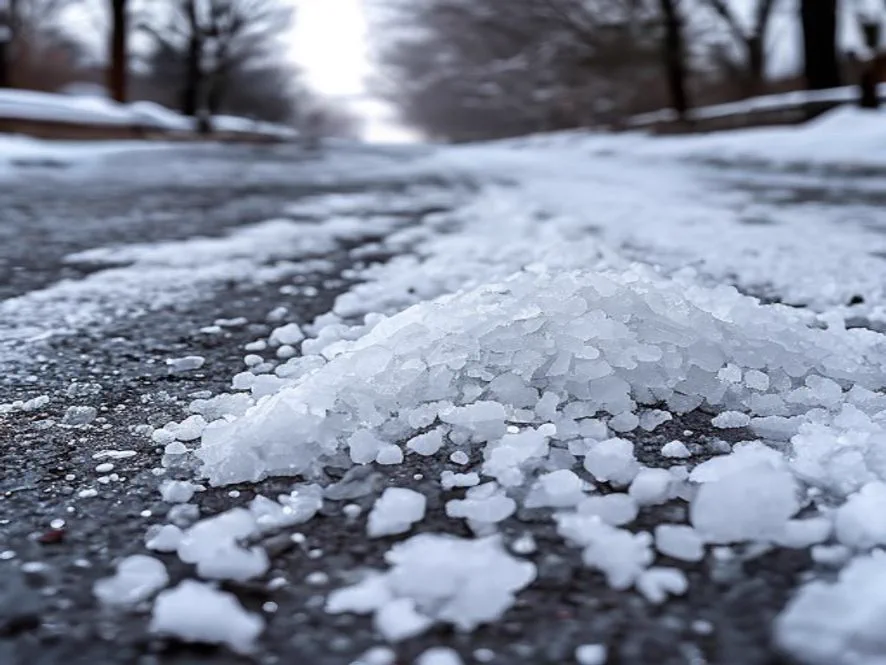
The myth vs the real mechanism
The widespread belief is that salt chemically eats away at asphalt like acid on metal. That belief comes from watching salt wreck concrete sidewalks and assuming the driveway gets the same treatment. It does not. Asphalt and concrete are completely different materials with different binders, and they fail for different reasons.
- What salt does NOT do. It does not chemically break down the asphalt binder. Petroleum-based bitumen is not soluble in salt brine, so the cement that holds the aggregate together stays intact.
- What salt DOES do. It lowers the freezing point of water, creating liquid that flows into surface pores and hairline cracks. When the temperature drops again, that trapped water freezes and expands about 9 percent, prying the crack wider.
- The compounding effect. A wider crack lets in more water next time, which freezes into a bigger wedge, which widens the crack further. This is why a small spring crack becomes a winter pothole.
So salt is not innocent, but it is an accomplice, not the killer. The killer is water plus the freeze-thaw cycle. Northern states see 30 to 80 freeze-thaw cycles per winter, and the Federal Highway Administration names freeze-thaw the leading pavement failure mode in cold climates.
Why concrete suffers and asphalt mostly shrugs
This is the heart of the confusion. The two materials respond to salt in opposite ways.
- Concrete is rigid and chemically vulnerable. Its cement paste holds water in tiny capillary pores. Salt brine draws in extra moisture, refreezes inside the surface layer, and pops off flakes. That is scaling and spalling, and chloride can also chemically attack the cement and any rebar inside.
- Asphalt is flexible and chemically stable. The bitumen binder flexes with temperature swings instead of cracking like rigid cement, and salt has no chemical pathway to degrade it. The weak point in asphalt is open cracks and unsealed pores, not the binder chemistry.
If you are weighing the two materials for a new driveway, the climate-by-climate tradeoffs are covered in our asphalt vs concrete by climate guide. In hard-winter regions, asphalt actually tolerates salt and freeze-thaw better than concrete does.
When salt genuinely becomes a problem on asphalt
The myth is overblown, but heavy salt use is not harmless. Salt turns into a real threat in three situations.
- The driveway is already cracked. Open cracks are direct highways for meltwater. Salt on a cracked driveway accelerates damage fast because the water has somewhere to go.
- The surface is unsealed or old. Fresh sealcoat closes the pores. A faded, oxidized, unsealed surface is porous and soaks up brine. See what sealcoating actually does.
- You over-apply, every storm. Dumping salt by the scoopful several times a winter maximizes melt-refreeze cycles. A light dusting does the job; a pile just makes more brine.
For a deeper look at the freeze-thaw process itself, read freeze-thaw damage explained. The takeaway: salt damage is really a water-management problem.
Deicer Risk Checker
Answer three quick questions about your driveway and product. This gives a rough risk level for using salt or another deicer this winter. It is general guidance, not a lab result.
The safest deicers for asphalt, ranked
If you want to remove almost all the risk, the product choice matters more than people think. Cost ranges below are rough US retail figures per bag.
- Calcium magnesium acetate (CMA). Gentlest on asphalt, pets, and plants. Works to about 20 degrees Fahrenheit. Most expensive, roughly 30 to 50 dollars a bag.
- Calcium chloride. The best balance. Asphalt-safe, melts down to about minus 20 degrees Fahrenheit, around 15 to 25 dollars a bag.
- Magnesium chloride. Also asphalt-safe and easier on concrete and plants. Works to about minus 5 degrees Fahrenheit.
- Rock salt (sodium chloride). Cheap, around 5 to 12 dollars a bag, but only works to about 15 degrees Fahrenheit. Fine in light occasional use; risky in heavy repeated use.
- Plain sand. No melting, no chemistry, just traction. Completely asphalt-safe. Pair with a small amount of deicer in icy spells. Compare in our sand vs salt traction guide.
The EPA snow and ice management resources also push homeowners toward lower-chloride options to reduce runoff into streams and groundwater. For more product detail, see the best ice melt for asphalt.
How to protect your driveway through winter
Since the real enemy is water, every protective habit comes down to keeping water out of the pavement and off the surface when it can refreeze.
- Sealcoat every 2 to 4 years. A sound seal closes pores so brine cannot wick in. Estimate gallons with the sealer calculator.
- Fill cracks every fall. The single highest-leverage task before freeze-thaw season. See how to seal cracks.
- Clear standing water before a freeze. Squeegee low spots. A puddle that freezes is a future crack.
- Use a plastic shovel and rinse in spring. Avoid gouging the surface, and hose off white salt residue once the thaw arrives.
- Apply deicer lightly. A thin scatter melts ice just as well as a heavy pile and leaves far less brine behind.
For the full seasonal routine, follow our winter protection guide and tie it into your overall maintenance schedule.
Bottom line
Does salt damage an asphalt driveway? Not directly. Salt cannot chemically eat asphalt the way it scales concrete. The damage you see blamed on salt is really freeze-thaw damage, driven by meltwater getting into unsealed pores and open cracks. Keep the surface sealed, keep cracks filled, use a gentler deicer in moderation, and your asphalt will shrug off winter for years. References for the chemistry and freeze-thaw data are on the sources page.