Your asphalt driveway softens in summer because it is held together by bitumen, a petroleum binder that becomes pliable as it heats. On a 90 degree Fahrenheit day the dark surface can reach 140 to 160 degrees Fahrenheit, and the binder goes soft. This is normal flexible-pavement behavior and it firms back up overnight. It only becomes a problem when heavy point loads press in.
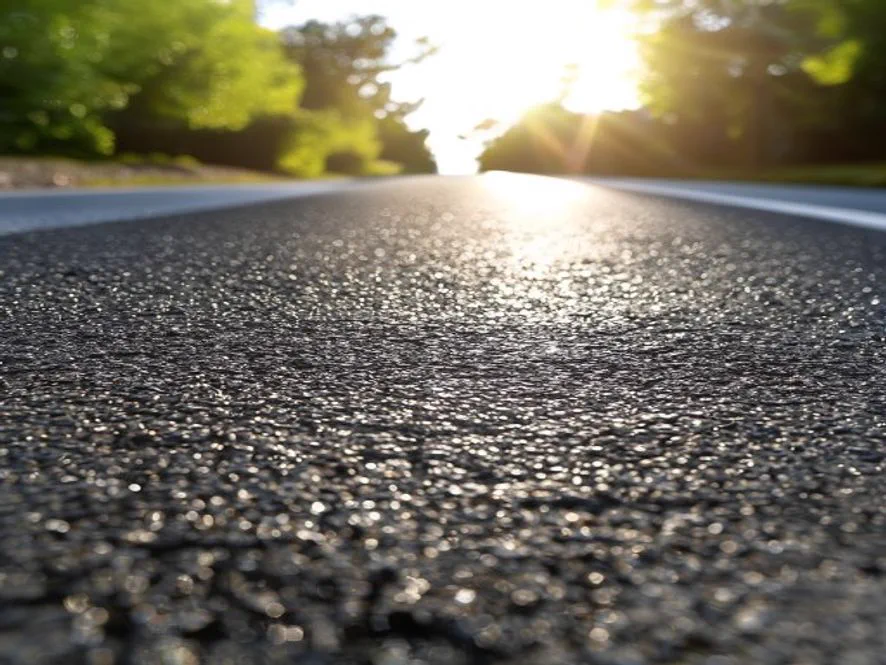
Why does asphalt go soft in the heat?
Asphalt pavement is a mix of crushed stone aggregate glued together by bitumen, the sticky black binder left over from refining crude oil. Bitumen behaves like a very thick, very slow liquid. It is firm when cool and pliable when hot. Engineers call this a viscoelastic material, which is why asphalt is a "flexible" pavement and concrete is a "rigid" one.
- Dark color absorbs sun. A black surface absorbs most of the sunlight that hits it. Air temperature might be 90 degrees Fahrenheit while the driveway itself sits at 140 to 160 degrees Fahrenheit by mid afternoon.
- The binder softens, not the stone. The rock in the mix does not change. The bitumen between the stones loosens its grip, so the surface gives slightly under pressure.
- It is reversible. As the surface cools overnight, the binder stiffens and the driveway returns to full hardness by morning. The next hot afternoon, it softens again.
- Hot climates and heat waves push it further. A run of 100 degree Fahrenheit days keeps the pavement hot for longer, so it stays soft into the evening. See our hot climate care guide for the full warm-region playbook.
The National Asphalt Pavement Association explains that mixes are designed with a performance grade rated for the local climate, so a properly specified driveway is built to handle the heat it will actually see. Curious how hot it really gets and whether that is a safety issue for bare feet or pets? Read does an asphalt driveway get too hot.
Is a soft driveway normal or a sign of a problem?
Most summer softening is completely normal. The trick is knowing the few cases that point to a real issue.
- Normal: A warm, slightly springy surface on a hot afternoon that firms back up at night.
- Normal: Faint tire marks that fade as the surface cools, especially on a newer driveway.
- Normal: A new driveway staying noticeably soft through its first summer while it cures.
- Watch it: Permanent dents from a kickstand, jack stand, or trailer tongue. The pavement was soft and a sharp point load punched in.
- Watch it: Ruts forming where a heavy vehicle parks in the same spot daily. This points to thin pavement or a weak base.
- Problem: A spongy area that stays soft after dark and feels different underfoot. That can mean a saturated base, not heat. See how to fix a settling driveway.
Thickness and base quality decide how much summer heat your driveway can shrug off. A residential driveway should run 2.5 to 3 inches of asphalt over 4 to 8 inches of compacted aggregate base. If yours dents easily, it may be undersized. Our residential thickness guide walks through the numbers.
Why is it sticky or tacky, not just soft?
Soft and sticky are two different things. Stickiness almost always traces back to fresh material on the surface.
- New asphalt curing. Fresh pavement stays soft and slightly oily for 6 to 12 months as the binder oxidizes and hardens. This is when summer heat causes the most marks. Treat a first-summer driveway gently and read caring for a new driveway the first year.
- Fresh sealcoat. A new seal coat needs 24 to 48 hours to dry and longer to fully cure. Walk on it too soon in the heat and it lifts onto shoes and tires. Our sealcoat dry time guide has the full schedule.
- Sealer applied too thick. A heavy coat stays gummy in heat for weeks. Two thin coats always beat one thick one.
- Excess surface binder. An older driveway with a glossy, weeping look may have surface bitumen migrating up in extreme heat. A light coat of sand can help it set.
Quick softening risk check
Enter today's high temperature and your driveway's age to gauge how soft the surface is likely to get and how careful to be with heavy loads.
What to do about a soft summer driveway
You cannot stop flexible pavement from softening in heat, but you can keep it from picking up dents and ruts. These habits cost almost nothing.
- Spread point loads. Set a square of 3/4 inch plywood or a wide stand pad under jack stands, trailer tongues, motorcycle kickstands, and patio furniture legs. Spreading the weight over a larger area stops the punch-through.
- Rotate parking in heat waves. Do not leave a heavy vehicle in the exact same spot for days during a 100 degree Fahrenheit stretch. Move it a foot or shift to evening parking.
- Hose it down before heavy use. A minute or two of water lowers the surface temperature for a short while. Handy before parking a loaded trailer or working on the driveway on a brutal afternoon.
- Avoid sharp turns at a standstill. Power-steering scuffing twists the soft surface and leaves scrub marks. Roll a little while you turn the wheel.
- Sealcoat on schedule. A sound seal protects the binder from sun and slows the aging that makes pavement brittle. Plan gallons with the sealer calculator and time it right using how often to sealcoat.
- Be extra careful the first summer. New asphalt is at its softest. Keep heavy vehicles and dumpsters off it, and read when you can park on a new driveway.
If you are running an RV, boat trailer, or work truck across the surface, thickness matters even more in heat. Heavy vehicles on thin or soft summer asphalt are how ruts and depressions start. Check the spec in our thickness for RVs and heavy vehicles guide.
When softening turns into real damage
Heat by itself rarely ruins a well-built, sealed driveway. The lasting damage comes from soft pavement meeting the wrong load or from a weak structure underneath.
- Dents and gouges. Point loads pressed into hot asphalt leave permanent marks. Annoying but cosmetic, and easy to prevent with a pad.
- Rutting. Channels in the wheel paths where heavy traffic parks daily. This signals thin asphalt or a poor base, not just heat.
- Shoving and bumps. Pavement pushing into ridges at stop points. Often a base or mix problem made visible by heat. Bad installs show up here, covered in common bad-install problems.
- Faster aging if never sealed. Unsealed asphalt in a hot climate dries out and turns gray and brittle faster, which leads to cracking down the road.
If you see ruts or shoving rather than just afternoon softness, that is a structural conversation. The U.S. Federal Highway Administration's pavement program documents rutting as a high-temperature load failure, which is exactly what happens when undersized pavement meets heavy summer traffic. The Asphalt Institute publishes the binder grading system that ties mix selection to local high temperatures.
Bottom line
A soft, warm asphalt driveway in summer is normal. Bitumen softens in heat, the dark surface bakes to 140 to 160 degrees Fahrenheit, and it all firms back up overnight. Keep heat from leaving marks by spreading point loads on plywood, rotating parking during heat waves, sealcoating on schedule, and treating a first-summer driveway gently. If you see permanent ruts or shoving instead of simple afternoon softness, look at thickness and base, not the weather. Full references are on the sources page.