Care for an asphalt driveway in a hot or desert climate by sealing it every two to three years, filling cracks before summer, keeping it shaded where you can, and fixing drainage so monsoon water never pools. Intense UV and heat dry out the binder, so a regular maintenance schedule matters more here than in mild regions.
What heat and UV actually do to asphalt
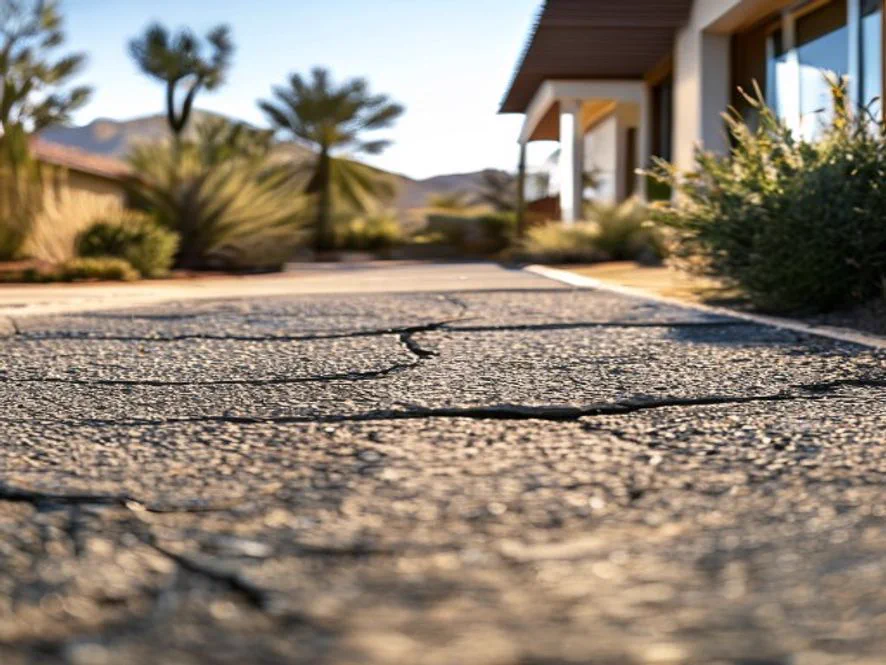
Asphalt is crushed stone bound together by bitumen, a sticky petroleum product. That binder is what keeps the surface flexible and waterproof. Two forces in hot climates work against it. The first is ultraviolet light. UV oxidizes the binder, drying it out so it turns from black to gray and gets brittle. The U.S. Environmental Protection Agency notes that dark pavement in sunny regions can reach surface temperatures of 120 to 150 degrees or more, which speeds that aging up dramatically.
The second force is heat cycling. Every day the surface heats up and expands, then cools at night and contracts. In the desert that daily swing can top 40 degrees. Over years this constant movement opens small cracks and pulls the binder apart. The result is the classic dried-out, faded, slightly crumbly surface you see on neglected Southwest driveways. If yours already looks gray and washed out, our guide on restoring driveway color walks through the fix.
How often to sealcoat in a hot, dry region
Sealcoat is the single best defense against UV and heat. It is a thin protective layer that blocks sunlight, replaces lost oils at the surface, and waterproofs the top. In a mild climate you might reseal every three to five years. In high-UV desert regions, plan for every two to three years instead.
- New driveways: wait until the surface fully cures, then seal. See when to sealcoat a new driveway for the timing in hot weather.
- The grit test: rub the surface with your hand. If fine black or gray sand comes off, the binder is breaking down and it is time to reseal.
- Color check: a healthy seal is dark and even. Patchy gray spots near the sun-facing edges mean UV is winning.
- Sealer choice: compare options in our sealer types guide and the best sealer brands roundup.
To estimate how much product you need for one coat, run the numbers through the asphalt sealer calculator before you buy.
Why the surface feels soft in summer
On a 100 degree air day, a dark driveway surface can hit 140 to 160 degrees. At those temperatures the bitumen softens and the pavement becomes pliable. This is normal, but it means concentrated point loads can dent fresh or thin asphalt. Motorcycle kickstands, trailer tongue jacks, jack stands, and even high heels can leave marks on a hot afternoon. A wider footplate spreads the load and prevents most of it. We cover the science in more depth in why asphalt gets soft in summer and the related question of whether driveways get too hot to walk on.
The risk is highest in the first summer after paving. A new surface needs a full curing season before it reaches its long-term hardness, so protect it carefully that first year. Park heavy vehicles in different spots rather than the same square foot every day.
Quick estimate
Hot-Climate Sealing Interval Checker
Enter your driveway details to get a suggested reseal interval and a rough surface temperature on a hot day.
Crack filling before the heat arrives
Cracks are the doorway for every other problem. In dry regions they let the little water you do get seep into the base, then summer heat expands and widens them. The fix is cheap if you stay ahead of it. Clean each crack, then fill it with a flexible hot-pour or rubberized filler. Our step-by-step on sealing cracks and the broader crack repair guide cover the technique. Do this in spring before peak heat so the filler cures properly and the surface is sealed before monsoon season.
If cracking is widespread and connected in a scaly pattern, you may be looking at base failure rather than surface aging. Read alligator cracking fixes to tell the difference. The Federal Highway Administration's pavement guidance treats timely crack sealing as one of the highest-value, lowest-cost maintenance steps, and that holds true for home driveways too.
Drainage, monsoons, and standing water
Desert does not mean dry all year. Many hot regions get short, violent monsoon storms that dump an inch of rain in an hour. Asphalt sheds water fine when it slopes correctly, but flat spots collect puddles that soften the surface and accelerate aging. Walk your driveway after a storm and mark any spot where water sits longer than an hour. Fix low areas using the methods in standing water repair, and review drainage solutions if water sheets toward your garage.
Keeping the surface cooler
You cannot change the sun, but you can lower how hot the driveway gets. Shade is the biggest lever. A carport, shade sail, or trees on the west side cut afternoon surface temperatures by 20 to 40 degrees. That slows oxidation and keeps the surface firmer underfoot, which matters if pets use it. Read protecting dog paws from summer heat if you have animals. A quick hose-down cools the surface briefly, but the effect vanishes in minutes and wastes water, so treat it as a short-term fix only.
Some homeowners ask whether a lighter surface helps. Light-colored seal coats and surface treatments do reflect more sun and run cooler, a principle the EPA promotes through cool pavement programs. They cost more and need more frequent refreshing, so weigh that against the benefit.
What hot-climate care costs
A professional sealcoat runs about 0.15 to 0.25 dollars per square foot, so a typical 600 square foot driveway costs roughly 100 to 250 dollars per application. Doing it every two to three years adds up over a driveway's life but is far cheaper than replacement. Crack filling materials cost 15 to 40 dollars for a season's worth if you DIY. To budget for your specific size, use the driveway cost calculator, and if you are getting bids for a reseal or repair, run them through the quote checker first.
Climate is one of the biggest factors in total lifespan. For the full picture, see how weather affects driveway lifespan and asphalt vs concrete by climate if you are still choosing a material.
Bottom line
Hot and desert climates are hard on asphalt, but the fixes are simple and cheap. Seal every two to three years, fill cracks each spring, keep the surface shaded when you can, and never let monsoon water pool. Do those four things and a hot-climate driveway will last close to its full 20 year potential instead of cracking out a decade early.