Yes, you can pave asphalt over a concrete driveway when the slab is structurally sound, well drained, and not heaving or sinking. The crew cleans it, treats the joints, applies a tack coat, then lays 2 to 3 inches of compacted hot mix. A broken or moving slab should be removed first, as our resurface vs replace guide explains.
Is paving over concrete actually a good idea?
It can be a smart, money-saving move, but it is not a default. The asphalt is only as stable as the slab beneath it. If the concrete is solid, paving over it skips the cost and time of demolition, hauling, and building a new aggregate base. If the concrete is failing, you are just hiding a problem that will resurface, literally, within a year or two.
The reason people do it is simple. Removing an old concrete driveway is expensive and disruptive. Tearing out a slab can run 2 to 6 dollars per square foot on its own before any new surface goes down, similar to the numbers in our guide on the cost to remove an old driveway. Paving over a healthy slab avoids most of that. You keep the existing base, save the disposal fees, and finish in a day or two instead of a week.
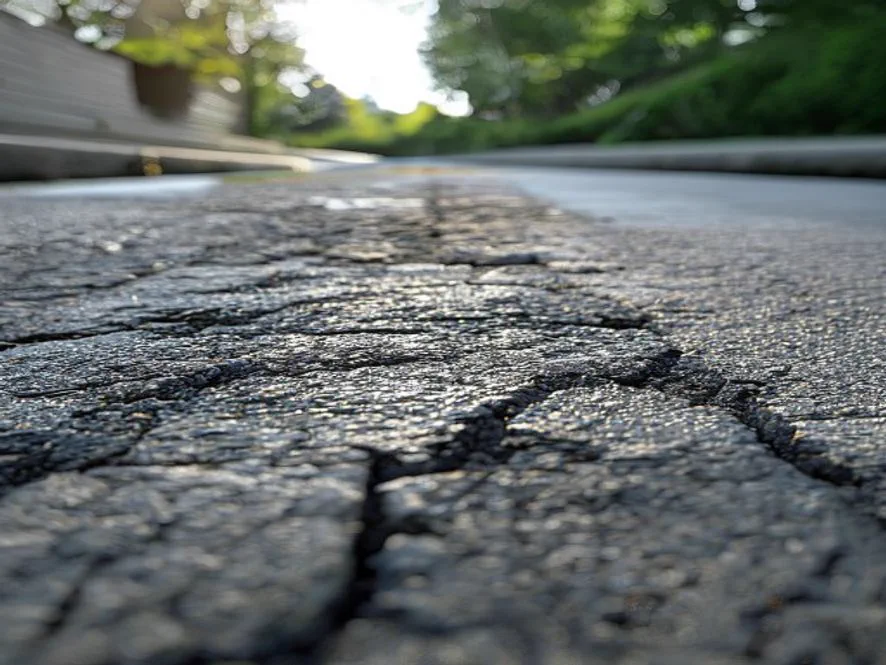
The catch is that concrete and asphalt move differently. Concrete is rigid and breaks at planned joints. Asphalt is flexible and rides on its base. When you stack one on the other, the joints in the concrete become the weak points in the asphalt above. That is the single biggest reason this job goes wrong, and it is the thing a good contractor plans around.
When does paving over concrete work?
This approach works when the slab below is doing its structural job and only needs a fresh, attractive wearing surface on top. Look for these green lights before you commit.
- The slab is stable. No rocking panels, no lifting at the joints, no sections that have sunk or heaved more than a quarter inch. Tap and walk it. Solid concrete stays put.
- Drainage already works. Water sheds off the slab and away from the house. Ponding means a grade problem the asphalt will not fix on its own.
- Cracks are minor and tight. Hairline and surface cracks are manageable. Wide, displaced cracks signal base movement.
- Height has room to rise. Adding 2 to 3 inches cannot bury the garage threshold, block a door, or sit above the apron and walkways.
- The base is dry. A slab built over a soggy or unstable subgrade will keep moving no matter what sits on top.
If every box checks out, paving over is a reasonable way to refresh the driveway for far less than a rebuild. If you are weighing this against a full tear-out, the asphalt vs concrete comparison is worth a read so you know what you are committing to long term.
When should you not pave over concrete?
Some slabs are beyond covering up. Paving over them wastes money because the failure underneath will telegraph straight through. Walk away from a pave-over and remove the concrete first in these cases.
- Panels rock or seesaw. Movement under load means the base is gone. New asphalt will crack along the same lines fast.
- Heaving or frost lift. Slabs pushed up by frost or tree roots will keep moving. Our guide on tree roots pushing up driveways shows how that damage spreads.
- Major settling. Sunken sections create low spots that pond water and never level out under a thin asphalt layer.
- Severe cracking. A slab broken into many pieces no longer acts as a base. It acts as loose rubble.
- Standing water. If the slab already ponds, the asphalt will too. Fix grade and drainage first, as our standing water fix guide covers.
When the concrete fails these tests, the honest answer is removal and a proper rebuild on a compacted aggregate base. That is more work upfront, but it is the only path to a surface that lasts. See when a driveway is beyond repair for how to tell the difference before you spend.
How should the concrete be prepped first?
Prep is what separates a pave-over that lasts a decade from one that cracks in a season. A careful crew follows a clear sequence.
- Clean it down. Pressure wash off dirt, oil, and loose material so the new asphalt can bond. Oil spots especially must go, as covered in removing oil stains.
- Repair the cracks and joints. Rout, clean, and fill wide cracks. Joints get treated so they flex without tearing the asphalt above.
- Address drainage. Correct low spots and confirm water sheds away from the house before any asphalt goes down.
- Apply a tack coat. A sprayed asphalt emulsion glues the new hot mix to the slab. Without it, the layers can slide and delaminate.
- Add a bond breaker or interlayer where needed. A geotextile fabric or stress-absorbing membrane over the joints helps delay reflective cracking.
Skipping any of these is where most pave-overs fail. The National Asphalt Pavement Association and the asphalt industry both stress surface prep and bonding as the make-or-break steps on any overlay. You can read more from the National Asphalt Pavement Association and the Asphalt Institute.
How thick should the asphalt be over concrete?
Plan on 2 to 3 inches of compacted hot mix for a residential pave-over. That depth gives the asphalt enough mass to spread vehicle loads and resist the joint movement below. Going thinner than 2 inches saves a little money but courts early cracking and rutting.
For a standard car-and-truck driveway, 2 inches compacted is the working minimum and 2.5 to 3 inches is safer. If you park an RV, a boat trailer, or other heavy vehicles, lean toward 3 inches or more, matching the logic in our asphalt thickness for RVs and heavy vehicles guide. Thicker asphalt also does a better job hiding the concrete joints so they reflect through more slowly.
Remember that thickness adds height. Two to three inches of new surface can change how the driveway ties into the garage, the sidewalk, and the street apron. If clearance is tight, that height gain may be the deciding factor against paving over, since you cannot mill a concrete slab down the way you would an old asphalt surface.
Pave-Over Cost Estimator
Enter your driveway size to see a rough installed-cost range for paving asphalt over a sound concrete slab. These are planning numbers, not quotes.
How much does it cost, and how long does it last?
Paving asphalt over an existing concrete slab usually runs about 3 to 6 dollars per square foot installed, since the slab already serves as the base and prep is lighter than a new build. On a typical 600 square foot driveway that lands near 1,800 to 3,600 dollars. Removing the concrete first, hauling it off, and building a fresh aggregate base pushes the total to roughly 5 to 11 dollars per square foot, or 3,000 to 6,600 dollars and up on the same driveway. For a fuller picture, see our cost per square foot guide and the driveway cost calculator.
Lifespan depends almost entirely on the slab and the prep. Over a solid, well-prepped concrete base, a pave-over commonly delivers 10 to 15 years before it needs resurfacing again, close to what a normal asphalt driveway returns. Over a marginal slab, you may see joint cracks reflect through in one to three years. Sealcoating every few years and keeping water off the surface protects your investment either way, as our sealcoating value guide explains.
What about reflective cracking?
Reflective cracking is the defining risk of paving over concrete, so it deserves its own answer. Concrete control joints and existing cracks open and close with temperature and moisture. That movement concentrates stress in the asphalt directly above and eventually tears a matching crack up to the surface. It is the same physics that limits a plain overlay on old asphalt, covered in our overlay vs mill-and-overlay comparison.
You cannot fully prevent it, but you can slow it down. A proper tack coat, treated joints, a geotextile or stress-absorbing interlayer over the joints, and adequate thickness all spread the movement out instead of letting it focus on one line. Good drainage matters too, since trapped water under the slab speeds up the freeze-thaw cycling that drives the cracks. If you live where winters bite, our guide on freeze-thaw damage shows why this matters so much.
Bottom line
You can pave asphalt over a concrete driveway, and it is a genuine money-saver when the slab is stable, drains well, and has no major heaving or settling. Prep is everything: clean the surface, treat the joints, fix drainage, apply a tack coat, add an interlayer over the joints, and lay 2 to 3 inches of compacted hot mix. Expect 3 to 6 dollars per square foot and 10 to 15 years of life over a sound slab. If the concrete is moving, cracked into pieces, or ponding water, remove it and rebuild instead. Use our quote checker to confirm any bid spells out the prep, joint treatment, and thickness before you sign.