Oil stains on asphalt are not just cosmetic. The petroleum solvents in motor oil, transmission fluid, and gasoline soften the asphalt binder. Left alone, a stain turns into a soft spot. Cleaning is worth the effort, and it is mostly DIY work. The right method depends on whether the stain is fresh or set in. If you have other surface issues to handle, see our DIY asphalt driveway guide for what is worth doing yourself.
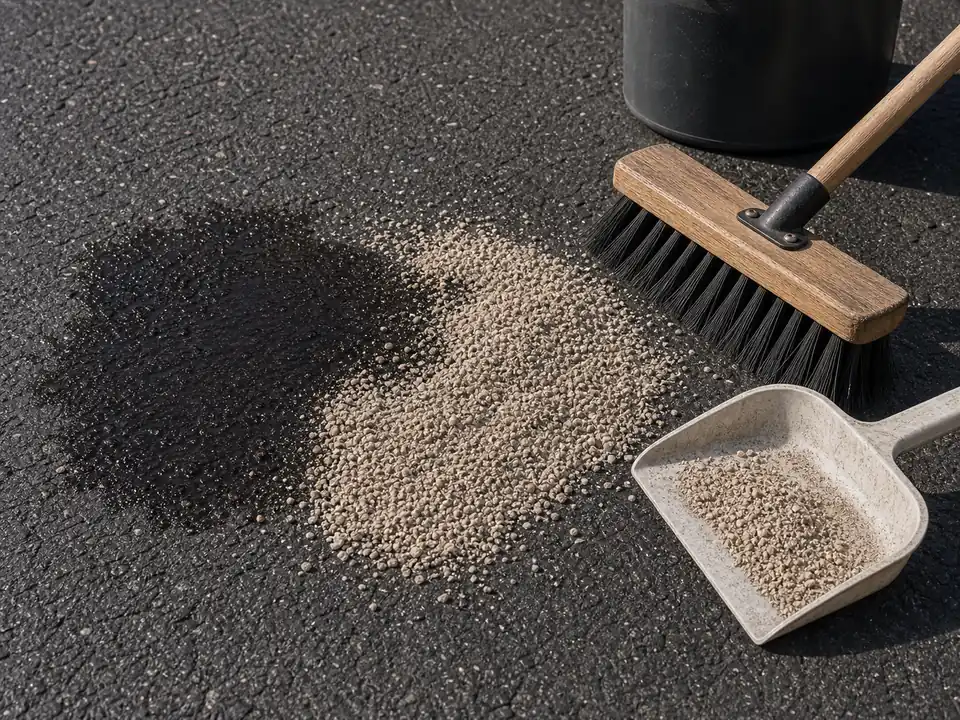
Fresh stains: act in the first hour
If you reach the spill within an hour, most stains come up cleanly with absorbents and dish soap.
- Cover the spill at once. Use kitty litter, baking soda, sawdust, or any dry absorbent.
- Press it into the stain. Let it sit for several hours, ideally overnight.
- Sweep up the absorbent.
- Mix dish soap with warm water. Scrub the stain with a stiff-bristle brush.
- Rinse with a garden hose. Repeat once if a faint shadow remains.
Fresh oil rarely needs degreasers. If it does, pick one that says "asphalt safe" on the label. Many citrus and acid-based degreasers work fine on concrete but soften asphalt binder. The US EPA publishes general guidance on small petroleum spills and absorbent disposal.
Old stains: degreaser and patience
Set-in stains have soaked into the binder. The cleanup is real work, but most stains lighten a lot.
- Sweep the area clean.
- Apply an asphalt-safe degreaser or oil stain remover. Spray-on or paste-on products are common. About 8 to 25 dollars per bottle.
- Work it in with a stiff brush. Avoid wire brushes. They can damage the surface.
- Let it sit per the product instructions. Usually 5 to 30 minutes.
- Rinse with a garden hose, or pressure wash on a wide fan tip.
- Repeat once or twice for stubborn stains.
For stains where the asphalt has visibly softened, full removal may not be possible. Cleaning still helps. It stops more damage and protects what is left of the binder.
What about pressure washing?
Pressure washing works. On the wrong settings, it strips the sealcoat and chews up the surface. Use these limits:
- Pressure: Under 2,500 PSI. Lower is safer.
- Tip: 25 to 40 degree wide fan tip. Never the narrow 0 or 15 degree tip on a driveway.
- Distance: Keep the wand 12 to 18 inches from the surface.
- Direction: Sweep across the stain. Do not hold it in one spot.
If your driveway was recently sealcoated, skip the pressure wash or keep it light. The sealcoat will lift on aggressive settings. If the surface needs a fresh seal afterward, plan it with the asphalt sealer calculator and our when to sealcoat timing rule.
What not to use
- Gasoline. A weirdly common forum suggestion. Gasoline dissolves oil and the asphalt binder. The stain leaves. A soft spot stays. Used motor oil and gasoline are both regulated household hazardous waste; the EPA household hazardous waste page has the right disposal channels.
- Lacquer thinner, paint thinner, mineral spirits. Same reason. Petroleum solvents soften asphalt.
- Bleach. Useless on oil. Lifts pigment from sealcoat.
- Pressure-washer turbo nozzle on a driveway. Strips sealer in narrow stripes.
- Wire brushes and metal scrapers. They scratch the surface and create new failure points.
Stopping future stains
- Park leaky vehicles on a drip pan or cardboard sheet.
- Inspect under parked cars after long rest periods. Catch leaks early.
- Sealcoat on schedule. A fresh seal is the cheapest stain shield.
- Keep a small kitty litter bag in the garage for first-hour response.
Sealcoating after cleaning
If you plan to sealcoat, clean oil stains first and let the area fully dry. Sealer does not bond to oil-saturated asphalt. For heavily contaminated spots, an oil-spot primer (sometimes sold as "oil spot fixer") helps the sealer bond. Otherwise the sealer flakes off the stain area within months. If the underlying surface also has cracks, fix those first using our crack repair guide. Always go: clean, fill, cure, seal.
Sources and references for the products and methods above are on the sources page. For the broader maintenance picture, the 5-year maintenance schedule puts oil stain response into the seasonal plan.