Driveway sealcoating gets sold hard. Contractors love the high-margin recurring work. Big-box stores stack pails in every spring aisle. Online guides tell you it doubles your driveway's life. The truth is somewhere in the middle. For most homeowners sealcoating is worth it. For some it is not. Here is the math that tells you which side you are on. Pair this with the sealcoat schedule guide and the 2026 cost guide.
The case FOR sealcoating
Four real benefits.
- UV protection. Sun bleaches asphalt and breaks down the binder. Sealcoat shields the surface and slows oxidation.
- Water sealing. Water in cracks is the main driver of freeze-thaw damage. Sealcoat keeps water out of the surface pores.
- Oxidation slowdown. Asphalt naturally hardens and embrittles over time. Sealcoat slows this process by sealing out air and water.
- Oil and gas resistance. Petroleum products soften asphalt. Sealcoat creates a barrier that resists chemical damage from spills.
The case AGAINST sealcoating
Three honest objections.
- Over-sealing causes failure. Yearly sealcoats build coat thickness that cracks in an alligator pattern. The damage looks like asphalt failure but is actually sealer failure.
- Faded driveways past 15 years will not be saved. Once oxidation has eaten through the binder, sealcoating hides the failure without fixing it.
- The ROI on resale is modest. A fresh sealcoat helps the listing photo. It does not move the appraised value much. See driveway ROI on home value for the resale math.
Real-world lifespan data
Two driveways. Same install. Same climate. Different maintenance.
- Maintained driveway: First seal at year 1. Re-seal every 2 to 4 years. Crack fill as cracks appear. Expected lifespan 22 to 28 years.
- Unmaintained driveway: Never sealed. Cracks left open. Oil stains left to soak in. Expected lifespan 12 to 15 years.
The maintained driveway lasts roughly double. That is the headline data point that sells sealcoating. For the deeper lifespan analysis see how long does asphalt driveway last.
Sealcoat ROI calculator
Enter your driveway size, planned years to replacement, and current replacement cost estimate. The calculator returns total sealcoat cost, life added, and savings.
The break-even math, in plain words
A 600 sq ft driveway costs about 158 dollars per pro sealcoat at average national pricing (sqft x 0.18 + 50 mobilization). 3 sealcoats over 10 years is 474 dollars. If sealing extends the driveway's life by 5 years and the replacement cost is 5,000 dollars, the deferred replacement is worth about 2,500 dollars. Net savings about 2,000 dollars. The math gets better on a larger driveway and worse on a smaller one. It gets better when replacement cost rises and worse when it falls. For region-specific replacement cost see local pricing in the cost calculator.
When sealcoating is NOT worth it
Four scenarios where the math says skip it.
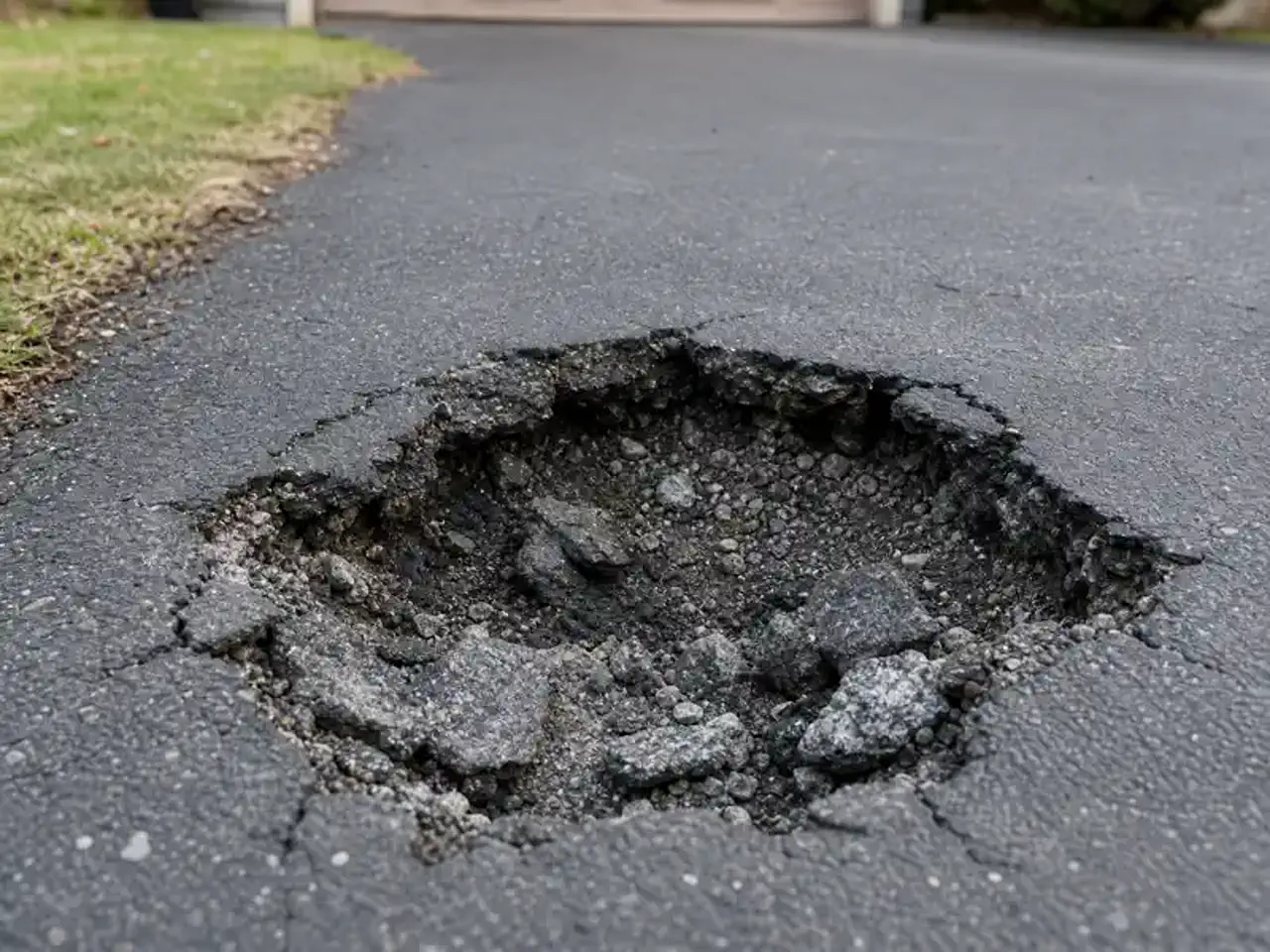
- Driveway too far gone. Alligator cracking past 25 percent of the surface. Multiple potholes. Sinking sections. Sealcoat just hides the failure. Plan a replacement instead.
- Replacement within 12 months. Spending 300 dollars on a coat that gets torn out next spring is wasted money.
- You are selling the house this season. A fresh asphalt patch or crack fill makes more visual impact for the listing photo than a uniform sealcoat. See driveway ROI on home value for resale-specific guidance.
- Driveway is fine and water still beads after 4 years. Skip the cycle. Run the water bead test next year.
When sealcoating IS worth it
Five scenarios where it pays off.
- New driveway under 10 years old in good condition. First seal at 6 to 12 months. See when to seal new asphalt.
- Driveway shows hairline cracks but no alligator pattern. Crack fill first, then seal. Stops the cracks from spreading.
- Color has faded from black to gray but the surface is otherwise sound. Seal restores both look and protection.
- Climate has freeze-thaw cycles or high UV. Sealcoat does its biggest work in harsh conditions.
- You are 5-plus years from a planned replacement. The seal extends the timeline and the cost spreads over more years.
The maintenance bundle
Sealcoating alone is half the maintenance picture. The full bundle:
- Sealcoat every 2 to 4 years.
- Crack fill at the first sign of hairline cracking. See how to sealcoat DIY.
- Clean oil and gas spills within 24 hours.
- Trim weeds and edges. See DIY mistakes for prep traps.
- Clear snow with a plastic shovel, not a metal blade.
The maintenance schedule covers the annual rhythm.
Picking the right sealer for the ROI
The cheap pail looks like the ROI play. It usually is not. A 20 dollar pail that lasts one season costs more per year of protection than a 40 dollar pail that lasts 3 years. The math favors mid-tier. See best sealer brands 2026 for picks and sealer types compared for chemistry selection.
A worked example
A homeowner in Ohio with an 8-year-old 700 sq ft driveway in fair condition. Color faded. Few hairline cracks. No alligator. Replacement quoted at 6,000 dollars. Owner sealcoats every 3 years for the next 10 years. 4 sealcoats total. Each one runs about 175 dollars pro. Total: 700 dollars over 10 years. Driveway hits year 18 instead of year 13 before replacement. Savings on deferred replacement: 6,000 / 13 x 5 = 2,308 dollars. Net savings: about 1,600 dollars. Plus better curb appeal across all 10 years.
The homeowner verdict for 2026
For 80 percent of homeowners, sealcoating is worth it. The math works in favor of a 2 to 4 year cycle from year 1 of the driveway. The exceptions are driveways too far gone, driveways about to be replaced, and homes about to be sold where a fresh patch beats a uniform seal. Skip the yearly cadence. Avoid the cheapest pails. Use the sealer calculator to size the order and the quote checker to score a contractor bid.
Bottom line
Sealcoating is worth it for most driveways. It adds 5 to 10 years of life. Pays back the cost roughly 4 times over. Lifts curb appeal year-round. Skip it if your driveway is past saving, about to be replaced, or you are selling this season. Otherwise stay on a 2 to 4 year cadence with a mid-tier emulsion or premium acrylic. Run the water bead test every spring before committing to that year's seal.
Pricing benchmarks and lifespan data are on the sources page. The National Asphalt Pavement Association publishes residential maintenance guidance. The Asphalt Institute has technical references on sealer performance. For contractor due diligence see the Better Business Bureau.