An asphalt overlay works when the base under your driveway is still solid and the surface only shows wear, fading, or hairline cracks. The crew cleans it, fills large cracks, applies a tack coat, then paves 1.5 to 2 inches of new hot mix on top. If the base has failed, an overlay will crack again within a year or two. Confirm the fix first with our resurface vs replace guide.
What is an asphalt overlay?
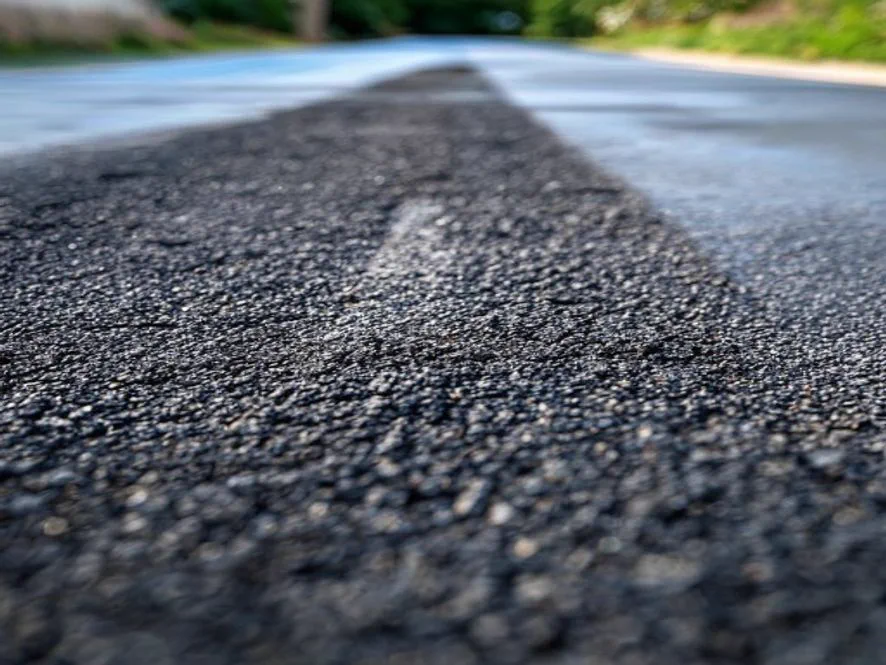
An asphalt overlay, also called resurfacing, is a fresh layer of hot mix asphalt laid directly on top of your existing driveway. Nothing gets torn out. The old pavement stays in place and becomes the foundation for the new surface. A typical residential overlay adds 1.5 to 2 inches of compacted asphalt, which restores a smooth black surface and seals over the worn top layer.
The key word is layer. An overlay only renews the surface. It does not rebuild the stone base or the soil under it. That is why an overlay is the right tool for a tired but structurally healthy driveway, and the wrong tool for one that is breaking up from the bottom. If the surface you want to cover is concrete rather than old asphalt, the bonding and movement rules change, so read our guide on paving asphalt over a concrete driveway first. If you are weighing this against grinding the old layer off first, our overlay vs mill-and-overlay comparison spells out the trade-offs.
When does an overlay actually work?
An overlay is the smart, cheaper choice in a specific set of conditions. If your driveway checks these boxes, paving over it can buy 10 to 15 more years at a fraction of replacement cost.
- The base is solid. No widespread potholes, no soft or sinking areas, and no deep alligator cracking that signals base failure underneath.
- Cracks are minor. Hairline and surface cracks are fine. Wide, moving, or interconnected cracks usually are not.
- Height has room to rise. Adding 1.5 to 2 inches will not bury the garage threshold, block a door swing, or sit above the walkway or street apron.
- Drainage already works. Water sheds off the surface away from the house, so a slightly higher surface will not pool or push runoff the wrong way.
- The surface is reasonably level. No major rutting, shoving, or birdbaths that the new layer would simply copy.
If your only complaint is a gray, oxidized look or shallow cracks, an overlay is almost certainly overkill on cost but well within reach technically. Before committing, read about the types of asphalt cracks so you can tell overlay-friendly damage from a structural problem.
When does an overlay fail?
An overlay fails when it is asked to fix a problem it cannot reach. The new asphalt is only as stable as what sits under it, so a bad base shows through fast. Walk away from a plain overlay in these situations.
- The base has failed. Potholes, soft spots, and alligator cracking mean the foundation is moving. Paving over it just hides the problem for a season. See how to handle alligator cracking before you spend a dime.
- Drainage is poor. Standing water or runoff toward the house gets worse when you raise the surface. Fix grade and drainage first.
- Height cannot change. Tight garage clearance or a fixed apron tie-in means a mill-and-overlay is the safer route.
- The surface is slick and oxidized with no prep. Without cleaning and a proper tack coat, the new layer can delaminate from the old.
Reflective cracking is the most common overlay failure. Cracks in the old layer move with freeze and thaw, and that movement telegraphs up through the new asphalt within one to three years. In cold regions this is a real risk, so review how freeze-thaw damage works. If the base is genuinely gone, our guide on when a driveway is beyond repair helps you avoid wasting money on a surface fix.
How do you tell if your base is solid?
You do not need an engineer to do a first-pass check. Walk the driveway after a rain and look for the same signals a contractor uses.
- Press soft spots. Areas that feel spongy under a car tire or flex underfoot suggest the base is holding water or breaking down.
- Look at the crack pattern. Isolated lines are surface aging. Connected cracks that form a scaly grid mean the structure is failing.
- Check for potholes. A pothole is a hole through the surface and into the base. More than a couple is a base warning.
- Watch the water. Puddles that sit for hours point to settling, low spots, or a grade problem an overlay will not solve.
- Note the age. A 20-year-old driveway on its original base is a different bet than a 10-year-old one with one bad corner.
When in doubt, have a contractor core or probe a few spots. The National Asphalt Pavement Association and the Federal Highway Administration both treat base condition as the deciding factor for whether resurfacing will hold, and that logic scales straight down to a home driveway.
How thick should the overlay be?
A residential overlay should land at 1.5 to 2 inches of compacted hot mix. Below 1.5 inches the asphalt will not bond properly or carry vehicle weight, and it tends to ravel or crack within a couple of years. Above 2 inches you start adding cost and height for little extra durability on a driveway that is not carrying trucks. If you regularly park an RV or heavy equipment, see our notes on thickness for heavy vehicles, where a thicker section or a mill-and-overlay makes more sense.
Two layers matter in any overlay. The tack coat is a thin sprayed bond between old and new, and skipping it is a top reason overlays delaminate. The compaction is what locks the new mat into a dense, durable surface. Ask any bidder to state both the thickness and the prep in writing, then run the bid through our quote checker.
How much does an overlay cost?
An overlay runs about 2 to 4 dollars per square foot installed, since there is no removal or disposal. On a typical 600 square foot driveway that lands near 1,200 to 2,400 dollars. Compare that with a mill-and-overlay at roughly 3 to 6 dollars per square foot and a full replacement at 8 to 15 dollars per square foot, and the overlay is clearly the budget option when the base supports it.
Use the estimator below for a rough range, then sanity-check it against our asphalt resurfacing cost guide and the driveway cost calculator.
Overlay Cost Estimator
Enter your driveway size to see a rough installed-cost range for a plain overlay versus full replacement. These are planning numbers, not quotes.
What does the overlay process look like?
A driveway overlay is a one-day job for most crews when the weather cooperates. Knowing the sequence helps you spot a contractor who is cutting corners.
- Clean the surface. Sweep and blow off dirt, debris, and loose material so the new layer bonds to clean pavement.
- Repair and fill. Fill large cracks and patch any small failures. Big problems should be fixed, not buried.
- Apply tack coat. A thin sprayed bond layer glues old to new. This step is not optional.
- Pave the new layer. Spread 1.5 to 2 inches of hot mix evenly, feathering the edges at the apron and garage.
- Compact while hot. Roll the mat to lock it into a dense surface before it cools.
After paving, treat the surface like new asphalt. Keep it cured before heavy use, and plan to seal it once it has fully cured. Our guide on caring for a new driveway in the first year covers the timeline, and you can confirm the bidder is reputable using our contractor selection guide.
Bottom line
An asphalt overlay on an existing driveway works when the base is solid, the cracks are minor, the height has room to rise, and drainage already moves water away from the house. In those conditions, 1.5 to 2 inches of new hot mix buys a decade or more for 2 to 4 dollars per square foot. It fails when the base has broken down, because reflective cracks return fast and a surface layer cannot fix a structural problem. Check the base first, demand a written thickness and prep, and match the method to the condition, not just the price.