Use a plain asphalt overlay when the base is solid and the surface only has minor wear, since it just adds 1.5 to 2 inches of new hot mix on top. Choose a mill-and-overlay when the old layer is cracked, the height cannot rise, or drainage matters, because milling removes the bad surface first. See our resurface vs replace guide to confirm a surface fix is even right.
What is the difference between an overlay and a mill-and-overlay?
An overlay, sometimes called resurfacing, lays a fresh layer of hot mix asphalt directly over your existing driveway. The crew cleans the surface, fills large cracks, applies a tack coat for bonding, then spreads and compacts 1.5 to 2 inches of new asphalt. The old pavement stays in place and becomes part of the structure.
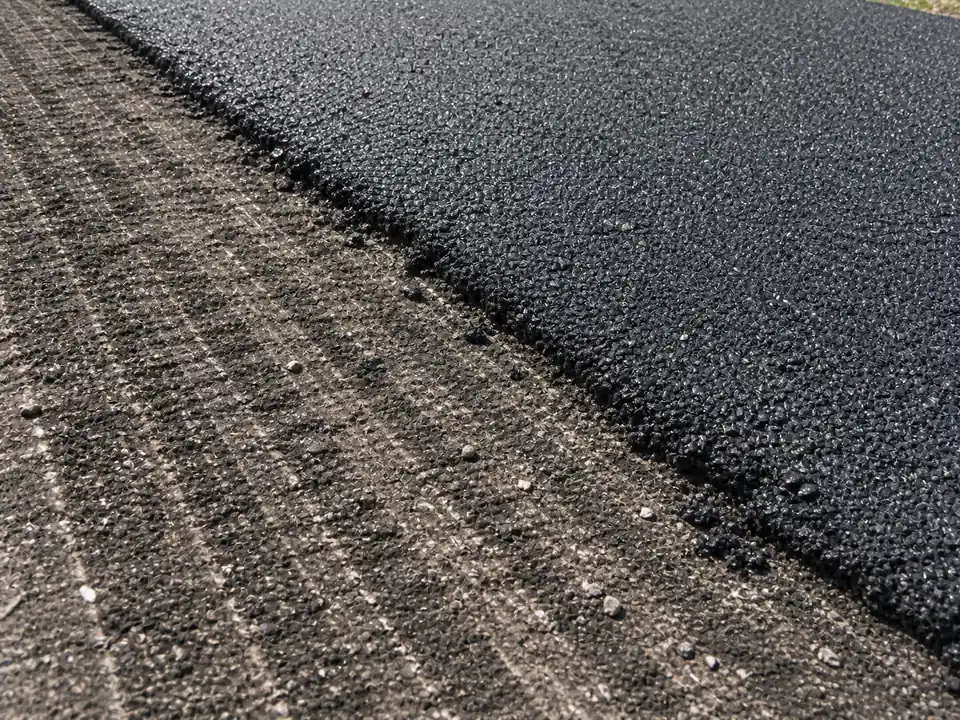
A mill-and-overlay adds one step at the front. A milling machine grinds off the top 1.5 to 2 inches of the worn surface and hauls it away. Then the crew tacks and paves new asphalt to fill the milled depth. The finished height matches the original, and the new layer bonds to a freshly ground, clean profile instead of a tired old surface.
That single milling step is the whole decision. It costs more in machine time, hauling, and disposal, but it solves problems a plain overlay cannot. If you are still deciding whether either approach beats a full rebuild, our sealcoat vs resurface vs replace breakdown walks through the full ladder of options.
When should you use a plain overlay?
A plain overlay is the right call when the foundation under your driveway is still sound and the surface is simply aging. It is the cheaper, faster choice, and it makes sense in these cases.
- The base is solid. No widespread potholes, no large soft spots, no deep alligator cracking that signals base failure. Surface wear and a few hairline cracks are fine.
- Height has room to grow. Adding 1.5 to 2 inches will not bury the garage threshold, block a door, or sit above an adjacent walkway or apron.
- Drainage already works. Water sheds off the driveway away from the house, so a slightly higher surface will not create pooling or push runoff the wrong way.
- The budget is tight. An overlay buys 10 to 15 more years for a fraction of replacement cost when the structure is healthy.
If the cracks worry you, read our guide on the types of asphalt cracks first. Hairline and surface cracks are overlay friendly. Wide structural cracks usually are not.
When is a mill-and-overlay the better choice?
A mill-and-overlay earns its higher price when a plain overlay would either fail early or cause new problems. Reach for it in these situations.
- The surface is badly cracked. Milling removes the cracked layer so reflective cracks do not telegraph straight through your new asphalt within a year or two.
- The height cannot change. Tight garage clearance, a fixed apron tie-in, or curbs and gutters mean the surface must stay at the original grade.
- Drainage is already marginal. Raising the surface would trap water. Milling preserves the existing slope and grade so water keeps moving.
- The old surface is slick or oxidized. A milled profile bonds far better than a polished, weathered top layer, which lowers the risk of delamination.
- There is rutting or shoving. Milling levels the deformed surface before new asphalt goes down instead of paving over the unevenness.
The Federal Highway Administration treats milling as standard practice before resurfacing on roads exactly because it controls grade and improves bond. The same logic scales down to a driveway. You can read more on pavement preservation from the FHWA and the National Asphalt Pavement Association.
How do the costs compare?
Both methods cost far less than removing and replacing the whole driveway, which often runs 8 to 15 dollars per square foot. Here is the rough range for each surface method in 2026 dollars.
- Plain overlay: about 2 to 4 dollars per square foot installed, since there is no removal or disposal.
- Mill-and-overlay: about 3 to 6 dollars per square foot installed, because milling, hauling, and dumping the old asphalt add labor and machine time.
- Full replacement: about 8 to 15 dollars per square foot, the benchmark both surface methods are meant to delay.
On a typical 600 square foot driveway, a plain overlay lands near 1,200 to 2,400 dollars, while a mill-and-overlay lands near 1,800 to 3,600 dollars. The gap is real but small next to a 5,000 to 9,000 dollar replacement. For a deeper cost picture, see our asphalt resurfacing cost guide and the driveway cost calculator.
Overlay vs Mill-and-Overlay Estimator
Enter your driveway size to see a rough installed-cost range for each method. These are planning numbers, not quotes.
Which method lasts longer?
A mill-and-overlay almost always outlasts a plain overlay on the same driveway. By removing the cracked top layer, it gives the new asphalt a clean, bonded base, so it commonly delivers 12 to 20 years of service. A plain overlay typically returns 8 to 15 years, and that number drops fast if it was laid over a surface that was already failing.
The most common way a plain overlay fails early is reflective cracking. Cracks in the old layer move with freeze and thaw, and that movement telegraphs up through the new asphalt within one to three years. If your area sees hard winters, review how freeze-thaw damage works before choosing. Once the new surface is down, keeping it sealed every few years protects either method, as covered in our sealcoating value guide.
What problems can each method cause?
Neither method is risk free. Knowing the failure modes helps you ask a contractor the right questions.
- Raised grade (overlay): the surface climbs 1.5 to 2 inches, which can bury thresholds, block doors, and create a lip at the apron.
- Trapped water (overlay): a higher edge near the house can redirect runoff toward the foundation instead of away.
- Reflective cracking (overlay): old cracks reappear through the new layer when the base keeps moving.
- Cost and dust (mill-and-overlay): milling adds machine time, hauling, and fine dust that should be controlled per OSHA guidance for silica.
- Wrong fix for a bad base (both): if the foundation has failed, no surface method holds. That is a replacement, not a resurfacing.
If you suspect the base itself is gone, our guide on when a driveway is beyond repair helps you tell the difference before you spend money on a surface job that will not last.
Bottom line
Choose a plain overlay when the base is solid, height has room to rise, and drainage already works, because it is the cheapest way to add a decade of life. Choose a mill-and-overlay when the old surface is cracked, the grade cannot change, or drainage is marginal, because milling buys longer life and protects clearance. Match the method to the base condition, not just the price, and get the surface assessed before you sign anything. Use our quote checker to make sure the bid spells out the method, thickness, and prep.