Most HOAs require written approval before you repave, resurface, or change driveway material, and many restrict the color and finish too. Submit a request to the architectural control committee first, wait for sign-off, then hire a contractor. Routine sealcoating and crack repair are usually allowed without approval, but always confirm in your covenants.
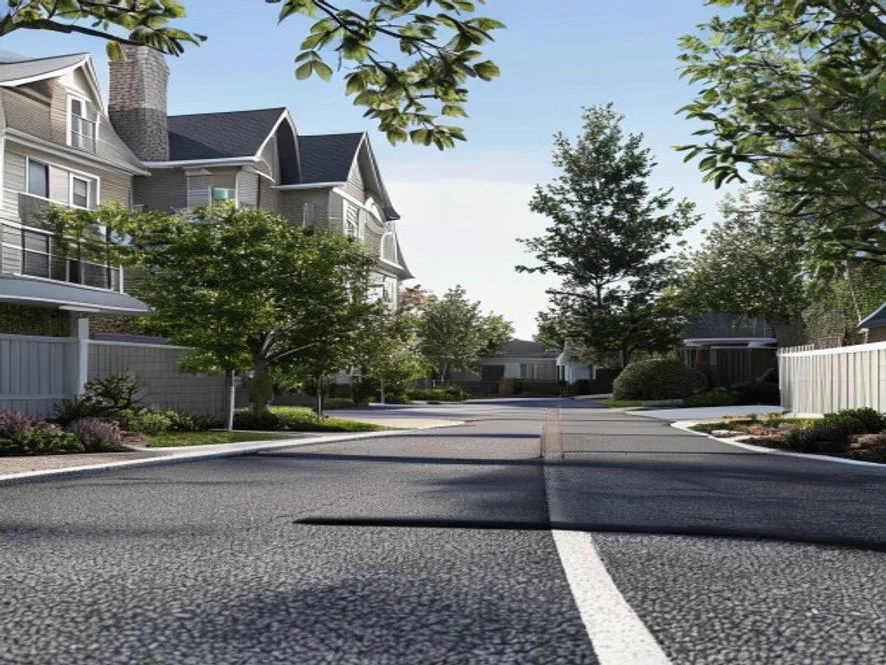
What driveway work needs HOA approval?
The line most HOAs draw is between changing how the driveway looks and simply maintaining it. Anything that alters the visible appearance of your lot usually triggers a review. Anything that keeps an existing surface in good shape usually does not, though strict associations review even that.
- Almost always needs approval: a full driveway replacement, switching materials (gravel to asphalt, asphalt to concrete or pavers), widening, extending, or adding a parking pad.
- Often needs approval: resurfacing or an overlay, since the fresh dark surface and any new edging change curb appeal. Read about an overlay on an existing driveway before you assume it is exempt.
- Usually allowed without a request: sealcoating, crack filling, and pothole patching that keep the same look. Follow your maintenance schedule to stay tidy and compliant.
- Gray area: colored or stamped asphalt, decorative borders, and new lighting. These change appearance, so treat them as approval items even if plain sealing is exempt.
When in doubt, ask. A two-line email to your property manager asking whether a project needs a request costs nothing and protects you from a violation notice later.
Where do I find my HOA's driveway rules?
The rules live in your governing documents, which you received at closing and can request again from the management company. Read these three before you plan anything.
- CC&Rs (covenants, conditions, and restrictions): the recorded master document that sets material, color, and maintenance standards for driveways.
- Architectural guidelines: a more detailed handbook listing approved materials, finishes, colors, and the exact submission process.
- Bylaws and rules: these set the committee's response deadlines, fine schedule, and appeal rights.
Look specifically for sections on driveways, parking, hardscape, and architectural review. If a clause is vague, the committee's prior decisions on neighboring homes are a strong hint at what they will approve. The U.S. government's consumer site at epa.gov also explains permeable paving, which some HOAs now encourage for drainage.
Can an HOA dictate my driveway material and color?
Yes, and this surprises many homeowners. Associations are allowed to enforce visual consistency, so they can require a specific material, ban another, and limit colors and finishes. Common rules include:
- Material mandates: some communities require concrete or pavers and prohibit plain black asphalt. Others allow asphalt but only in standard finishes. If you are weighing options, compare asphalt vs concrete and asphalt vs pavers before you submit.
- Color limits: standard asphalt is fine, but tinted or red-oxide colored asphalt may be banned. Review colored asphalt options only after confirming they are permitted.
- Edge and border rules: brick or paver borders may need a separate sign-off even when the main surface is approved.
- Width and setback limits: the HOA may cap how wide your driveway can be and how close it sits to the property line. This overlaps with local code on setbacks and any required city permit.
HOA approval and a municipal permit are two separate steps. Clearing one does not clear the other, so plan for both.
Quick tool
HOA Approval Timeline Estimator
Enter when you want work to start and how long your committee takes to respond. This shows the latest date to submit your request.
How do I submit an HOA driveway request?
Most associations use an architectural control committee, sometimes called the ACC or ARC. The process is straightforward when you give them complete information the first time.
- 1. Get the form: ask the property manager for the architectural request form. Many HOAs now accept it through an online portal.
- 2. Describe the work: state the material, color, finish, and dimensions. If you are repaving, note the standard residential thickness you plan to use.
- 3. Attach proof: include a site sketch, a contractor estimate, and a product sample or spec sheet. A clean written quote helps; run yours through our quote checker first.
- 4. Submit early: allow 30 to 60 days for a decision. Use the estimator above to find your submit-by date.
- 5. Keep records: save the dated approval. Some committees require work to finish within a set window, often 60 to 90 days.
What happens if I skip approval or break the rules?
HOAs have real enforcement power, and ignoring the process is the most expensive mistake you can make. A finished driveway is hard and costly to undo.
- Violation notice: the first step is usually a letter with a cure period to fix or remove the work.
- Fines: these often start near 25 to 100 dollars and can repeat weekly or monthly until you comply.
- Forced removal: the HOA can require you to tear out unapproved material and start over, doubling your cost.
- Liens: unpaid fines can become a lien on your home, which complicates selling or refinancing.
Your state attorney general and consumer protection rules set limits on how HOAs collect, and the Federal Trade Commission publishes guidance on disputing improper charges. If you feel a contractor pressured you into rule-breaking work, the Better Business Bureau tracks complaints worth reviewing before you hire.
Who pays for driveway repairs in an HOA?
On a typical single-family lot, the driveway sits on your property, so you own it, maintain it, and pay for it. The HOA owns and maintains common areas, shared private streets, and any driveway it explicitly lists as common. The split matters most for shared driveways, where two owners or the association may divide costs. Confirm three things in your covenants before assuming who pays:
- Boundary line: where your lot ends and common area begins, including the apron near the street.
- Maintenance standard: the condition you must keep the driveway in, which is why a routine sealcoat pays off.
- Reserve coverage: whether the HOA reserve fund covers shared paving, and how special assessments work.
How do I stay HOA-compliant and protect resale value?
Compliance and curb appeal go together. A driveway that meets HOA standards also tends to add to your home's value. Keep these habits:
- Maintain proactively: seal every 2 to 3 years and fill cracks each season so you never get a notice. See how this supports driveway ROI and home value.
- Match the neighborhood: stick to approved materials and colors. This is the cheapest path to approval and the smoothest at resale.
- Keep paperwork: file every approval letter and contractor warranty. Buyers and the HOA may ask for them. A solid warranty reassures both.
For background on pavement standards and best practices, the National Asphalt Pavement Association is a useful authority to cite if your committee asks about material quality.
Bottom line
Treat your HOA as the first stop, not an afterthought. Read your CC&Rs, confirm whether the work needs approval, submit a complete request 6 to 8 weeks early, and keep the sign-off on file. Do that and your repave or repair goes smoothly. Skip it and you risk fines, liens, or tearing out a brand-new surface.