Yes, most asphalt driveways need a permit. A brand-new driveway, a wider or longer one, a changed slope, or any tie-in to the public road almost always requires a permit from your city or county. Simply repaving the same footprint often does not. Always confirm with your local building office before you budget the job.
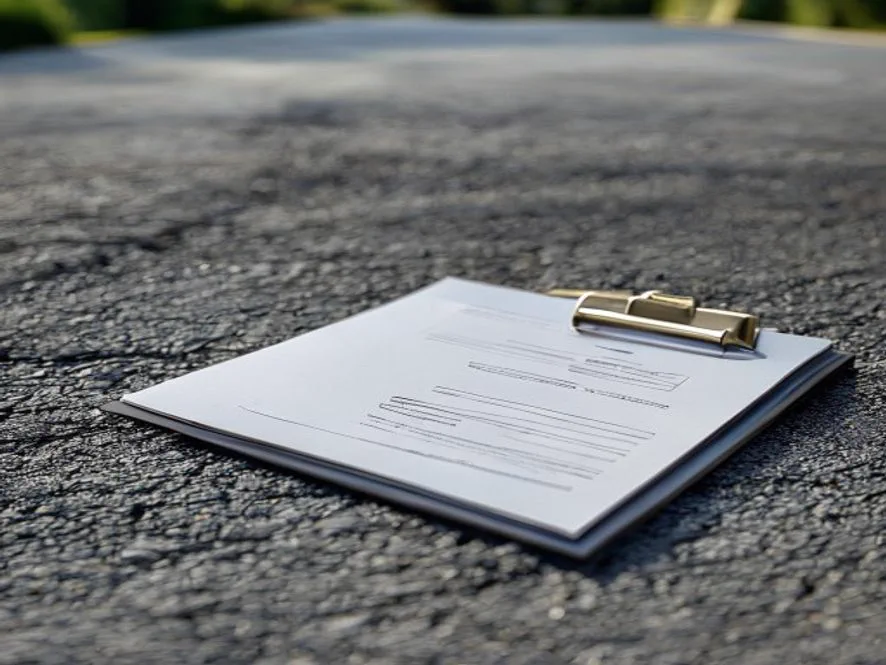
When does an asphalt driveway need a permit?
Permit rules are local, so there is no single national answer. That said, the triggers are consistent across most towns. A few specific situations almost always require a permit, and a few often do not.
- New driveway: Paving where no driveway existed before nearly always needs a permit, because the town has to review where it meets the street and how water drains.
- Tie-in to a public road: Any work that touches the public right-of-way, the curb, or the road edge needs a separate curb-cut or right-of-way permit. This is the most commonly missed one.
- Expansion or widening: Adding a driveway extension, a turnaround, or a second parking pad changes the footprint and usually triggers a permit.
- Grade or drainage change: Altering the slope or rerouting runoff often needs a grading or stormwater review.
- Like-for-like repaving: Replacing the same driveway in the same spot, same width, and same shape often counts as maintenance and may skip the permit. Confirm anyway.
The Federal Highway Administration treats every connection to a public road as part of the road network, which is why your local public works office cares about driveway aprons and sight lines. You can read how agencies frame access management at fhwa.dot.gov.
What types of driveway permits exist?
People say "the permit" as if it is one thing. For driveways it is often two or three separate approvals, and missing one can stall the whole project.
- Building or zoning permit: Covers the driveway itself, its size, location, and how close it sits to your property line. See our guide to setback rules before you finalize dimensions.
- Right-of-way or curb-cut permit: Covers the part that connects to the public street, often called the driveway apron. This is usually issued by the public works or transportation department, not the building department.
- Grading or stormwater permit: Required when you move enough dirt or change drainage. More common on slopes, large lots, and near wetlands.
- HOA architectural approval: Not a government permit, but a real approval you may still need. Review the basics in HOA driveway rules.
How much does a driveway permit cost?
Permit fees are modest compared with the paving job itself, but they vary widely by town. Plan for the permit as a line item, not an afterthought, and remember it sits on top of your paving budget.
- Simple flatwork permit: Roughly 50 to 150 dollars in most areas.
- Right-of-way or curb-cut permit: Roughly 150 to 500 dollars, sometimes with a refundable bond of a few hundred dollars to cover road repair.
- Grading or stormwater review: Often 100 to 600 dollars, more if an engineered plan is required.
- Site plan or survey: If the town wants a drawing, a surveyor or engineer may add 200 to 1,000 dollars.
Use the mini-tool below to get a rough total before you call your permit office.
Quick estimate
Driveway Permit Cost Estimator
Pick what your project involves. This is a rough planning range, not a quote. Your town sets the real fees.
How do you get a driveway permit, step by step?
The process is more paperwork than mystery. Most homeowners can get through it in a week or two if they start early.
- Call your building and public works offices. Ask which permits a driveway needs and whether like-for-like repaving is exempt. Two phone calls save weeks.
- Gather your documents. Usually a simple site sketch, your lot dimensions, the driveway width and length, and the contractor license number.
- Let your contractor pull it. A licensed contractor should apply under their license. Confirm this in your paving contract.
- Wait for approval. Simple permits clear in days. Right-of-way and grading reviews can take weeks, so build that into your timeline.
- Schedule inspections. Some towns inspect the base before paving and again after. Do not pave over a missed inspection.
If a contractor pressures you to skip the permit or pull it yourself, treat that as a warning sign. Our list of contractor red flags covers why that matters.
What happens if you skip the permit?
Skipping a permit feels cheaper until it is not. Code enforcement does drive-bys, neighbors report visible work, and unpermitted paving surfaces during a home sale.
- Stop-work order: Work halts mid-job, sometimes with fresh asphalt half-laid.
- Fines: Commonly 100 to 1,000 dollars or more, and some towns charge double the original permit fee as a penalty.
- Tear-out: If the work does not meet code, you may have to remove it. See our guide to removal costs to understand that pain.
- Sale problems: Unpermitted work shows up in inspection and title review and can delay or kill a closing.
For straight consumer guidance on contractor agreements and your rights when a job goes sideways, the Federal Trade Commission keeps plain-language resources at ftc.gov, and you can check a contractor's track record through your local BBB.
Permits versus HOA approval versus easements
These three get confused constantly, and they are not interchangeable. A government permit covers safety and the public road. An HOA approval covers appearance and is enforced by your neighborhood, not the city. An easement is a recorded right that someone else, often a utility or a neighbor on a shared driveway, has over part of your land. You can need all three to clear before paving, and clearing one does nothing for the others. Check your deed and survey for easements early, because paving over one can force a costly tear-out later.
Bottom line
If you are building new, widening, changing the grade, or touching the public road, assume you need a permit and probably more than one. If you are simply repaving the same footprint, you may be exempt, but a single phone call to your building office settles it. Permits cost far less than fixing unpermitted work, so pull them, let your licensed contractor handle the paperwork, and keep the approval on file for the day you sell.