Infrared asphalt repair reheats your existing pavement to about 300 degrees Fahrenheit, then a crew rakes the softened material, mixes in a little fresh hot mix and rejuvenator, and recompacts it into a seamless patch with no cold joints. It works best for surface potholes and cracks over a sound base. See our asphalt repair guide for the full menu of options.
What is infrared asphalt repair?
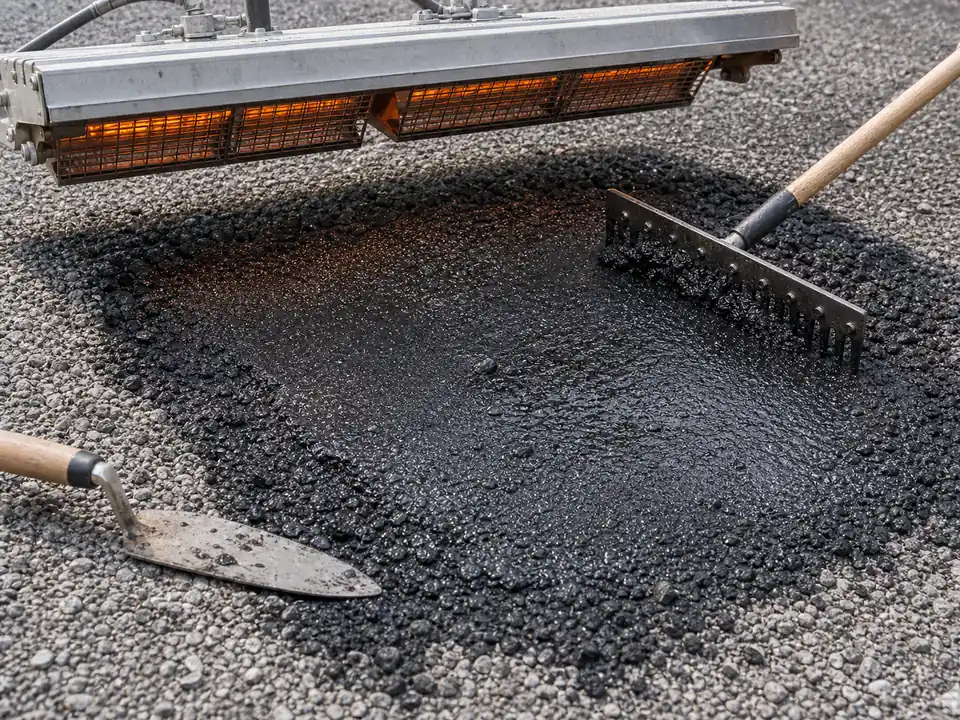
Infrared repair is a method that fixes damaged asphalt by heating it instead of removing it. A propane or electric infrared heater sits over the damaged spot for about seven to ten minutes. It warms the top inch and a half to two inches of pavement until the asphalt binder softens and the surface becomes workable, like fresh mix again. The crew then rakes the loosened material, scrapes out the failed bits, blends in a small amount of new hot mix to replace what was lost, adds a rejuvenating oil to restore the old binder, and recompacts the whole area with a plate compactor or roller.
The big difference from a normal patch is the edge. A traditional saw cut patch leaves a hard seam between the new and old asphalt. That seam is a cold joint, and water finds it fast. Infrared reheats the surrounding pavement too, so the new and old material fuse together with no visible edge. There is nothing for water to creep into, which is the main reason the method appeals to property managers and homeowners who hate seeing a checkerboard of patches.
How does the infrared repair process work step by step?
The actual sequence is short, which is part of the appeal. A typical patch takes 15 to 30 minutes from start to driveable.
- Clean the area. The crew sweeps out loose debris, water, and vegetation. Wet pavement slows the heat, so they may dry it first.
- Heat the surface. The infrared unit warms the damaged zone to roughly 300 degrees Fahrenheit over seven to ten minutes without burning the binder.
- Scarify and rake. Workers rake the softened asphalt, remove any badly oxidized or contaminated material, and level the void.
- Add mix and rejuvenator. A few shovels of fresh hot mix top off the volume, and rejuvenating oil restores the aged binder so it bonds.
- Recompact. A plate compactor or small roller presses the blend flush with the surrounding surface.
- Cure. The patch is usually driveable within 15 to 30 minutes once it cools, far faster than waiting on a fresh overlay.
If you have only one small pothole, this is a fast fix. For a do it yourself comparison, our pothole patching walkthrough covers the cold patch route that needs no special equipment.
When should you use infrared repair?
Infrared is a surface treatment, so it fits damage that lives in the top couple of inches of asphalt over a base that is still solid. Good candidates include:
- Surface potholes. Shallow holes that have not punched through to the dirt below.
- Birdbaths and low spots. Ponding areas where the surface dipped but the base held. See low spot repair for details.
- Oil and fuel stained patches. Heat helps burn off and rework softened, contaminated asphalt.
- Failed seams and old patches. Reheating blends a previous ugly patch back into the surrounding pavement.
- Utility cut repairs. Where a trench was filled and the joint is now leaking water.
The U.S. asphalt industry, through the National Asphalt Pavement Association, points out that recycling and reheating existing material reduces the new aggregate and binder a repair consumes. The Federal Highway Administration tracks similar in place recycling methods on public roads for the same reason.
When should you not use infrared repair?
Heat only fixes what it can reach. If the problem starts below the surface, infrared will not solve it, and the patch will fail fast. Avoid infrared when:
- The base is soft or pumping. If you can feel the pavement flex under a car, the base needs digging out, not reheating.
- Damage goes full depth to dirt. A deep pothole through the asphalt needs a full dig out and hot mix repair, not a surface reheat.
- Alligator cracking is widespread. Interconnected cracking across a large area signals base failure. Read alligator cracking fixes before spending money.
- The driveway is near the end of life. If most of the surface is shot, an overlay or replacement beats spot patching. Our beyond repair guide helps you decide.
How much does infrared asphalt repair cost?
For homeowners, most single infrared patches land between 100 and 300 dollars, or roughly 2 to 6 dollars per square foot. Because the truck, heater, and crew have to mobilize no matter how small the hole, many contractors charge a minimum trip fee of 200 to 500 dollars. That means one small patch costs nearly the same as several patches done in the same visit, so it pays to batch repairs.
Compared to a saw cut and replace patch, infrared is usually a little cheaper per spot and much faster, with no asphalt hauled away. Compared to a full overlay, it is far cheaper up front but only treats the spots you point at. If your driveway has many failing areas, run the numbers against resurfacing in our resurfacing cost guide, and use the mini tool below to ballpark a job before you call.
Estimator
Infrared Patch Cost Estimator
Enter the number of patches and an average patch size to get a rough total. This is a planning estimate, not a quote.
Below the trip minimum, so you would likely pay the minimum trip fee.
How long does an infrared patch last?
A good infrared patch over a sound base typically lasts five to ten years, on par with a quality cut and replace patch. The seamless edge actually helps it outlast a cold joint patch, because there is no perimeter seam for water to attack. That said, lifespan is only as good as the base beneath it. If the soil or aggregate under the patch is failing, the repair will heave or sink within a season or two no matter how clean the heat work was.
To stretch the life of any repair, sealcoat the surface a few months later and keep cracks sealed. Our crack sealing guide walks through the routine. For the bigger maintenance picture, the maintenance schedule lays out what to do each year. The EPA notes that keeping pavement sealed and crack free reduces stormwater runoff problems too.
Infrared vs hot mix patch vs overlay
It helps to see the three common fixes side by side so you pick the right tool:
- Infrared repair. Reheats and reuses existing asphalt. Seamless, fast, no haul off. Best for surface damage over a solid base.
- Hot mix patch. Cuts out and replaces the bad section with new mix. Strong but leaves cold seams. Best when damage is deep but localized.
- Overlay. Lays a fresh layer over the whole driveway. Best when most of the surface is worn but the base is sound. See overlay basics.
If a contractor pushes infrared for a driveway that is clearly failing across the board, treat it as a red flag and get a second opinion. Our contractor red flags list covers the warning signs, and you can sanity check any written bid with the quote checker.
Bottom line
Infrared asphalt repair is a smart, low waste fix for surface potholes, low spots, and ugly old patches when the base underneath is still solid. It bonds seamlessly, cures in under half an hour, and usually costs 100 to 300 dollars per patch with a trip minimum. It is the wrong choice when damage runs full depth, the base is soft, or alligator cracking has spread. Match the method to the depth of the problem, batch your patches into one visit, and seal the surface afterward to get the full five to ten year payoff.