Walk into any home improvement store and you will see a wall of driveway sealer. Different brands. Different colors. Different price points. Underneath, there are only 4 chemistries. Once you know which one fits your driveway and your state, the brand decision gets easy. Here is the full comparison. For brand picks see best sealer brands 2026 and for schedule see how often to sealcoat.
The 4 chemistries in one paragraph each
Coal tar is a byproduct of the steel and coke industries. It is the most durable sealer and the most fuel- and chemical-resistant. It is also the most restricted, with 17 states and many cities banning or limiting its use because of PAH content washing into stormwater.
Asphalt emulsion is asphalt cement broken into tiny droplets suspended in water. As the water evaporates the droplets coalesce into a solid film. It is the universal default for residential driveways. Safe everywhere. Available everywhere.
Acrylic is a polymer-based product. It was originally formulated for commercial parking lots that needed UV resistance and long lifespan. It now sees use on premium home driveways. Costs more, lasts longer.
Latex-modified emulsion is asphalt emulsion with latex polymer added. The latex makes the film flexible and able to bridge small cracks. Best fit for driveways already showing hairline cracking.
Lifespan by chemistry
- Coal tar: 5 to 7 years in cold and moderate climates. 3 to 4 in hot UV-heavy climates.
- Asphalt emulsion: 3 to 5 years across most climates.
- Acrylic: 5 to 10 years residential. Up to 10 years on commercial applications.
- Latex-modified emulsion: 2 to 3 years. Shorter life is the tradeoff for the crack-bridging flexibility.
Climate fit
The same chemistry can be the best or worst choice depending on where you live.
- Cold (Northeast, upper Midwest): Coal tar excels. Asphalt emulsion is the safe alternative. Freeze-thaw and salt wear coats fast, so durability matters most.
- Moderate (Mid-Atlantic, Pacific Northwest): Asphalt emulsion or coal tar. Acrylic if the budget allows.
- Hot UV-heavy (South, Southwest): Acrylic is the best choice. Asphalt emulsion is the default. Coal tar is the worst pick because UV breaks it down faster than the climate breaks down other chemistries.
- Coastal: Asphalt emulsion or acrylic. Salt spray attacks coal tar faster.
Cost by chemistry
2026 retail pricing for a 5 gallon pail.
- Coal tar: 30 to 50 dollars where legal.
- Asphalt emulsion: 25 to 45 dollars.
- Acrylic premium: 50 to 90 dollars.
- Latex-modified emulsion: 35 to 55 dollars.
For the full project budget see sealcoating cost 2026.
Environmental and regulatory situation
Coal tar is the chemistry with the most regulation. Studies have linked PAH content to fish kills, soil contamination, and indoor dust exposure when sealer wears off into household tracking patterns. The EPA tracks state and municipal restrictions. As of 2026, the following states have full or partial bans or strong restrictions: Minnesota, Wisconsin, Washington, Maryland, Maine, Vermont, New Hampshire, Massachusetts, Connecticut, New York, New Jersey, Pennsylvania, Illinois, Iowa, Oregon, Michigan, and the District of Columbia. Many cities add their own rules. Always check before buying. See the older coal tar vs emulsion guide for the deeper environmental comparison.
Asphalt emulsion and acrylic are not subject to PAH restrictions. They are safe everywhere.
Side-by-side comparison
| Chemistry | Lifespan | Climate fit | Cost (5 gal) | Environment | Where to use |
|---|---|---|---|---|---|
| Coal tar | 5 to 7 yrs | Cold and moderate | $30 to $50 | PAH concern, restricted in 17 states | Northern climates where legal |
| Asphalt emulsion | 3 to 5 yrs | Universal | $25 to $45 | Low impact, safe everywhere | Default for most homes |
| Acrylic | 5 to 10 yrs | All, best in high-UV | $50 to $90 | Low impact | Premium homes, high-traffic, southern climates |
| Latex emulsion | 2 to 3 yrs | Universal | $35 to $55 | Low impact | Driveways with hairline cracks |
How to choose a driveway sealer type
Six steps to lock in the right chemistry.
- Check local regulations. Is coal tar legal in your state and city? The EPA has a state-level reference.
- Assess your climate. Cold and moderate favor coal tar or emulsion. Hot UV-heavy favors acrylic.
- Inspect driveway condition. Hairline cracks favor latex-modified emulsion. Smooth surface accepts any chemistry.
- Match traffic load. Standard residential uses emulsion. RV, trailer, or commercial use favors acrylic.
- Set your budget. Emulsion is cheapest mid-quality. Coal tar same price longer life. Acrylic 50 to 80 percent more upfront.
- Pick a brand and pail count. Cross-reference with best sealer brands 2026 and size with the sealer calculator.
The 2026 homeowner default pick
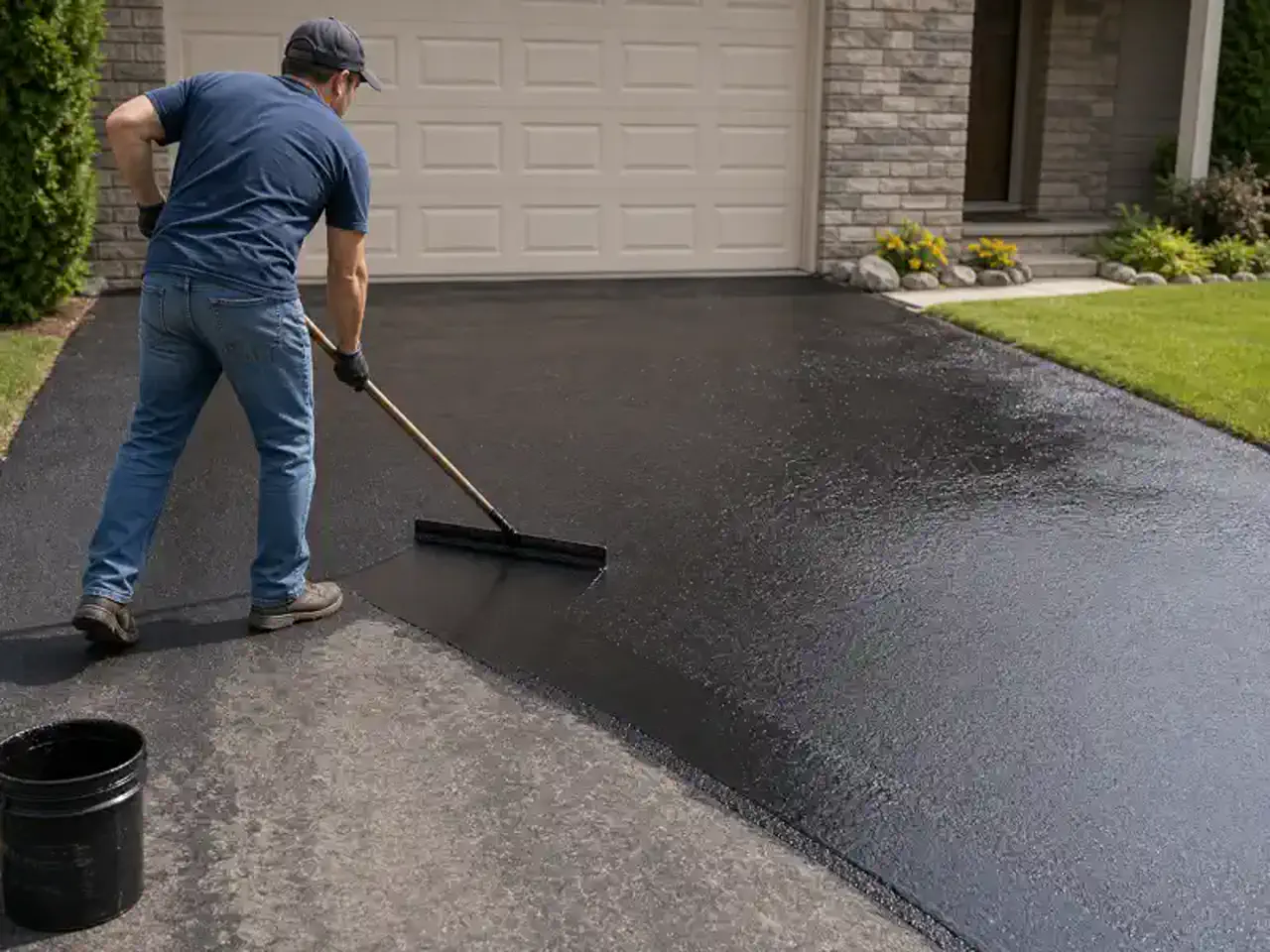
For 80 percent of homeowners in 2026, the right call is a standard asphalt emulsion sealer. It is safe in every state. It costs the least. It lasts 3 to 5 years which lines up with the standard sealcoat cadence. It applies easily with a brush or squeegee. It cleans up with water. All four of these are surface coatings that protect from the top down, which is a different job from a penetrating product that restores the binder underneath, explained in sealer vs rejuvenator. The only reasons to choose something else are durability priority (acrylic), cold-climate maximum lifespan where legal (coal tar), or visible hairline cracks needing flexible bridging (latex). See sealcoat dry time for application planning and is sealcoating worth it for the ROI math.
Application differences by chemistry
- Coal tar. Applies thick. Dries fast (4 to 6 hours). Strong odor. Wear gloves and old clothes.
- Asphalt emulsion. Applies smooth. Dries slower (6 to 8 hours). Mild odor.
- Acrylic. Applies thin. Dries fast (4 hours). Almost no odor. May need a specific applicator.
- Latex emulsion. Applies thick and tacky. Dries slowest (8 to 10 hours). Mild odor.
See DIY sealcoating mistakes for application traps to avoid.
Bottom line
Coal tar for max durability where legal. Asphalt emulsion as the universal default. Acrylic for premium long-life jobs. Latex emulsion for driveways with hairline cracks. The right chemistry depends on climate, condition, traffic, budget, and your state's rules. Most homeowners land on asphalt emulsion. Check the when to seal new asphalt guide for timing on a fresh driveway.
Chemistry references are on the sources page. The Asphalt Institute publishes sealer formulation data. The EPA maintains the PAH and coal tar regulatory reference. The NAPA covers application standards for residential pavement.