A permeable asphalt driveway costs 7 to 13 dollars per square foot installed in 2026, about 30 to 50 percent more than standard asphalt. It uses an open-graded mix that lets rain soak straight through into a deep stone reservoir, eliminating runoff. It is the eco and drainage choice, not the budget one. Compare the standard number on the driveway cost calculator.
What is permeable asphalt?
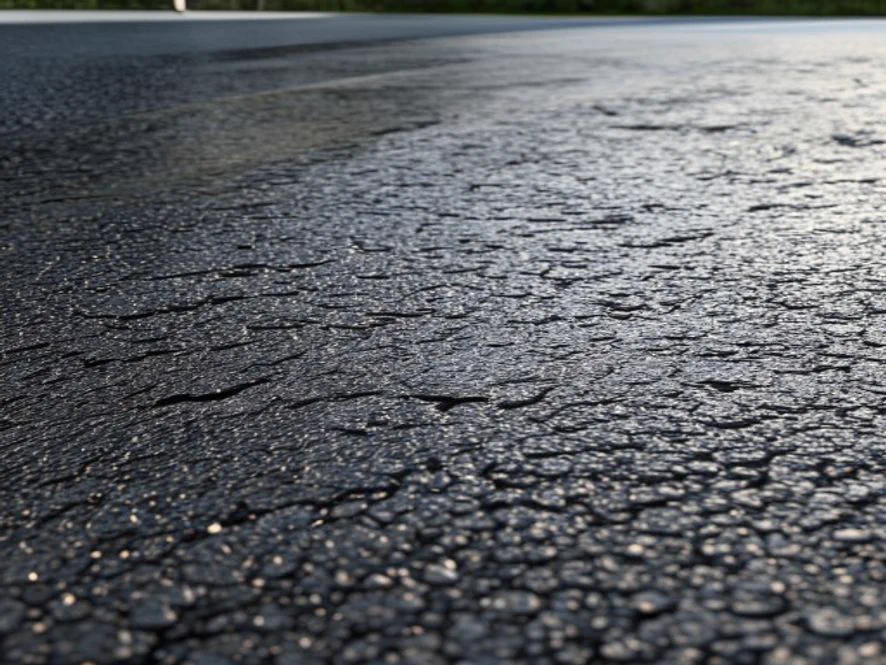
Permeable asphalt, also called porous or open-graded asphalt, is a hot-mix pavement made with almost no sand or fine particles. Standard asphalt packs fine aggregate into the mix so it sets dense and waterproof. Permeable asphalt leaves that fine material out, so the cured surface holds 15 to 20 percent open void space. Rain runs through those voids instead of sheeting off the top.
Below the surface sits the part that does the real work: a reservoir of clean, uniformly sized crushed stone 12 to 24 inches deep. Water passes through the asphalt, fills the gaps between the stones, and then soaks slowly into the soil underneath. The whole system is a stormwater control device that also happens to be a driveway. The EPA permeable pavement guide explains the stormwater logic in detail.
How much does it cost in 2026?
- Permeable asphalt: 7 to 13 dollars per square foot installed. National midpoint around 9 to 11.
- Standard asphalt: 5 to 10 dollars per square foot installed for comparison.
- The premium: roughly 30 to 50 percent more than a standard driveway of the same size.
- 600 sq ft driveway: about 4,200 to 7,800 dollars permeable versus 3,000 to 6,000 standard.
The extra cost is almost entirely below grade. The open-graded asphalt mix itself is close in price to standard hot mix. What drives the premium is the deep reservoir of washed, single-size stone, the geotextile fabric that separates it from the soil, and the extra excavation depth. See the per-square-foot pricing guide for the standard baseline and the hidden costs guide for line items that catch people out.
How does it drain water?
A standard asphalt driveway is impervious. Every drop that lands on it has to run somewhere, which is why slope and grading matter so much on a normal job. Permeable asphalt skips that problem. Rain enters the surface across the whole driveway, not just the edges, then sits in the stone reservoir and infiltrates the soil over the next several hours.
A well-built permeable section can handle 100 inches of rainfall per hour through a fresh surface, far more than any storm produces. The bottleneck is never the asphalt; it is how fast your native soil can absorb the stored water. Sandy soil drains fast. Clay drains slowly and can defeat the system, which is the single biggest design failure to avoid. If your lot already has standing water issues, read the driveway drainage solutions guide before you decide.
Permeable cost and runoff estimator
Enter your driveway size and a rough rate to compare permeable against standard asphalt, and to see how much rain runoff the permeable surface keeps on your own lot in a typical 1 inch storm.
The pros
- No runoff: Rain stays on your lot. No water pushed toward the garage, the neighbor, or the street. This is the headline benefit.
- Solves flat-lot drainage: Works on grades too flat to drain a standard driveway. No slope toward a drain is needed.
- Stormwater fee relief: Many cities charge an impervious-surface fee. A permeable driveway can reduce or remove it and sometimes earns a rebate.
- Recharges groundwater: Water returns to the soil instead of the storm sewer, which the EPA treats as a green-infrastructure win.
- Less ice glaze: Surface water drains down instead of freezing into a sheet, so the top stays less slick in freeze-thaw weather.
- Cooler surface: The open structure runs slightly cooler than dense asphalt in summer heat.
The cons
- Higher upfront cost: 30 to 50 percent more than standard asphalt, mostly for the deep stone reservoir.
- Clogging: Sand, silt, leaves, and lawn clippings pack the voids over time and cut the infiltration rate. This is the number one long-term issue.
- Specialized installer: Few crews do it well. A standard paving crew that treats it like normal asphalt will compact it wrong and seal the voids.
- No sealcoating: You can never sealcoat it, so the protective routine that extends standard driveways does not apply.
- Wrong on clay or steep grades: Clay soil cannot absorb the stored water, and a steep grade lets water exit before it infiltrates.
- Slightly shorter life: 15 to 20 years versus 15 to 25 for a well-built standard driveway.
Lifespan and what shortens it
A permeable asphalt driveway lasts 15 to 20 years. That is a little short of the 15 to 25 years a standard driveway can reach, mostly because the open structure is more sensitive to two things: clogging and heavy point loads. See how long an asphalt driveway lasts for the standard comparison. Parking a loaded RV or a dumpster on one spot can crush the void structure, so review the thickness guide for heavy vehicles if that applies to you.
Clogging is the slow killer. As fine silt works into the surface, infiltration drops. A driveway that drank 100 inches an hour when new might handle only 10 after five neglected years. The fix is cheap if you keep up with it and expensive if you do not.
Maintenance is the opposite of standard asphalt
This is the part that surprises homeowners. Standard asphalt maintenance is about sealing the surface, on a schedule like the one in our maintenance schedule. Permeable asphalt maintenance is about keeping the surface open. You never sealcoat it. Instead you vacuum or pressure wash the voids two to four times a year to lift out the silt before it sets.
- Vacuum sweep: Twice a year minimum, more if there are trees or road sand nearby. A regenerative-air street sweeper does it best.
- Keep sand off it: Do not use sand for winter traction. It is the fastest way to clog the surface.
- Spot pressure wash: A focused rinse reopens local clogged patches between full cleanings.
- Crack repair: Fix cracks promptly, the same as any pavement. See how to fix cracks.
Where it works and where it fails
Site fit decides everything with permeable asphalt. Get the soil and grade wrong and you have paid a premium for a driveway that floods anyway.
- Works: Flat lots with drainage trouble, sandy or loamy soil, areas with stormwater fees, and homeowners who want runoff handled on site.
- Fails: Heavy clay soil, grades over about 5 percent, sites with constant leaf or sand load, and budgets that cannot absorb the premium.
If your driveway sits on a slope, permeable is usually the wrong tool. Look at the slope and grade guide first. On clay, a graded standard driveway with a french drain often solves the problem for less money.
Permits, rebates, and stormwater rules
Permeable asphalt often interacts with local rules in your favor. Many municipalities cap how much impervious surface a lot can have, and a permeable driveway can keep you under that cap. Some offer stormwater-fee credits or one-time rebates that shrink the cost gap. Check with your local zoning or stormwater office, and confirm whether a driveway needs a permit at all using our driveway permit guide. The EPA green infrastructure program lists the kinds of incentives commonly tied to permeable surfaces.
Permeable asphalt versus the alternatives
Permeable asphalt is not the only way to manage runoff. Permeable pavers and porous concrete do the same job at different price points and looks. Plain gravel is permeable by nature and far cheaper, though it lacks a firm surface. If your driving need is the runoff control and not the asphalt look, compare with the asphalt vs gravel breakdown and the asphalt vs pavers comparison. For most homeowners the decision is permeable asphalt versus a standard driveway plus a separate drainage fix, and the cost-checker above frames that trade.
Bottom line
Permeable asphalt is a drainage and sustainability tool first and a driveway second. On a flat lot with a runoff problem, in a city with stormwater fees, or on sandy soil where infiltration is easy, the 30 to 50 percent premium can pay for itself and solve a problem no amount of regrading fixes. On clay, on a slope, or where road sand will clog it, the same money is better spent on a standard driveway and targeted drainage. Use the estimator above to size the premium, then get a written scope that spells out reservoir depth, stone gradation, and the no-sealcoat maintenance plan. Score any quote with the quote checker before you sign.
Cost ranges, infiltration figures, and the stormwater incentive notes are documented on the sources page.