To remove moss and algae from an asphalt driveway, sweep off loose debris, spray the green growth with diluted bleach or a moss killer, let it dwell fifteen to twenty minutes, scrub with a stiff broom, then rinse. To prevent regrowth, fix the shade and drainage and sealcoat the surface.
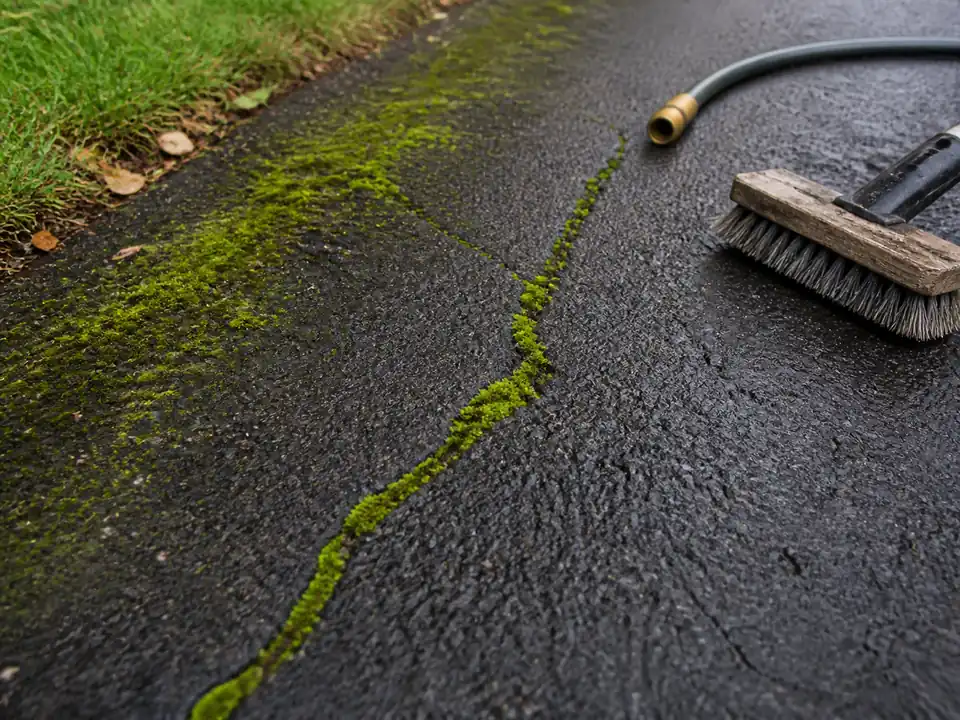
Why moss and algae grow on asphalt in the first place
Moss and algae are not random. They show up where three things line up: shade, steady moisture, and a textured surface that gives spores something to grip. North facing driveways, sections under trees, and low spots that hold water are the usual hot zones. Algae is the slick green or black film. Moss is the thicker, spongy mat that builds on top once algae has softened the surface.
Asphalt itself is not food for these plants the way wood or soil is. The real problem is what they do to the surface. The mat traps water against the pavement, and that constant dampness speeds up oxidation, raises the chance of cracking, and eats at the edges. Wet moss is also genuinely dangerous to walk on. Many slip and fall injuries on driveways trace back to a green film nobody thought twice about.
How to remove moss and algae from asphalt, step by step
This is a half day project for most driveways. Pick a dry, mild day so your cleaner has time to work and the surface can dry afterward. Wear gloves and eye protection if you use bleach.
- Step 1, clear the debris. Sweep off leaves, twigs, and any loose moss mats with a stiff push broom. The cleaner needs to reach the growth, not sit on a layer of dead leaves.
- Step 2, apply the cleaner. Mix one part household bleach to four parts water, or use a ready made moss and algae killer. Load a pump sprayer and coat the green areas until evenly wet. Let it dwell fifteen to twenty minutes so it can kill the growth down to the root layer.
- Step 3, scrub. Work the stiff broom back and forth over the moss to break up the mat and lift it out of the asphalt texture. Thick mats may need a second soak.
- Step 4, rinse. Flush the whole area with a garden hose or a low pressure washer. Push the slurry toward a storm drain or gravel area, away from lawn, garden beds, and ponds.
- Step 5, dry and prevent. Let the surface dry fully, then fix the underlying causes and plan to seal. Skipping this step means the moss is back within a season.
If your driveway also has oil marks or general grime, it is worth combining jobs. Our guides on cleaning an asphalt driveway and removing oil stains walk through cleaners that pair well with a moss treatment.
What kills moss on a driveway: cleaner options compared
You have a range of options from gentle to aggressive. Match the cleaner to how thick the growth is.
- Diluted bleach. The reliable workhorse. One to four dilution, twenty minute dwell, then rinse. Cheap and fast, but protect plants and rinse well.
- White vinegar. Full strength vinegar kills surface moss and algae naturally. Best on thin growth. It may need a repeat pass and can leave a smell that fades in a day.
- Baking soda. Sprinkle, let it sit, then scrub. Mild and pet friendly, good for spot treatment rather than a whole driveway.
- Commercial moss killer. Products with zinc or potassium salts of fatty acids are made for this. Follow the label, since these are the formulas tested for outdoor masonry and paving.
- Hot water and dish soap. Surprisingly effective on a fresh, thin film and the safest choice near edible gardens.
Whatever you pick, check the runoff rules in your area. The EPA recommends keeping cleaning chemicals out of storm drains where you can, so rinse toward a planted or gravel zone that lets water soak in.
Can you pressure wash moss off asphalt safely?
Yes, with limits. A pressure washer is the fastest way to lift a thick mat, but asphalt is softer than concrete and high pressure tears it up. Keep the machine under about 2,000 PSI, use a 25 to 40 degree fan tip, and hold the wand at least twelve inches off the surface. Move steadily and never linger in one spot.
Too much pressure strips the binder, loosens the fine aggregate, and leaves a rough, pitted patch. That rougher texture actually holds more moisture and gives moss a better grip, so you trade a quick clean for faster regrowth. Our pressure washing guide covers tips, distances, and the warning signs you are going too hard. If you see sand and small stones washing out, back off immediately.
Moss cleaner quantity estimator
Enter your driveway size to estimate how much diluted bleach solution you need for one full pass.
How to stop moss and algae from coming back
Cleaning is the easy part. Prevention is what saves you from doing this every spring. Moss and algae return whenever the surface stays damp and shaded, so the fix is to change those conditions.
- Open up the shade. Trim back overhanging branches and shrubs so sun and air reach the pavement. A surface that dries within an hour of rain rarely grows moss.
- Clear debris often. Leaf piles and pine needles hold moisture and feed the cycle. A quick sweep every couple of weeks in fall makes a real difference.
- Fix the drainage. Standing water is the single biggest cause. If you have low spots or pooling, see our drainage solutions and standing water fix guides.
- Sealcoat on schedule. A fresh seal coat gives a smoother, less porous surface that moss struggles to grip. Most homeowners seal every two to three years. Check our maintenance schedule to time it right.
For the science on how surface moisture and biological growth break down pavement over time, the National Asphalt Pavement Association and the Asphalt Institute are solid technical references.
When moss is a symptom of a bigger problem
A little algae in a shady corner is cosmetic. But if moss keeps coming back fast across the whole driveway, that usually means a drainage or grading issue is keeping the surface wet. Persistent dampness also accelerates other damage, so do not just treat the green. Look for soft spots, sunken areas, and crumbling edges at the same time. If you find them, our guides on edge crumbling and general asphalt repair cover the next steps.
Wet, slick surfaces are also a slip hazard, and the CDC notes that falls on walking surfaces are a leading cause of injury at home. If your driveway slopes or sees foot traffic, clearing the moss is a safety job, not just a curb appeal one.
Bottom line
Moss and algae on asphalt come down to shade and moisture. Kill the growth with diluted bleach or a moss killer, scrub it loose, and rinse it clear. Then fix the cause by opening up sunlight, clearing debris, correcting drainage, and sealcoating on a regular schedule. Treat the conditions and you treat the problem for good, instead of every single spring.