The best asphalt driveway edging ideas pair good looks with edge support: a paver or brick soldier course, Belgian block set in concrete, a poured concrete curb, or hidden steel edging. Expect 8 to 25 dollars per linear foot installed. A defined border lifts curb appeal and stops the edge from crumbling.
Why asphalt driveways need an edge at all
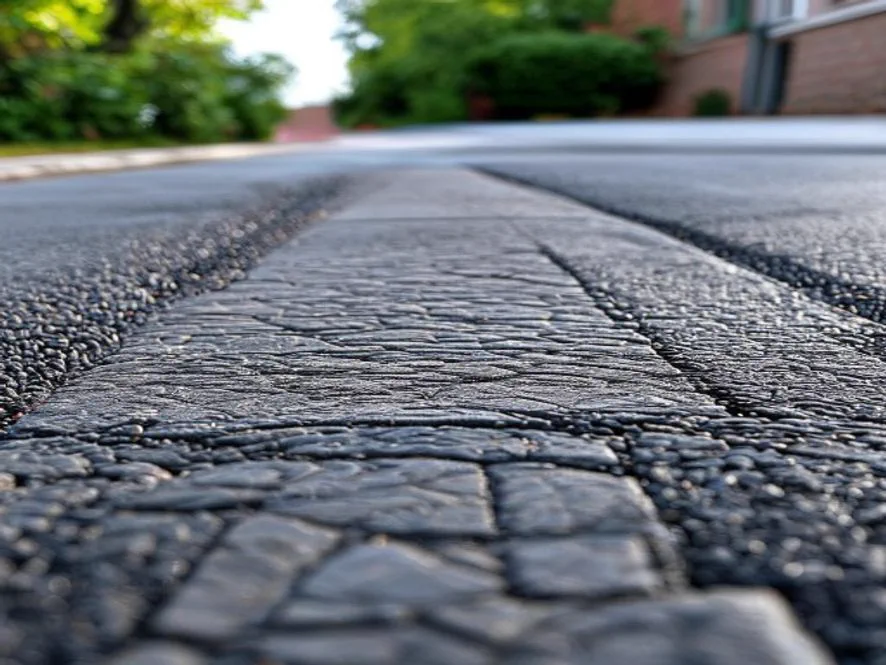
Concrete is poured into forms, so it ends in a clean, supported line. Asphalt is different. Hot mix is spread and rolled, and the outer few inches get the least compaction because the roller has nothing to push against. That unsupported lip is where almost every driveway starts to fail. It cracks, then breaks into chunks, then peels back under tire loads near the edge.
A border solves three problems at once. It confines the mix so the edge cannot spread sideways. It carries vehicle weight when a tire rolls right to the margin. And it stops soil, mulch, and gravel from washing under the slab during heavy rain. A good edge is part drainage detail, part structure, and part design. For the full failure picture, see our guide on fixing a crumbling driveway edge. The National Asphalt Pavement Association explains edge support best practices at asphaltpavement.org.
Paver and brick borders: the most popular look
A soldier course is a single row of clay pavers or concrete pavers laid on edge along the driveway margin. It is the most requested border because it reads as a deliberate frame and works with almost any house style. Brick suits traditional and colonial homes. Tumbled concrete pavers suit modern and farmhouse looks. Cost runs about 10 to 25 dollars per linear foot installed, with the spread driven by paver type and whether the installer uses polymeric sand or a mortar set.
- Clay brick: warm, classic, fade resistant. Holds color for decades because the color is fired through, not coated.
- Concrete pavers: wider color range and lower cost, but surface color can dull over 10 to 15 years.
- Polymeric sand joints: flexible, easy to repair, resist weeds better than plain sand. A smart pairing if you also battle weeds in driveway cracks.
- Mortared joints: rigid and tidy, but can crack in hard freeze thaw cycles if the base moves.
For deeper paver and brick pattern ideas, including running bond and herringbone accents, read our dedicated paver and brick border guide.
Belgian block and cobblestone for a premium edge
Belgian block, often called cobblestone, is a chunky granite stone set in a concrete bed. It is the heaviest, most durable, and most expensive common border, usually 18 to 40 dollars per linear foot installed. The mass means it almost never shifts, it shrugs off snowplow blades, and it gives a high end estate look that buyers notice. If you are weighing a driveway upgrade against home value, our driveway ROI breakdown shows where edge upgrades pay back at resale.
Belgian block needs a real concrete footing, so it is best installed when the driveway is new or being overlaid. Retrofitting it on an existing driveway is possible but adds trenching and forming labor.
Concrete curb, steel, and hidden edging
Not every border needs to be decorative. Some edges are about pure function and a crisp line.
- Poured concrete curb: a low ribbon of concrete formed along the edge. Costs 12 to 30 dollars per linear foot, lasts 25 plus years, and doubles as a drainage channel. Pair it with smart driveway drainage so runoff has somewhere to go.
- Steel or aluminum edging: a thin metal strip driven flush with the asphalt. Nearly invisible, holds a tight line, and keeps lawn from creeping in. Best in milder climates. The U.S. Federal Highway Administration covers edge drop off and shoulder support at fhwa.dot.gov.
- Plastic landscape edging: the cheapest option at 2 to 5 dollars per foot, but it heaves in freeze thaw climates and looks flimsy. Skip it for the driveway proper.
- Cobble or river rock strip: a planted gravel band that softens the edge and aids drainage, but offers little structural support on its own.
Mini tool
Driveway Edging Cost Estimator
Enter your driveway dimensions and pick a border type. This estimates the linear feet of edging you need (both long sides) and a ballpark installed cost. Real quotes vary by region and base prep.
How edging is installed alongside asphalt
Whether the driveway is new or existing, a quality border follows the same logic. The installer digs a trench beside the asphalt, lays and compacts a gravel base, then sets the border tight against the slab so there is no gap for water to exploit. On a new pour, the edge is often formed first and the asphalt is laid up to it, which gives the cleanest joint. On an existing driveway, the crew saw cuts a straight line, removes any failing edge, and butts the border to fresh asphalt or a patch.
- Base depth: 4 to 6 inches of compacted crushed stone under any masonry border, more in soft soils.
- Tight joint: the border should touch the asphalt, not float an inch away. A gap defeats the edge support.
- Drainage path: keep the border slightly below the asphalt surface so water sheets over it instead of pooling behind it.
- Frost line: in cold regions, masonry borders need a base below or near the frost line to limit heaving.
If you are planning a full project, run your numbers through the asphalt calculator first, then sanity check the bid with our quote comparison guide. The EPA covers stormwater runoff and permeable surfaces at epa.gov.
Matching the edge to your home and budget
Edging is a design decision, not just a repair. The trick is to echo a material already on the house or hardscape. Brick on the chimney or steps points to a brick border. A stone foundation pairs with Belgian block. A clean modern facade looks best with a flush steel edge or a low concrete curb. Plant a narrow bed of low groundcover behind the border to soften the line, an idea covered in our driveway landscaping ideas.
On budget, you do not have to edge the whole driveway at once. Many homeowners start with the visible street facing run and the apron, then extend the border up the sides later. If color is your main goal rather than structure, compare a border against colored asphalt options before committing.
Bottom line
The right edge does double duty. It frames the driveway for instant curb appeal and it protects the most failure prone part of the asphalt. For most homeowners a paver or brick soldier course at 8 to 25 dollars per linear foot hits the sweet spot of looks, durability, and cost. Go to Belgian block or a poured curb if you want the longest life and an estate look, and skip thin plastic edging on the driveway proper. Match the material to your house, set it on a real base, and keep the joint tight to the asphalt.