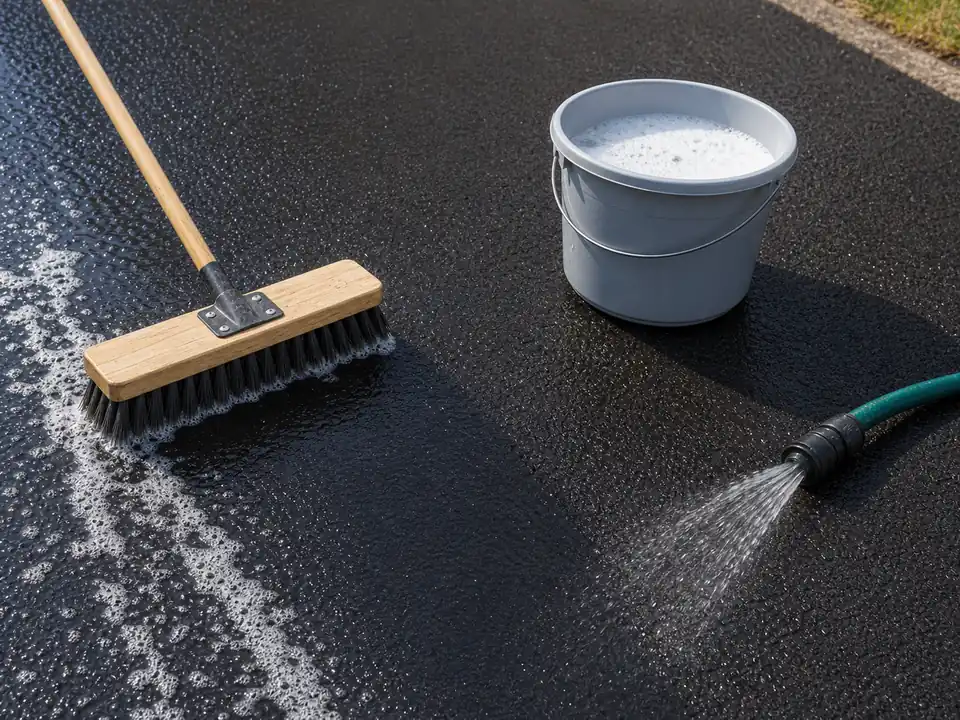
To clean an asphalt driveway safely, sweep off loose grit, then wash it with warm water and a few drops of dish soap using a stiff-bristle brush or push broom, and rinse with a garden hose. Spot-treat oil with an asphalt-safe degreaser, and pressure wash only on a wide fan tip under 2,500 PSI. This lifts dirt without stripping the sealcoat or softening the asphalt.
Why cleaning method matters for sealcoat
Asphalt is held together by a petroleum binder, and most driveways carry a thin protective sealcoat on top. Both can be harmed by the wrong cleaner. Strong solvents soften the binder. High-pressure water and harsh chemicals strip the sealcoat off in patches, leaving the surface gray, porous, and open to water. So the goal is simple. Use the gentlest method that removes the dirt, and escalate only when you have to. Most routine cleaning never needs anything stronger than dish soap and a broom.
This matters more on freshly sealed asphalt. A new sealcoat needs to cure, and aggressive cleaning in the first few weeks can peel it. If you recently sealed the surface, check our note on how long to stay off after sealcoat before you scrub anything.
What you need
- Stiff push broom or deck brush. The main tool. A long-handled stiff-bristle brush does 80 percent of the work.
- Dish soap. A few drops in a bucket of warm water. Cheap and sealcoat-safe.
- Garden hose. A standard hose with a spray nozzle is plenty for rinsing.
- Asphalt-safe degreaser. For oil and grease spots only. About 8 to 25 dollars per bottle.
- Bucket and rubber gloves. Basic protection and mixing.
- Pressure washer (optional). Only for ground-in grime, used on the right settings.
Step by step: the safe cleaning routine
The whole job on an average two-car driveway takes one to two hours, mostly sweeping and rinsing. Work on a dry, mild day so you can see the dirt and the surface dries afterward.
- Sweep off loose debris. Move cars, toys, and planters. Sweep the entire surface with a stiff push broom to clear grit, leaves, and dirt. Wetting dirt before you sweep just makes mud.
- Pull weeds and clear cracks. Remove any weeds in cracks or along the edges by the root. Loose dirt in seams washes back out during rinsing. See our guide on weeds in driveway cracks if they keep coming back.
- Wash with dish soap and water. Mix a few drops of dish soap into a bucket of warm water. Pour it across a section and scrub with the broom in overlapping strokes. Work in sections so the soap does not dry out.
- Spot-treat oil and grease. Apply an asphalt-safe degreaser only to stained spots. Let it dwell per the label, scrub gently, and rinse. For stubborn oil, see how to remove oil stains.
- Rinse from the high side. Start the hose at the high end so water and loosened dirt flow toward the street, not back across clean areas. Rinse until the runoff is clear.
- Pressure wash only if grime remains. Keep it under 2,500 PSI on a wide fan tip, 12 to 18 inches away, always moving.
- Let it dry. Give the surface at least 24 hours to dry before sealing or before heavy parking on recently sealed asphalt.
Pressure washing without stripping the sealcoat
A pressure washer is the part most likely to cause damage, so treat it as a last resort. When you do use one, stay inside these limits. The same limits protect concrete aprons and pavers nearby.
- Pressure: Under 2,500 PSI. Lower is safer on sealed asphalt.
- Tip: A 25 to 40 degree wide fan tip. Never the 0 or 15 degree narrow tip on a driveway.
- Distance: Hold the wand 12 to 18 inches from the surface.
- Motion: Sweep steadily across the surface. Do not hold one spot.
- Detergent: Use the soap tank for a low-pressure pass, then rinse on a wider tip.
If you want a deeper walkthrough including soap selection and surface prep, our asphalt driveway pressure washing guide covers it. For general electrical and water safety with the machine, the CDC NIOSH and OSHA both publish basic pressure-washer handling guidance worth a read before your first use.
What not to use on asphalt
The wrong product can do more harm than the dirt ever would. Skip these completely.
- Gasoline, paint thinner, mineral spirits. Petroleum solvents dissolve oil and the asphalt binder. The stain leaves, a soft spot stays. These are also regulated hazardous waste under the EPA household hazardous waste rules.
- Bleach. Useless on oil and it lifts pigment from the sealcoat, leaving pale blotches.
- Wire brushes and metal scrapers. They gouge the surface and create new failure points.
- Narrow turbo nozzles. They strip sealer in tight stripes you will see for years.
- Acidic concrete cleaners. Made for masonry, they can attack the asphalt binder.
Moss, algae, and mildew
Shaded driveways grow green or black film. Do not reach for bleach. A diluted oxygen bleach (sodium percarbonate) solution or a dedicated outdoor mildew cleaner lifts it without harming the sealcoat. Scrub, let it dwell, and rinse. Improving drainage and trimming overhanging branches stops it from coming back. For a full method, see moss and algae on asphalt.
How often to clean
Cleaning is light, frequent maintenance, not a once-a-decade project. A simple cadence keeps the surface looking new and protects the seal.
- Every few weeks: A quick sweep to clear grit and leaves.
- Two or three times a year: A light soap-and-water wash, usually spring and fall.
- Same day: Spot-clean any oil, paint, or chemical spill before it sets; if dried latex or oil paint has already bonded to the surface, follow our steps for removing a paint spill.
- Before sealcoating: A full wash so the sealer can bond to clean asphalt.
Fitting cleaning into the bigger picture is easier with our driveway maintenance schedule, which spaces washing, crack filling, and sealing across the year.
Decision tool
What Cleaning Method Do I Need?
Answer two quick questions and get the gentlest method that will handle your driveway, plus whether a pressure washer is worth it.
Guidance only. When in doubt, start with dish soap and water, the safest option for any sealcoat.
Cleaning before you sealcoat
If a clean driveway is the goal because you are about to seal it, the cleaning is the prep. Sealer will not bond to dirt, oil, or loose grit, so a thorough wash is non-negotiable. Sweep, wash, treat oil spots, kill weeds in cracks, and fill cracks before the sealer goes down. Then let everything dry for a full 24 hours. Skipping this is the top reason a fresh sealcoat flakes within a year. Once it is clean and dry, plan your coats and gallons with the asphalt sealer calculator, and if you are weighing the job yourself, our sealcoat prep guide sequences every step.
Bottom line
Cleaning an asphalt driveway is mostly a broom, a bucket of soapy water, and a hose. Reach for a degreaser only on oil, an oxygen-bleach product only on moss, and a pressure washer only when soap fails, and even then keep it under 2,500 PSI on a wide tip. Avoid solvents and chlorine bleach entirely. Do that and your sealcoat stays intact, your binder stays firm, and the surface keeps shedding water the way it should. For the full reference list behind these methods, see the sources page.