To landscape around an asphalt driveway, add a hard edge band, then plant low, drought-tolerant perennials and grasses in a mulched strip kept 12 to 18 inches off the slab. Hold trees 10 to 30 feet back so roots cannot heave the asphalt. Good drainage protects both the plants and the pavement.
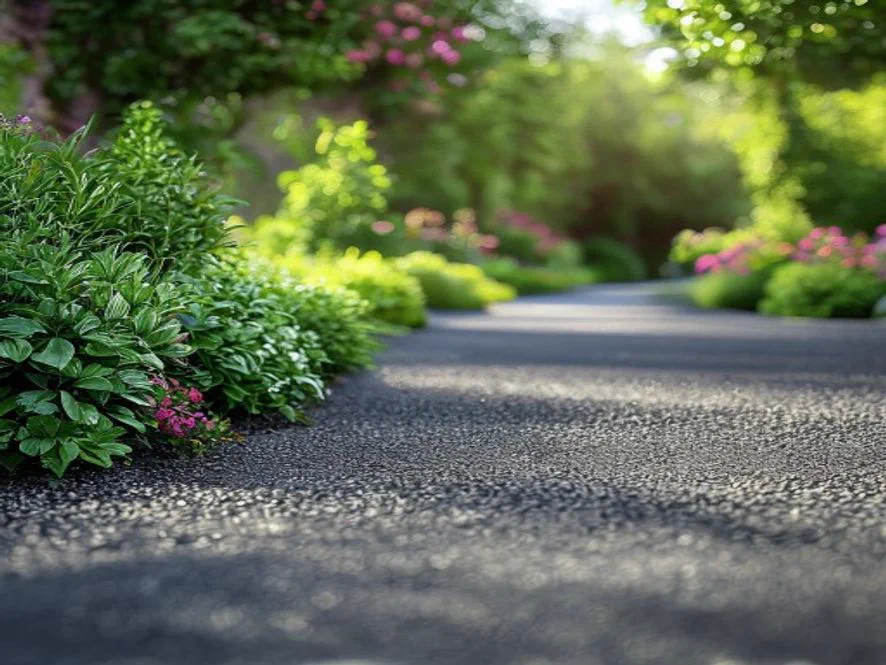
Why landscaping around asphalt needs a plan
An asphalt driveway is a big, dark surface. Left bare, it can make a yard feel like a parking lot. The fix is to break up the black with green, texture, and a defined edge. But planting near pavement has rules that planting in an open bed does not. Roots can travel under the base course and lift the slab. Soil that washes onto the asphalt feeds weeds in every crack. Water that pools at the edge undermines the foundation that holds the pavement flat.
So the goal is curb appeal that does not cost you the driveway. Get the edge, the drainage, and the plant choices right, and you add real value. A tidy, planted driveway reads as a maintained home and supports the kind of resale value buyers notice from the street. Get it wrong and you trade a few flowers for cracking, heaving, and a repair bill.
How far should plants and trees be from the slab?
Distance is the single most important rule. Tree roots are the leading cause of pavement heave near homes, and once a root grows under the base it is nearly impossible to remove without tearing up the driveway. The American root and pavement guidance from the Federal Highway Administration treats root intrusion as a structural concern, not just a cosmetic one (see fhwa.dot.gov).
- Large shade trees: 20 to 30 feet from the edge. Oaks, maples, sweetgum, and poplars have wide, aggressive root systems.
- Small ornamental trees: at least 10 feet. Crape myrtle, dogwood, and Japanese maple are gentler but still need room.
- Large shrubs: 4 to 6 feet, so the mature canopy clears the slab and roots stay in the bed.
- Perennials and grasses: 12 to 18 inches off the asphalt edge. Close enough to soften it, far enough to mow and edge.
If you already have a big tree near the pavement, watch the surface every spring. Lifting, cracking, or a bump near the trunk side means roots are at work. Our guide on tree roots pushing up asphalt walks through what to do before it spreads.
Edging ideas that keep asphalt clean
A defined edge is what separates a finished driveway from a tired one. It stops soil and mulch from creeping onto the slab, blocks grass runners, and gives the eye a crisp line. It also makes mowing and string-trimming faster. Match the edge to your home and budget.
- Brick or paver band: a single row of clay brick or concrete paver set in sand or mortar. Classic, durable, and a popular look covered in our paver and brick border ideas.
- Steel or aluminum edging: a thin, near-invisible line that holds mulch back. Cheap, fast, and ideal for curved beds.
- Belgian block or cobble: chunky stone for a heavier, traditional frame. Great on long or rural driveways.
- Poured concrete curb: the most permanent option, useful where you also need to manage water flow.
For more on dressing the edge of the slab itself, see our roundup of asphalt driveway edging ideas. A clean edge is also the first line of defense against the weeds that root in cracks when soil sits against the pavement.
Best plants for a driveway border
The strip nearest asphalt is a tough spot. Pavement absorbs sun and radiates heat, so the soil there can run 10 to 20 degrees hotter and dry out faster than the rest of the yard. Salt and sand from winter de-icing can also splash into the bed. Pick plants that shrug all of that off.
- Heat and drought tolerant: lavender, sedum, Russian sage, yarrow, coreopsis, daylily, and black-eyed Susan.
- Ornamental grasses: blue fescue, little bluestem, and feather reed grass add movement and need almost no water once established.
- Evergreen structure: dwarf juniper, boxwood, and yucca hold shape through winter so the bed never looks bare.
- Salt-tolerant picks: daylily, sedum, and juniper handle de-icing splash better than tender annuals.
Match plants to your climate zone and check that none are listed as invasive in your state. The EPA keeps practical guidance on water-wise, regionally appropriate landscaping (see epa.gov). In snow country, plan for the bed to take a beating each winter, and read our notes on whether salt damages asphalt before you pick a de-icer.
Drainage: the part most people skip
Water is the quiet killer of both plants and pavement. Beds that hold water rot roots. Water that runs toward the slab and pools at the edge soaks the base and leads to cracking, settling, and potholes. Grade every planting bed so it drains away from the driveway, not into it.
- Slope beds away from the slab: a gentle fall of a quarter inch per foot moves water off the edge.
- Add a gravel or river-rock channel: a 6 to 12 inch stone strip along the edge lets runoff disperse instead of pooling.
- Consider a French drain: for low spots or a slope that drains toward the house, a buried perforated pipe carries water away.
- Keep mulch below the asphalt level: mulch piled above the slab traps moisture against the edge and rots it.
If you already see puddles after rain, fix that first. Our guides on standing water and French drains for driveways cover the options in detail.
Quick estimator
Border Material Estimator
Enter your driveway edge length and bed depth to estimate mulch or rock volume and a rough material budget. This is a planning estimate, not a quote.
Low-maintenance and budget-friendly looks
You do not need a big bed to make a driveway look intentional. The cheapest durable upgrade is a clean mulch or river-rock strip with a handful of tough perennials, often 3 to 8 dollars per linear foot in materials. River rock and gravel never need replacing the way mulch does and stay tidy in wind. For a fuller bed, group plants in odd numbers and repeat two or three species along the run so it reads as a design, not a collection.
Solar path lights along the edge improve safety and curb appeal at night for very little money. A small boulder cluster or a single ornamental tree set well back can anchor the entrance. If you are weighing a bigger refresh, our guide to improving driveway curb appeal covers sealcoating, edging, and lighting together, and the maintenance schedule keeps the slab itself looking sharp under all that greenery.
Mistakes to avoid
- Planting trees too close: the most expensive error. Roots heave and crack asphalt years later.
- Burying the edge: mulch or soil mounded over the slab traps water and rots the pavement edge.
- Ignoring slope: beds that drain toward the driveway undermine the base.
- Skipping the hard edge: without a band, grass and weeds invade the asphalt every season.
- Overwatering near the slab: constant moisture at the edge softens the base and feeds crack weeds.
Bottom line
Good driveway landscaping is mostly about respecting the pavement. Keep trees far back, give every bed a hard edge and a path for water to escape, and choose tough, heat-friendly plants for the strip nearest the slab. Do that and you get years of curb appeal with no surprise repair bills. Before you buy plants, sketch the layout, confirm your drainage falls away from the asphalt, and price your border materials so the project stays on budget.