A stamped asphalt driveway costs about 7 to 13 dollars per square foot installed, roughly 3 to 6 dollars more than plain asphalt but far less than real pavers. You get a brick or stone look on a normal asphalt base. The texture and color last 3 to 5 years before a tinted reseal.
What is a stamped asphalt driveway?
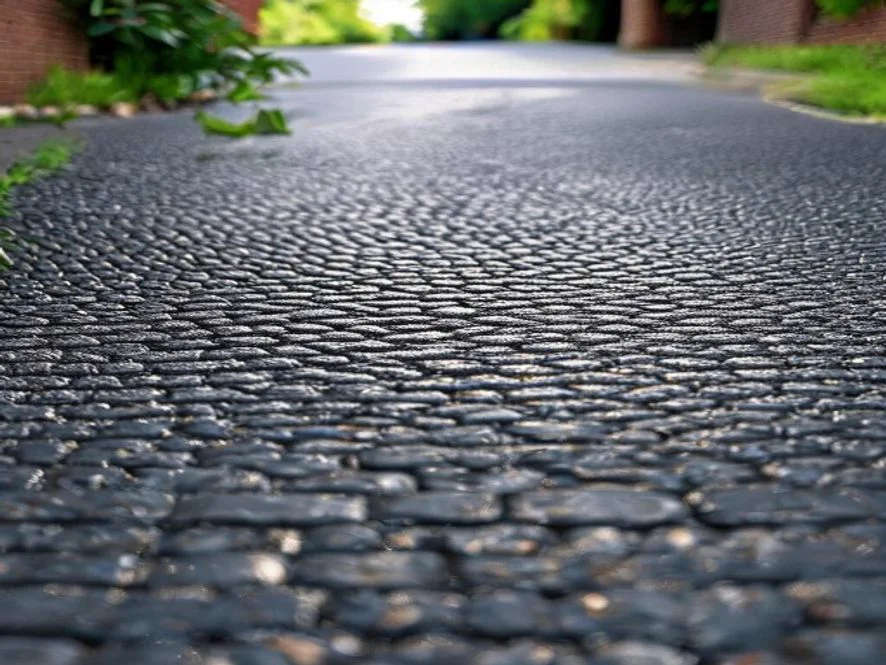
Stamped asphalt is a normal hot mix asphalt driveway with a decorative pattern pressed into the surface while the asphalt is still hot and soft. Crews lay the asphalt the same way they would for any layered driveway, then use heated metal template grids to imprint a pattern like running bond brick, cobblestone, or fan stone. After the surface cools, they apply a tinted acrylic or polymer coating in brick red, slate gray, tan, or charcoal to make the pattern stand out.
The key point is that everything underneath is still asphalt. The base, binder, and structural strength are identical to a plain driveway. Only the top half inch carries the look. That is why stamped asphalt costs much less than pavers, where every unit is a separate piece set by hand. It also means the durability of the base matches any well-built asphalt drive, while the decorative layer is the part that wears.
How much does stamped asphalt cost?
Expect 7 to 13 dollars per square foot installed for stamped asphalt over a fresh base. Plain asphalt usually runs 3 to 7 dollars per square foot, so the stamping and color add roughly 3 to 6 dollars per square foot, and you can check that plain baseline against the full 2026 cost report. The exact number depends on pattern complexity, how many colors you want, your region, and driveway size. Larger jobs spread the crew setup cost over more area and lower the per-foot price.
- Small drive (400 sq ft): about 2,800 to 5,200 dollars.
- Average drive (600 sq ft): about 4,200 to 7,800 dollars.
- Large drive (1,000 sq ft): about 7,000 to 13,000 dollars.
- Just the stamped border on plain asphalt: often only 800 to 2,000 dollars extra.
To sanity check any number a contractor gives you, run the area through our driveway cost calculator for the plain asphalt baseline, then add the stamping premium. If a quote feels high, paste it into the quote checker to flag padded line items. For more on what drives the base price up or down, see our guide on why quotes vary so much.
Quick estimate
Stamped Asphalt Cost Estimator
Enter your driveway size and pick a finish to see a ballpark total. This is a planning estimate, not a quote.
What are the pros of stamped asphalt?
The biggest draw is curb appeal for the money. You get the look of brick, cobble, or stone for a price closer to plain paving than to a hand-set paver job.
- Much cheaper than pavers: often half the price or less, while still reading as patterned from the street.
- Strong asphalt base: the structure flexes with freeze-thaw better than rigid concrete, which helps in cold climates.
- No weeds in joints: unlike pavers, there are no real joints for weeds or ants, so you skip the headaches in our weed control guide.
- Fast install: stamped while the asphalt is still hot, so it adds little time to a normal pave.
- Good for borders and aprons: a stamped border around plain asphalt gives a custom look at a small premium and adds resale appeal, which ties into curb appeal upgrades.
What are the cons and trade-offs?
Stamped asphalt is a surface effect, so its weak spot is the decorative coating, not the structure. Be honest with yourself about upkeep before you commit.
- Color fades and wears: the tinted coat wears at tire paths and needs a tinted reseal every 3 to 5 years. See how to handle a faded surface in our color restore guide.
- Pattern flattens over time: the imprinted texture slowly compresses under traffic, especially where cars turn.
- Not as realistic as pavers: up close it is clearly textured asphalt, not real stone.
- Higher lifetime maintenance: more frequent and more expensive resealing than plain asphalt. Compare the routines in our maintenance schedule.
- Repairs show: patching a cracked or sunken spot is harder to blend because the pattern and color rarely match perfectly.
The Federal Highway Administration notes that surface treatments protect pavement but wear with traffic and weather, which is exactly what happens to the decorative coat here. You can read more on pavement surface care from the FHWA pavement program and on asphalt mix basics from the National Asphalt Pavement Association.
Stamped asphalt vs pavers vs stamped concrete
If you want the patterned driveway look, you really have three options. Here is how they stack up so you can match the choice to your budget and climate.
- Stamped asphalt (7 to 13 dollars/sq ft): cheapest patterned option, flexible base, but the color and texture need regular refreshing.
- Stamped concrete (12 to 20 dollars/sq ft): holds the pattern longer and looks crisper, but cracks more in freeze-thaw and is costly to repair.
- Pavers (15 to 30 dollars/sq ft): most realistic and longest lasting, with individual units you can lift and replace, but the highest upfront cost and joint weeds.
For a deeper money comparison, our asphalt vs pavers cost guide breaks down lifetime spend, and if you are still deciding between asphalt and a poured slab, see asphalt vs concrete in 2026. Climate matters too, covered in asphalt vs concrete by climate.
How long does it last and how do you maintain it?
The asphalt base lasts 15 to 25 years, the same as any quality driveway, as long as it was built on a solid prepped base. The decorative layer is the part with the short clock. Expect the pattern and color to look sharp for 3 to 5 years, then need a tinted seal coat to bring the color back and protect the imprint.
Plan your upkeep like this. Apply a tinted seal coat every 3 to 5 years, sooner in hot, sunny climates where UV fades color faster. Clean oil and rust spots quickly so they do not stain the lighter colors, using the steps in our driveway cleaning guide. Touch up high-traffic tire paths between full reseals. Keep an eye out for cracks and fix them early, since a patched stamped surface is harder to hide than a plain one. The EPA also recommends checking what is in any sealer you buy, with material safety basics at epa.gov.
Bottom line
Stamped asphalt is the budget way to get a patterned driveway. At 7 to 13 dollars per square foot it costs far less than pavers and a bit less than stamped concrete, while keeping the flexible, freeze-friendly asphalt base. The catch is upkeep. You sign up for a tinted reseal every 3 to 5 years and a pattern that slowly softens under tires. If you want maximum impact for the least money and you are fine with that maintenance rhythm, a stamped border on plain asphalt is often the smartest middle ground. Run your numbers in the cost calculator first, then get at least three quotes.