To remove a paint spill from asphalt, act while it is wet: blot up the puddle, then scrub latex paint with warm soapy water or lift oil-based paint with a little mineral spirits on a rag. Scrape dried paint gently with a plastic putty knife after soaking. Avoid harsh solvents that dissolve the asphalt binder.
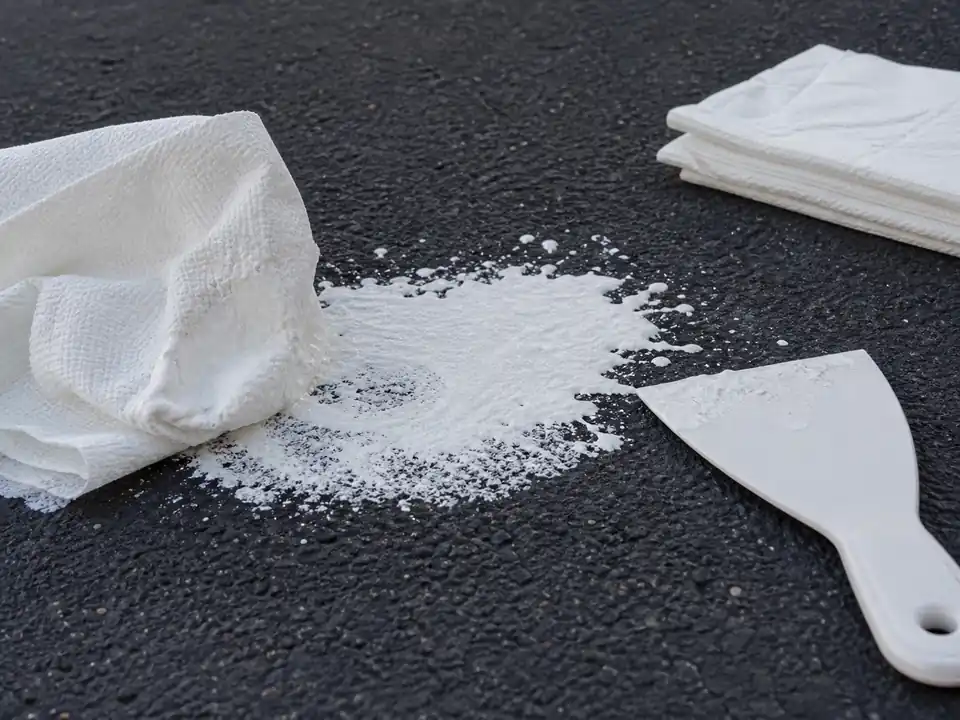
A paint spill on a driveway looks alarming, but most of it comes off with patience and the right product. The real risk is not the paint. It is the solvent you reach for to remove it. Acetone, lacquer thinner, and gasoline all strip paint, and they also dissolve the petroleum binder that holds your asphalt together. That trades a paint blotch for a soft, sunken spot. This guide walks through the safe path for each paint type. If you have other surface cleanup to do at the same time, our driveway cleaning guide covers the full routine.
First, what kind of paint is it?
The single most important question is whether the paint is water-based (latex) or oil-based (alkyd). They behave completely differently on asphalt and need different removers.
- Latex / water-based: The most common house and craft paint. Cleans up with soap and water while wet. If the can said "soap and water cleanup," it is latex.
- Oil-based / alkyd: Enamels, some primers, deck and trim paints. Needs mineral spirits to clean up. Smells stronger and dries glossier.
- Spray paint / aerosol: Usually a fast-drying lacquer or enamel. Lands as a thin film and skins over in minutes, so treat it as oil-based and urgent.
- Traffic / line-striping paint: Often water-based but formulated to bond to pavement. Hardest to remove. Plan to abrade and sealcoat over it.
If you still have the can, read the cleanup line. If not, dab a hidden bit with a soapy rag. If color lifts, it is latex. Knowing the type before you start saves you from grabbing the wrong solvent.
Paint Removal Method Picker
Tell us the paint type and whether it is still wet. We will suggest the safe first move for your asphalt.
How to remove a fresh paint spill
Fresh paint is the easy case. Wet paint has not bonded to the surface yet, so speed matters more than product. Latex skins over in 10 to 30 minutes, so move fast.
- Blot, do not wipe. Lay rags or paper towels on the puddle and lift. Work from the outside edge inward so you do not smear it wider.
- For latex, mix warm water with dish soap. Scrub with a stiff-bristle brush. Rinse with a garden hose.
- For oil-based or spray, dab a small amount of mineral spirits onto a rag and lift the paint. Reapply to a clean part of the rag as it loads up.
- Rinse the area and check in good light. Repeat the cycle if a shadow remains.
You usually will not need a stripper on a fresh spill. Hot asphalt is softer, so if the surface is baking in summer sun, wait for a cooler part of the day or shade the spot before you scrub. Our note on why asphalt goes soft in summer explains why heat plus solvent is a bad mix.
How to remove dried paint
Dried paint clings to the texture of the asphalt. The trick is to soften it before you scrape, never to attack it dry with a metal blade.
- Sweep the area so grit does not act like sandpaper under your scraper.
- Soak the paint. For latex, warm soapy water for 15 to 30 minutes. For oil-based, a rag laid over the spot with a little mineral spirits.
- Scrape with a plastic putty knife held at a low angle. Lift, do not gouge.
- For stubborn film, apply a water-based citrus paint stripper labeled safe for asphalt. Let it dwell per the label, usually 10 to 30 minutes.
- Scrub with a stiff brush, rinse, and repeat. Two or three passes is normal on dried paint.
A small leftover ghost is fine. It will fade and disappear once the area is sealcoated. If the spill sits near cracks, handle those at the same time with our crack repair guide so you only prep the surface once.
What not to use on asphalt
This is where most driveways get damaged. These products lift paint, and they also attack the binder.
- Acetone and lacquer thinner. Aggressive solvents that dissolve asphalt binder. They leave a soft, dished spot.
- Gasoline. A common forum suggestion and a bad one. It thins paint and the binder, and it is a fire and disposal hazard. The EPA household hazardous waste page covers safe disposal of solvents and paint.
- Methylene chloride strippers. Effective on paint but a health risk. The CDC NIOSH guidance on methylene chloride documents the exposure danger. Skip it outdoors and around kids and pets.
- Wire brushes and metal scrapers. They gouge the surface and create new failure points.
- High-pressure turbo nozzles. A narrow 0 or 15 degree tip strips sealcoat in stripes. If you pressure wash, use a wide fan tip under 2,500 PSI.
How much does removal cost?
Paint spill cleanup is one of the cheapest asphalt jobs you can do yourself.
- DIY supplies: 10 to 40 dollars. Dish soap, a plastic putty knife, a brush, and a small can of mineral spirits or citrus stripper.
- Citrus paint stripper: 12 to 30 dollars per quart for stubborn dried spots.
- Pressure washer rental: 40 to 90 dollars per day if you want to speed the rinse.
- Sealcoat over the area: if removal is partial, a fresh seal hides it. Size it with the asphalt sealer calculator.
If a contractor handles a large industrial spill, expect a small minimum service charge rather than a per-foot rate. For most home spills there is no reason to pay anyone.
Sealcoating over a paint spill
If removal is not perfect, a sealcoat is your finish move. Sealer will not bond over a glossy, intact paint film, so scuff or abrade the paint first, let the area dry, and use an adhesion primer on heavy spots. The National Asphalt Pavement Association covers surface prep principles for maintenance work. Plan the timing with our sealer calculator and the broader maintenance schedule so the patch blends in with your next full seal.
Bottom line
Match the remover to the paint, not the other way around. Soap and water for latex, a little mineral spirits on a rag for oil-based, and patience with a plastic putty knife for anything dried. Keep harsh solvents off the asphalt, work in cooler temperatures, and finish with a sealcoat if a ghost remains. Done right, a paint spill leaves no lasting mark on the surface.
Sources for the products and methods above are on the sources page.