A heated asphalt driveway adds a snow-melt system, either electric cables or hydronic tubing, beneath the pavement so snow and ice melt on contact. Installed cost runs about 12 to 25 dollars per square foot, so a 600 square foot drive costs 7,000 to 15,000 dollars on top of normal paving, which you can benchmark against our full asphalt driveway cost report.
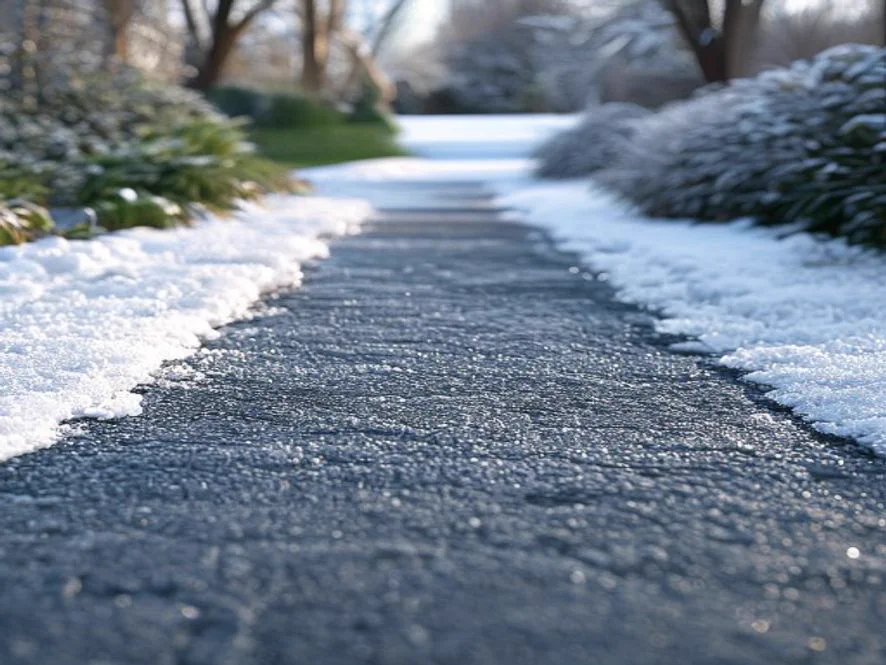
How does a heated asphalt driveway work?
A snow-melt system puts a heat source inside the pavement. When a storm hits, the surface warms above freezing so snow melts and water drains off instead of building up into ice. Two main technologies do this.
- Electric resistance cable. Heating cables, similar to the elements in a toaster, are stapled to the base in loops or pre-spaced mats. They draw power and turn it directly into heat. Simple to install, fast to warm, and ideal for smaller or odd-shaped areas.
- Hydronic tubing. Flexible PEX tubing carries a warm water and antifreeze mix from a boiler or water heater through the slab. The fluid loop spreads heat evenly. Higher install cost, but cheaper to run over a long winter, especially on big driveways.
Both run off a controller with a snow sensor that watches temperature and moisture. The system fires only when both are present, so it is not heating bare dry pavement on a cold clear night. For asphalt specifically, the mix is placed cooler than usual, around 250 to 275 degrees Fahrenheit, so the hot mat does not scorch the cables or tubing. This is why heating has to be designed in before paving day, not added later.
How much does a heated asphalt driveway cost?
The snow-melt portion is the big number, and it stacks on top of the regular cost to pave. Here are the ranges most homeowners see in 2026.
- Electric system, installed. About 12 to 19 dollars per square foot for cable, controller, sensor, and the dedicated electrical work. A 600 square foot drive lands near 7,000 to 11,000 dollars.
- Hydronic system, installed. About 16 to 25 dollars per square foot once you include the boiler, manifold, pumps, and tubing. The same 600 square foot drive runs 10,000 to 15,000 dollars or more.
- Heated tire tracks only. Heating just two strips where wheels roll, instead of the whole slab, can cut the system cost by 40 to 60 percent. Snow still piles between the tracks, but the car gets traction.
- The asphalt itself. Separate from heating. Use the driveway cost calculator for the base paving number, then add the system on top.
Electrical upgrades are a hidden line item. A full-slab electric system can need a 100 to 200 amp dedicated feed, which may mean a panel upgrade. Get that priced up front so it does not surprise you, the same way other hidden install costs catch people off guard.
Estimate
Snow-Melt Install Estimator
Rough out the system cost for your driveway. Enter the heated area and pick a system type. This estimates the snow-melt portion only, not the paving.
Estimates only. Get firm bids from a licensed installer. Compare them with the quote checker.
What does it cost to run each winter?
Install is one bill. Operating cost shows up on the energy bill every storm. Electric systems use roughly 50 watts per square foot while running, so a 600 square foot slab pulls about 30 kilowatts. At 16 cents per kilowatt-hour that is close to 5 to 8 dollars per hour of active melting, more in high-rate areas. A long storm can mean several hours of run time.
Hydronic systems burning natural gas usually cost less per hour because gas heat is cheaper than electric resistance, but the boiler, pumps, and yearly service add overhead. Over a heavy winter with 60 or more snow days, hydronic often wins on running cost. Over a mild winter with a dozen events, electric is fine and far cheaper to install. The U.S. Department of Energy publishes home energy-cost basics at energy.gov that help you plug in your local rate.
Will heat hurt the asphalt or shorten its life?
Done right, no. The bigger threat to any asphalt drive is the freeze-thaw cycle, where water seeps into cracks, freezes, expands, and breaks the surface apart. A heated drive that stays above freezing actually dodges a lot of that damage. You can read how that cycle works in our guide to freeze-thaw damage.
Two cautions. First, the asphalt must be paved at a controlled, lower temperature so the mix does not melt cable insulation. A contractor who has not done snow-melt before is a red flag. Second, heat does not replace sealcoating. You still want the surface sealed on a normal maintenance schedule to protect against UV and oxidation. The Federal Highway Administration covers pavement performance fundamentals at fhwa.dot.gov.
Who should actually buy one?
Snow-melt is a comfort and safety upgrade, not a money-saver. It pays off in specific situations.
- Steep driveways. A grade where you cannot safely back a car up on ice is the classic case. See our notes on steep driveway paving for the slope angles that get dangerous.
- Long rural drives. If you plow 300 feet of rural driveway by hand every storm, the labor savings add up, though full-length heating gets expensive fast. Many people heat only the worst section.
- Mobility or health concerns. Shoveling is a known heart-attack trigger in cold weather, a risk the CDC flags in its cold-weather safety guidance at cdc.gov. Removing that chore has real value.
- Heavy-snow regions. 60 plus snow days a year changes the math. In a mild winter zone, a snow blower and the right ice melt are far cheaper.
What are the cheaper alternatives?
If full snow-melt is out of budget, you have lower-cost ways to handle winter on asphalt.
- Heated tire-track strips. Heat only the wheel paths to cut system cost roughly in half while keeping traction.
- Portable heated mats. Roll-out electric mats sit on top of an existing drive and plug into an outlet. A few hundred dollars per mat, no repaving, but limited coverage.
- Good winter habits. Prompt shoveling, asphalt-safe ice melt, and avoiding metal blades. Our guide on snow removal without damage and the broader winter care playbook cover the routine that protects a normal drive.
Bottom line
A heated asphalt driveway costs roughly 7,000 to 15,000 dollars for a two-car size on top of paving, with electric cheaper to install and hydronic cheaper to run over a hard winter. It must be planned before you pave, since elements live inside the pavement. For steep drives, long rural drives, mobility needs, or heavy-snow climates it is a genuine quality-of-life upgrade. For mild winters, a snow blower and asphalt-safe ice melt usually make more sense. Price the paving first, add the system, and get firm bids before you commit.