Yes, you can pave asphalt over a gravel driveway if the gravel is dense graded crushed stone, at least 4 to 6 inches deep, free of mud and soft spots, and compacted hard. In that case the gravel becomes your aggregate base. If it is round stone, too thin, or sitting on soft soil, it needs fixing first.
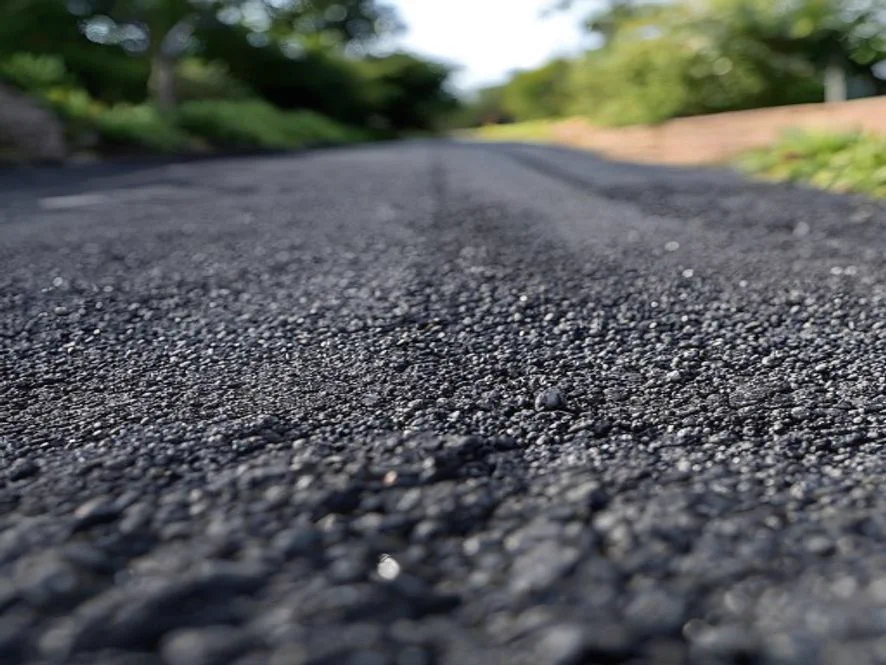
Why gravel can become the base (and why that saves money)
Under every good asphalt driveway is a compacted layer of crushed stone called the aggregate base. It is the part that actually carries wheel loads and spreads them across the soil so the surface above does not crack and sink. A gravel driveway is, in many cases, already that layer. If yours was built and maintained well, the most expensive and labor heavy step of a new driveway, building the base, is partly done. That is why paving over usable gravel is cheaper than a full build from dirt. To see how the layers stack, our driveway layers guide walks through subgrade, base, and surface in order.
The catch is the word usable. A lot of gravel driveways were never engineered. They are a scattering of stone thrown on bare ground and topped up over the years. That kind of gravel will not pass for a base, and paving over it is one of the fastest ways to a driveway that alligator cracks in a couple of seasons. The whole question comes down to four checks: stone type, depth, compaction, and the soil underneath.
What kind of gravel can you pave over?
Only one type of gravel works as an asphalt base: dense graded crushed stone. Depending on your region it is sold as crusher run, road base, 21A, or 21B. It blends angular rock from about three quarter inch down to fine stone dust, so when it is compacted the pieces lock together into a hard, almost solid layer. That interlock is what gives it strength.
Round stone is the opposite. Pea gravel and river rock are smooth and rounded, so they roll past each other under load instead of locking up. You cannot build a stable base on them, and asphalt placed over round stone will flex, rut, and crack. If your driveway is round decorative gravel, the crew has to remove it or blend in crushed stone before paving. This is the same crushed versus round distinction that drives the comparison in our millings versus gravel guide.
- Crusher run, 21A, 21B, road base: Angular crushed stone with fines. Compacts hard. This is what you pave over.
- Pea gravel or river rock: Round and smooth. Rolls under load. Will not work as a base.
- Mixed or topped up stone: Often a blend. A contractor has to dig a test hole to see what is really down there.
How thick does the gravel need to be?
Depth is the second test. You want at least 4 to 6 inches of compacted dense graded stone over firm, well draining soil, and 8 inches or more over clay, soft ground, or anywhere an RV or loaded truck parks. Many gravel driveways are only 2 to 3 inches of stone over dirt, which is not enough to carry the load once it is sealed under asphalt. If yours is thin, the crew adds new crushed stone, regrades, and compacts to bring the base up to spec before paving. Our base prep guide covers the full depth and lift process, and the residential thickness guide sets the asphalt layer that goes on top, usually 2 to 3 inches compacted.
Can I pave over my gravel? Quick check
Answer four questions about your existing gravel. This gives a rough verdict on whether it can become the base or needs work first. Always confirm with a contractor who digs a test hole.
Compaction and the soil underneath
Even the right stone at the right depth fails if it was never compacted or if the soil under it is soft. A good gravel driveway has been packed by years of traffic and stays hard with no soft, springy, or muddy spots. Before paving, the crew regrades and runs a roller or plate compactor over the whole pad, then proof rolls it by driving a loaded truck across and watching for any area that ruts, flexes, or pumps water up. Any weak spot is dug out and rebuilt. Skipping that check is gambling with the whole driveway, and it is one of the most common bad install mistakes. The soil below the gravel, called the subgrade, matters just as much. Clay holds water and heaves in frost, so it usually needs a thicker base and sometimes a woven separation fabric. The Federal Highway Administration treats subgrade and base strength as the foundation of how long any pavement lasts.
Drainage is part of the job
A gravel driveway lets water soak straight through. Asphalt does not, so the moment you cap gravel with pavement you change how water moves. The base has to be graded to a slope of at least 1.5 to 2 percent, about a quarter inch of fall per foot, so water runs to the edges and off the driveway instead of soaking in and weakening the base. On flat lots or at the bottom of a grade, you may need a perimeter drain. Our drainage solutions guide and the french drain guide cover when extra drainage is worth adding. Trapped water under asphalt freezes, expands, and lifts the surface, which is the freeze thaw cycle behind a lot of cracking.
What does it cost to pave over gravel?
Paving over usable gravel usually runs 3 to 7 dollars per square foot, cheaper than building from dirt because the base already exists. A typical 600 square foot driveway often lands around 2,000 to 4,000 dollars. The number climbs if the crew has to add gravel to reach depth, fix drainage, undercut soft soil, or haul off round stone that cannot be used. Get the size and tonnage straight first with the asphalt calculator, then pressure test the price with the driveway cost calculator. For full regional ranges, see our cost per square foot guide.
- Best case: Good crushed base already in place. You mostly pay to regrade, compact, and pave.
- Middle case: Crew adds a few inches of new stone and fixes minor drainage before paving.
- Worst case: Round stone or soft soil. Removal and a rebuilt base pushes cost toward a full new install.
How to make sure a contractor does it right
You cannot inspect a base after it is paved, so the conversation before the job matters. A good crew digs a test hole to confirm stone type and depth, talks about compaction and proof rolling, and itemizes any added gravel or drainage rather than burying it in one lump line. Vague answers about the base are a red flag. Run the written scope through the quote checker and use our contractor questions checklist so base prep, slope, and stone are all spelled out before anyone shows up with a paver. The National Asphalt Pavement Association publishes homeowner guidance on what a quality residential install includes.
Bottom line
You can pave asphalt over a gravel driveway, and when the gravel is the right crushed stone, deep enough, compacted, and well drained, it is a smart, money saving move because the base is already there. The honest verdict comes from a test hole and a proof roll, not from how the surface looks. If the stone is round, thin, or floating on soft soil, fix the base first or you are just hiding a future failure under fresh asphalt. References and standards are on the sources page.