To clean a gas or fuel spill on an asphalt driveway, stop the source, cover the puddle with kitty litter or sand to absorb the liquid, sweep it into a hazardous-waste bag, then scrub with an asphalt-safe degreaser and rinse. If a soft spot forms, patch it once the area is dry. Speed matters most.
Why fuel is worse than oil on asphalt
Asphalt is aggregate, sand, and a petroleum binder that glues it all together. Gasoline, diesel, kerosene, and most fuels are light petroleum solvents. They dissolve that binder on contact. Motor oil is a heavier, slower attacker, but raw gasoline can soften the surface in minutes. That is why a fuel spill is a timed problem, not a stain you deal with next weekend. A quart of spilled gas left overnight on a hot day can leave a sticky, sunken, alligator-looking patch that no amount of scrubbing will firm back up. If you are still learning how the surface is built, our guide on asphalt driveway layers explains what the solvent is actually eating into.
Diesel is slightly less aggressive than gasoline but soaks deeper because it evaporates slowly. A diesel drip from a parked truck can wick down through the surface over days. Brake cleaner, starting fluid, and two-stroke mix all behave like gasoline. Treat every fuel the same: fast absorb, then clean.
Step 1: Stop the source and stay safe
Before any cleaning, control the hazard. Gasoline vapor is heavier than air and pools in low spots. It ignites from a spark, a pilot light, a cigarette, even static.
- Kill ignition sources. No smoking, no running engines, no power tools, no doorbell cameras being plugged in nearby.
- Stop the leak. Right the tipped can, close the cap, move the leaking vehicle if it is safe to do so.
- Ventilate. Work outdoors with airflow. Do not push fumes toward a garage or basement window.
- Protect yourself. Nitrile gloves and eye protection. Fuel strips skin oils and irritates eyes.
For a large spill, more than about 5 gallons, or fuel reaching a storm drain, call your local fire department non-emergency line. Fuel runoff into drains is a reportable event in many areas. The US EPA emergency response pages explain when a spill crosses into a reporting threshold, and workplace fuel handling rules are covered by OSHA flammable liquids guidance.
Step 2: Absorb the liquid fast
Your first move is to soak up everything still sitting on the surface. Do not hose it. Water spreads raw fuel across more asphalt and washes solvent into the soil.
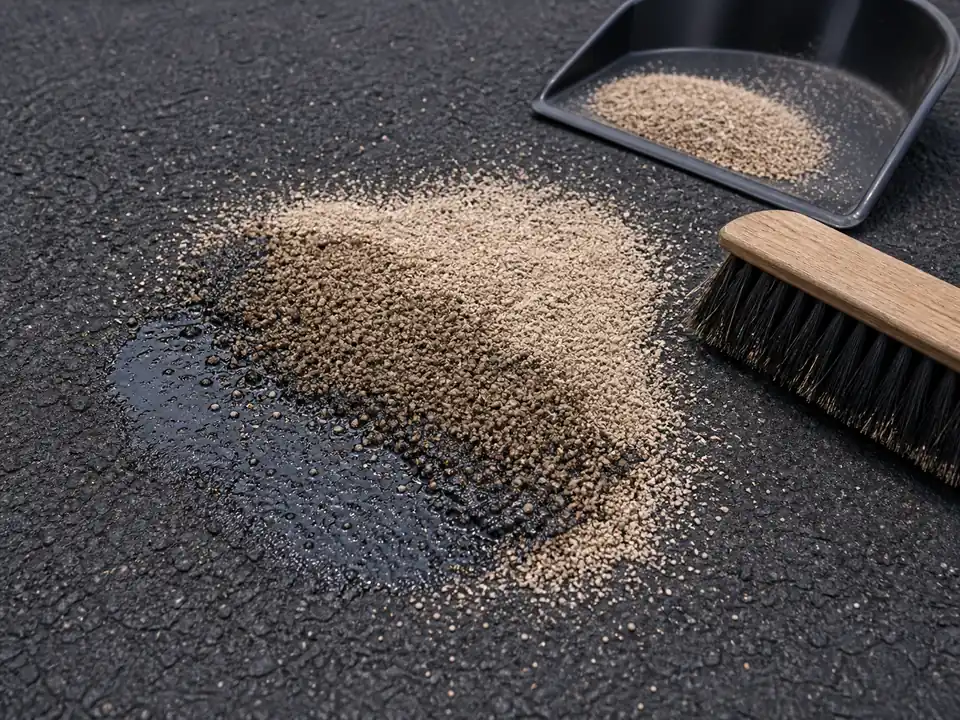
- Pour absorbent over the whole puddle. Clay kitty litter, dry sand, baking soda, sawdust, or a commercial oil-dry product all work. Use enough to cover the liquid completely.
- Let it draw the fuel up. A few minutes for a small drip, up to an hour for a real puddle. The absorbent darkens as it soaks.
- Add a second layer if the first becomes saturated and there is still liquid underneath.
Keep a bag of cheap clay litter in the garage for exactly this. The first hour decides whether you have a cleaning job or a repair job.
Step 3: Sweep up and dispose of it correctly
Fuel-soaked absorbent is household hazardous waste. It is flammable and cannot go in your regular trash or down a drain.
- Sweep the saturated material into a metal or heavy-duty plastic bag or a lidded metal container.
- Do not seal it airtight while vapors are still strong. Let it gas off in a safe outdoor spot first.
- Take it to a hazardous-waste drop-off. Most counties run free household hazardous-waste days. The EPA household hazardous waste page lists the right disposal channels.
Step 4: Degrease the residue
After the bulk fuel is gone, a dark shadow and a thin film usually remain. This is the part that soaked into the top of the binder.
- Sweep the area clean and dry.
- Apply an asphalt-safe degreaser or a strong dish soap and warm water mix. Products like Oil Eater or Pour-N-Restore run about 8 to 25 dollars per bottle.
- Scrub with a stiff-bristle brush, never a wire brush. Wire scratches the surface and opens new failure points.
- Let it dwell per the label, usually 5 to 30 minutes.
- Rinse lightly with a garden hose into a vegetated area, not a storm drain. Repeat once for a stubborn shadow.
Avoid heavy pressure washing here. High PSI on a fuel-softened surface tears it up and strips any sealcoat. If you do use a washer, stay under 2,500 PSI with a wide 25 to 40 degree fan tip and keep the wand 12 to 18 inches off the surface. The same rules apply to any cleaning job, so our pressure washing guide is worth a read. For solvent-based residue more generally, the oil stain removal guide covers the same degreasers.
Spill severity check
Answer two quick questions to see whether you are looking at a clean-only job or a clean-and-patch job.
Step 5: Repair the soft spot, if there is one
Once the area is clean and dry, press on it with a screwdriver or your heel. Firm asphalt means you are done. A spongy, dented, or crumbling spot means the binder is gone and the patch has to come out.
- Small surface scar, still firm. Treat with an oil-spot primer, then sealcoat. The shadow disappears under fresh seal.
- Soft top layer, under about an inch. Scrape out the loose material, clean the cavity, and fill with cold patch. Tamp it level. Our pothole patching steps apply.
- Deep failure, more than an inch. Saw-cut a clean rectangle around the spot, dig to firm base, fill with hot mix or layered cold patch, and compact. The asphalt repair guide walks the full cut-out method.
For cold patch versus hot mix on these small repairs, see the comparison in our cold patch vs hot mix breakdown. Most homeowner fuel scars are shallow enough for a bag of cold patch and a hand tamper.
Cost and timeframe
Most fuel cleanups are cheap if you catch them. A clay litter bag is a few dollars, a degreaser bottle is 8 to 25 dollars, and the whole cleaning takes under an hour plus dwell time. A cold-patch repair adds a 15 to 30 dollar bag of mix and an afternoon. If a soft spot is large, a pro patch typically runs 100 to 400 dollars depending on size and access. A spill you ignore can grow into a full panel repair, so the math strongly favors fast action. To budget any larger fix, the driveway cost calculator gives a quick range.
What never to use
- More gasoline or solvent. A common bad forum tip. Gasoline, paint thinner, lacquer thinner, and mineral spirits all dissolve the binder you are trying to save.
- Open flame to burn it off. Obvious fire and injury risk. Never.
- Bleach. Useless on fuel and it lifts pigment from sealcoat.
- A turbo or 0-degree pressure nozzle. Strips sealer in stripes and gouges softened asphalt.
- Hosing raw fuel into the street or a drain. Illegal in most places and an environmental hazard.
Preventing the next spill
- Fuel mowers, cans, and equipment on the grass or a drip mat, not the bare driveway.
- Park leaky vehicles over a drip pan or cardboard sheet.
- Keep a clay litter bag and gloves in the garage for first-hour response.
- Sealcoat on schedule. A fresh seal is a sacrificial top layer that buys you time on the next spill. Plan it with the sealer calculator.
Bottom line
Fuel attacks asphalt faster than oil, so the whole game is speed. Cover the spill with absorbent in the first hour, dispose of it as hazardous waste, degrease the residue, and skip every petroleum solvent and high-pressure shortcut. Then test the spot. If it stayed firm, you are done. If it softened, patch it before it spreads. Sources and product references are on the sources page.